



How To Find A Clothing Manufacturer For Your Brand: The Complete 2026 Guide
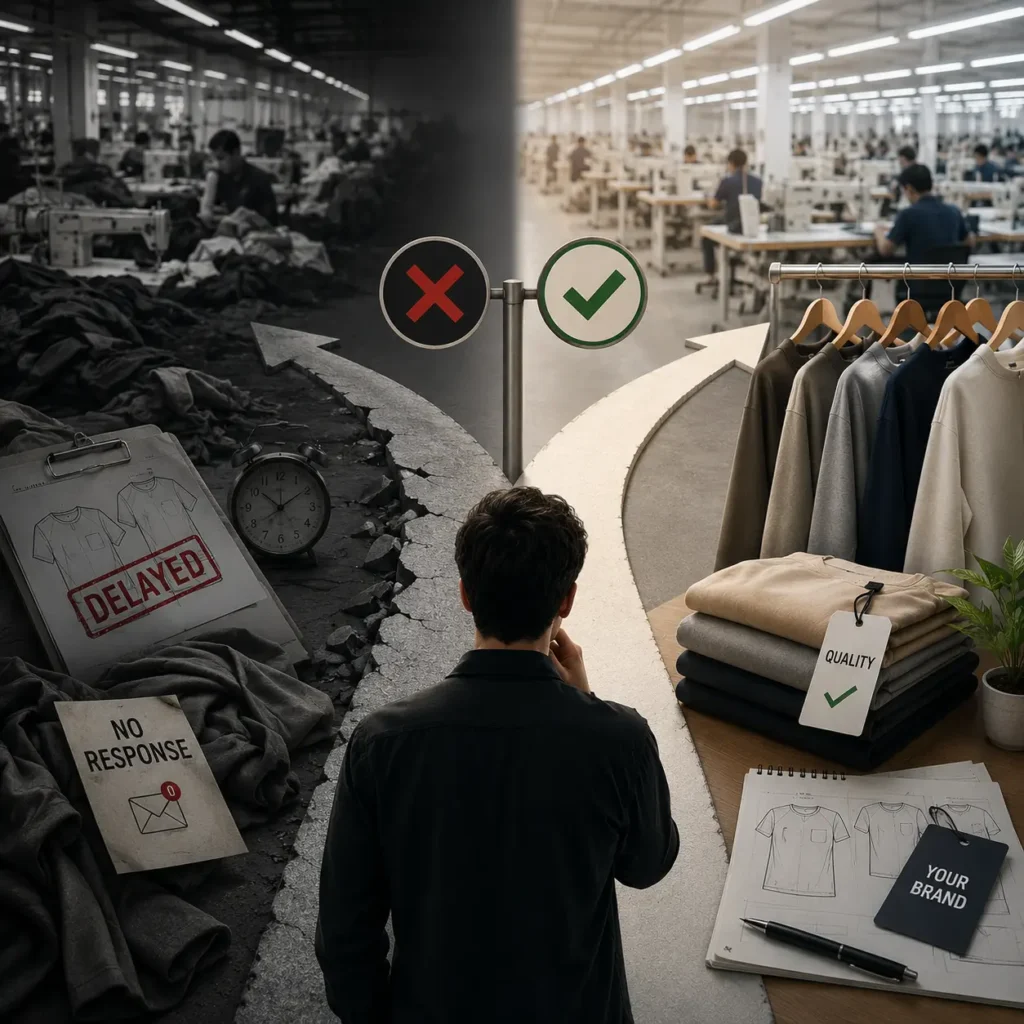
Most fashion startups don’t fail because of bad designs. They fail because they choose the wrong manufacturer.
You spend months developing a product, invest in samples, finalize your branding, and finally place your first order. Then production delays happen. Quality changes. Communication disappears.
Now you’re stuck asking yourself:
How do successful brands actually find a reliable clothing manufacturer before expensive mistakes happen?
I’ve spent the last 23 years working inside apparel manufacturing and supporting more than 100 apparel development projects. During that time, I’ve seen brands grow from a single product to international businesses. I’ve also seen promising brands lose momentum because they partnered with the wrong factory.
Why Finding The Right Clothing Manufacturer Is So Difficult
Many first-time founders believe finding a manufacturer is simply a matter of searching Google or browsing supplier directories.
In reality, thousands of factories can produce clothing.
Only a small percentage can consistently deliver quality, communication, and scalability.
That’s where the challenge begins.
A manufacturer isn’t just producing garments.
They’re producing your reputation.
One late shipment can damage customer trust.
One quality issue can destroy repeat purchases.
The cheapest factory is often the most expensive mistake.
I learned this lesson years ago while helping a growing fashion brand launch its second collection. Their first supplier offered a lower price and promised faster delivery.
The first order looked acceptable.
The second order arrived with inconsistent sizing, different fabric hand feel, and visible sewing defects.
The savings disappeared overnight.
At YIDI Clothing, operating from a 10,000㎡ facility with 300+ production staff, we frequently receive inquiries from brands trying to recover after experiences like this.
And honestly, it’s one of the most common stories in apparel manufacturing.
1: Define Exactly What You Want To Produce
Before contacting any manufacturer, get clear on your product.
This sounds obvious.
Yet many brands skip this step.
Ask yourself:
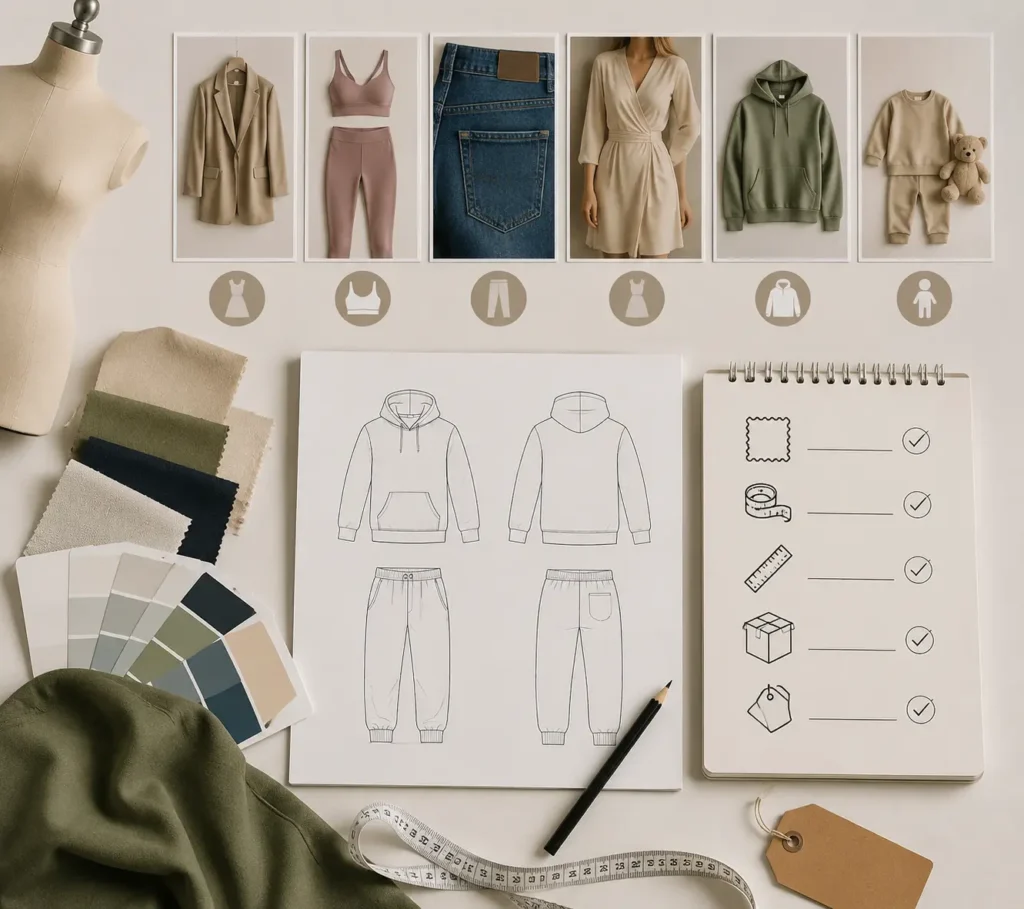
- Are you producing women’s wear?
- Activewear?
- Denim?
- Dresses?
- Streetwear?
- Kidswear?
The more specific your direction becomes, the easier it is to identify factories with relevant experience.
A factory that specializes in denim may not be the best choice for performance sportswear.
Likewise, a sportswear factory may struggle with complex woven dresses.
In my experience, manufacturing specialization matters far more than company size.
Expertise beats capacity.
Before reaching out to suppliers, prepare:
- Product sketches
- Reference images
- Fabric preferences
- Size specifications
- Quantity estimates
- Target retail market
This single step can save weeks of unnecessary communication.
The next challenge isn’t finding factories.
It’s finding the right ones.
2: Know Where Serious Brands Find Manufacturers
Many entrepreneurs start and stop at Alibaba.
That’s a mistake.
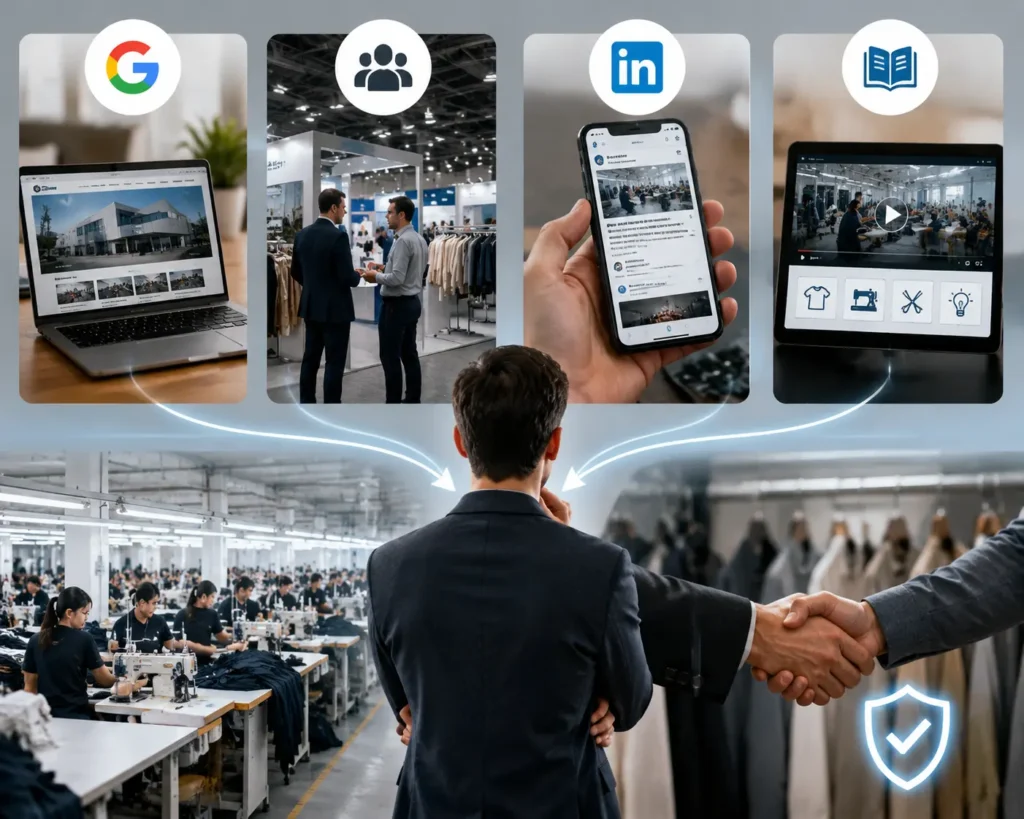
The strongest sourcing strategy combines multiple channels.
Google remains one of the most valuable resources because established manufacturers invest heavily in their websites, case studies, and content.
Trade shows remain another excellent source.
Industry events allow you to evaluate suppliers face-to-face and compare capabilities directly.
LinkedIn has also become increasingly useful over the past few years.
I regularly see founders discover suppliers through educational content rather than advertisements.
Why?
Because expertise creates trust.
And trust shortens buying decisions.
The best factories teach before they sell.
At YIDI Clothing, after supporting over 300 global apparel brands, many long-term partnerships actually started from educational content rather than direct sales inquiries.
People often buy confidence before they buy products.
3: Evaluate Experience Beyond Marketing Claims
Every factory claims quality.
Every factory claims reliability.
Every factory claims experience.
The question is:
Can they prove it?
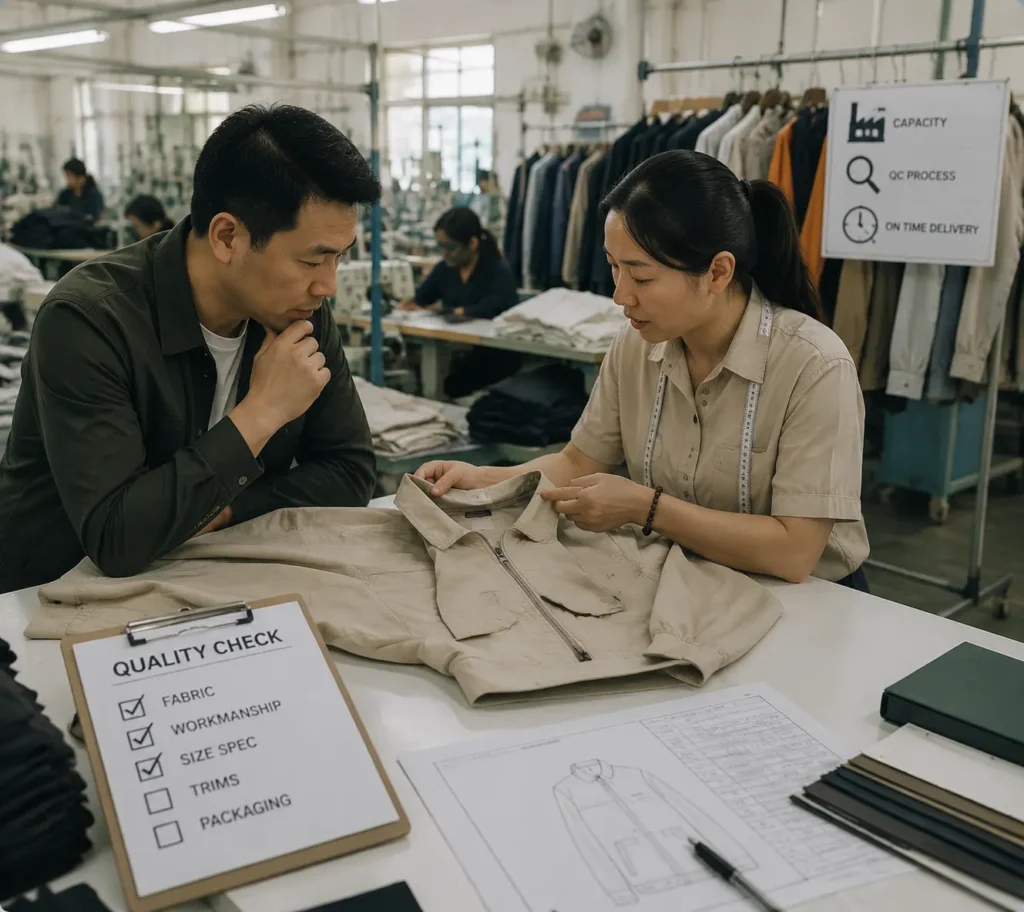
When evaluating manufacturers, focus on measurable indicators:
- Years in business
- Product specialization
- Export experience
- Production capacity
- Quality control systems
- Third-party certifications
Ask difficult questions.
How many workers are involved?
How are inspections conducted?
What happens when defects are found?
Who approves production samples?
A reliable factory welcomes these conversations.
An unreliable one avoids them.
In my experience, communication quality often predicts production quality.
The warning signs usually appear early.
4: Never Skip Sample Development
This is where many expensive mistakes begin.
A sample is not simply a prototype.
It’s a communication tool.
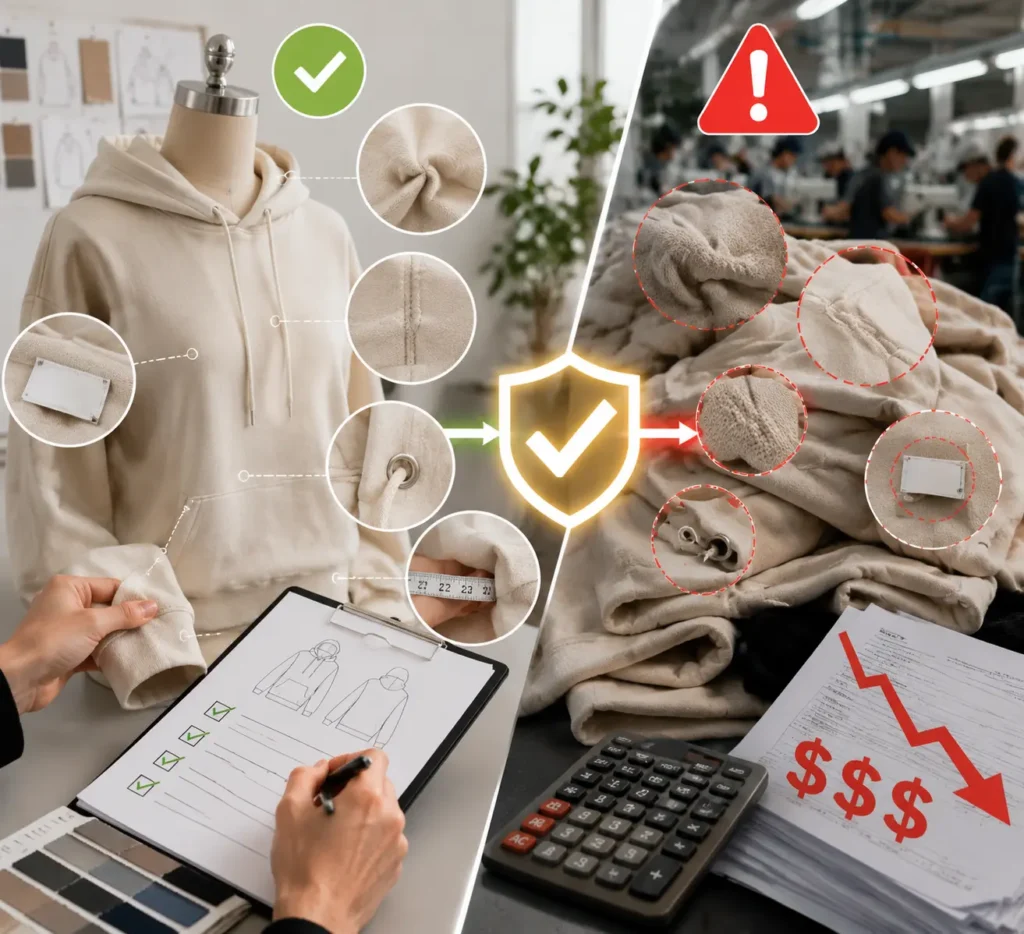
It reveals misunderstandings before they become production problems.
I’ve seen brands spend thousands correcting issues that could have been identified during sample approval.
Fabric weight.
Fit consistency.
Construction details.
Label placement.
Everything matters.
At YIDI Clothing, with sample development cycles typically ranging from 7–14 days, we encourage clients to view samples as risk reduction rather than additional cost.
Because fixing one issue during development is always easier than fixing 1,000 units after production.
That difference matters.
A lot.
Before discussing pricing, there’s another factor most brands underestimate:
MOQ — and why it often connects back to “Why Bulk Production Doesn’t Match Sample”
5: Understand MOQ Before Negotiating
MOQ stands for Minimum Order Quantity.
Many new brands see MOQ as an obstacle.
Experienced brands see it as a planning tool.
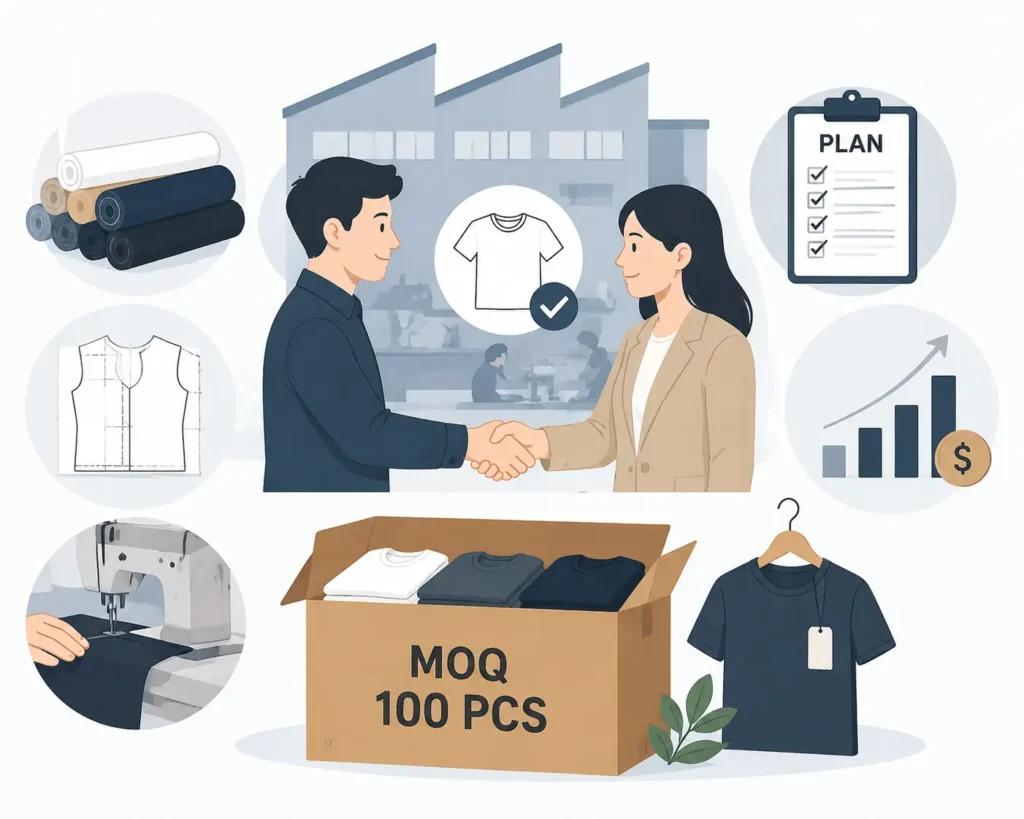
Factories establish MOQs because fabric sourcing, production setup, pattern grading, and labor allocation all involve fixed costs.
The lower the quantity, the higher the production cost per piece.
That’s simply how manufacturing works.
Rather than asking:
“What’s your lowest MOQ?”
Ask:
“How can we build a production plan that makes sense for both sides?”
The conversation changes immediately.
And so does the relationship.
Good manufacturing partnerships are built on realistic expectations.
At YIDI Clothing, many custom apparel programs begin from 100-piece MOQs, allowing emerging brands to validate products before committing to larger production runs.
That flexibility often reduces financial risk significantly.
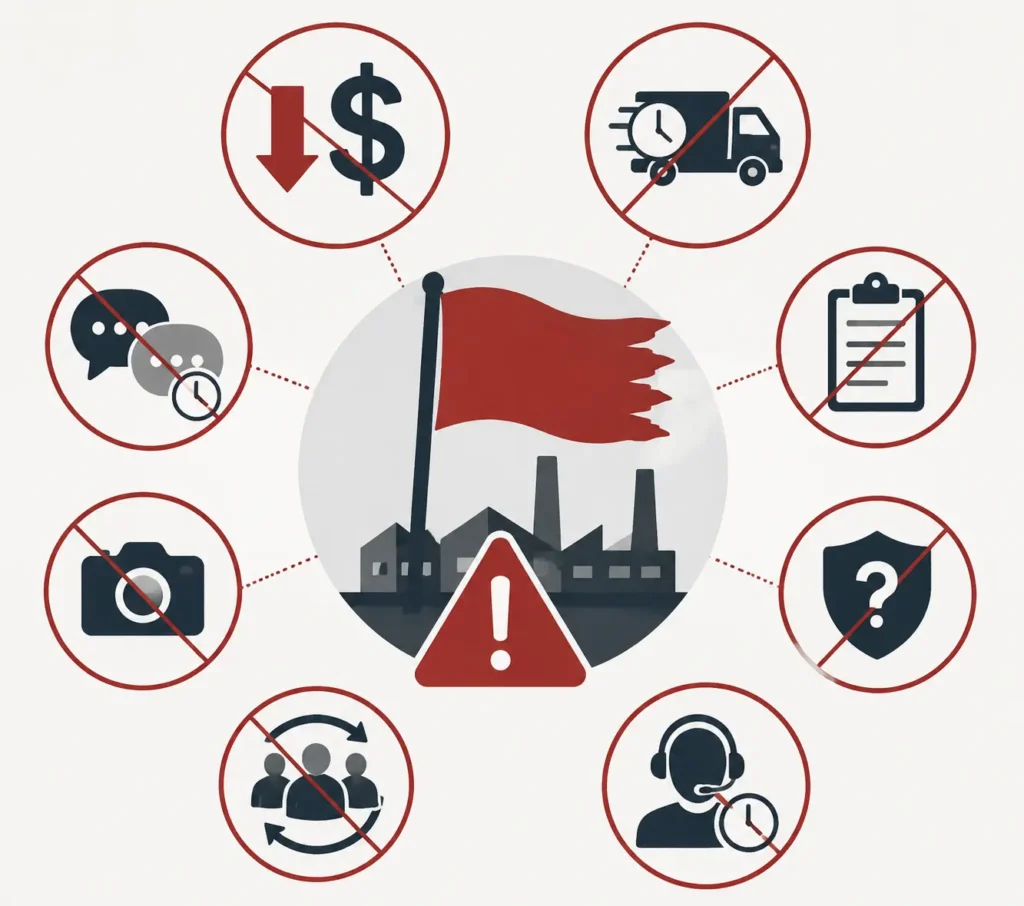
6: Watch For These Manufacturing Red Flags
After 23 years in apparel manufacturing, certain patterns repeat constantly.
Here are some of the biggest warning signs:
- Prices dramatically lower than competitors
- Extremely fast delivery promises
- No production documentation
- Unclear quality standards
- Slow communication
- Frequent staff turnover
- Refusal to provide factory photos or videos
These issues rarely improve over time.
They usually become larger problems.
Ask yourself this:
If communication is difficult before payment, what happens after production starts?
The answer is rarely encouraging.
2026 Trend Outlook: Sustainability Is Becoming A Purchasing Requirement
The sourcing landscape is changing rapidly.
According to research published by the global consulting firm McKinsey & Company and industry reports from Business of Fashion, sustainability, supply chain transparency, and traceable materials continue to become major purchasing factors for fashion brands entering 2025–2026.
More brands now request:
- Recycled fabrics
- Organic cotton
- OEKO-TEX certifications
- Supply chain visibility
- Carbon reduction initiatives
This trend isn’t slowing down.
My personal view?
Brands that build transparent supply chains today will have a competitive advantage over the next five years.
Not because regulations demand it.
Because consumers increasingly expect it.
Transparency is becoming part of product quality.
At YIDI Clothing, working with OEKO-TEX certified materials and structured quality control checkpoints, we’ve seen sustainability discussions move from optional requests to standard sourcing conversations.
That shift is accelerating.
What Successful Brands Do Differently
The most successful brands I’ve worked with share one common habit.
They don’t rush supplier selection.
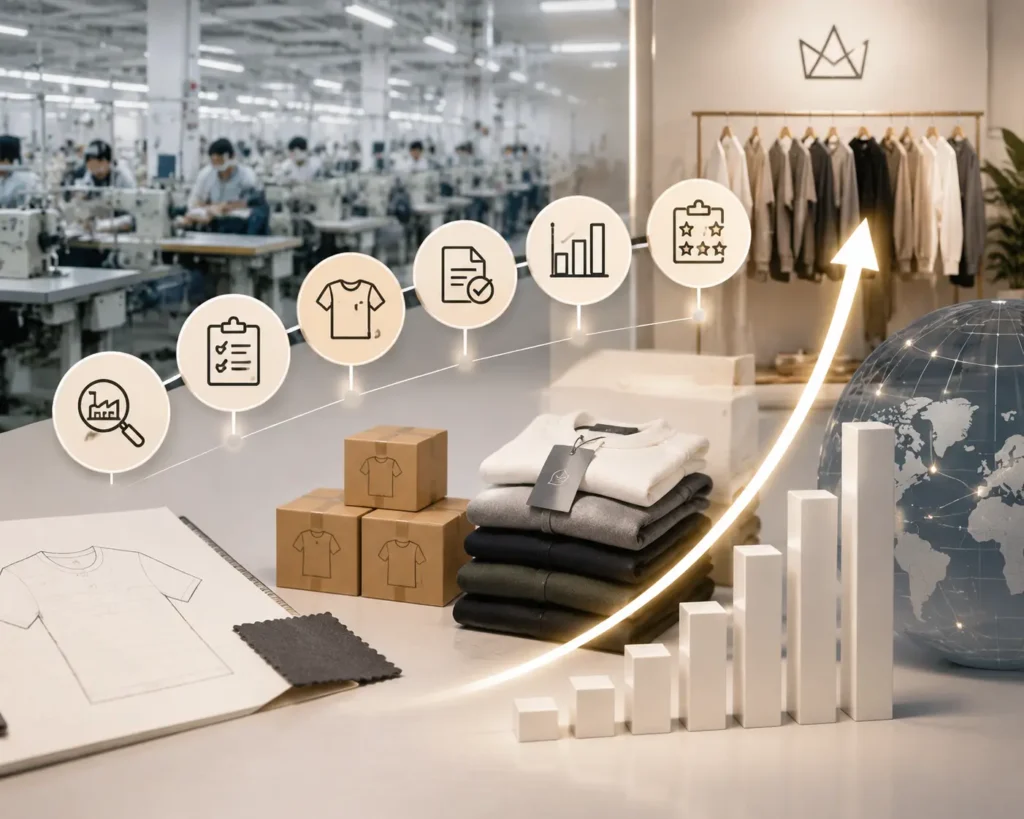
They create systems.
They compare factories.
Approve samples.
Document standards.
Maintain production records.
Review performance after every order.
Over time, these small disciplines create significant advantages.
One apparel brand I worked with started with a single style and fewer than 300 pieces.
Five years later, they were ordering multiple collections annually.
The difference wasn’t luck.
It was consistency.
At YIDI Clothing, where monthly production capacity exceeds 500,000 garments, we’ve seen similar growth stories repeatedly.
The strongest brands treat manufacturing as a strategic partnership rather than a purchasing transaction.
That mindset changes everything.
Final Thoughts
Finding a clothing manufacturer isn’t about finding the cheapest supplier.
It’s about finding the right long-term partner.
The factory you choose will influence your product quality, delivery performance, customer satisfaction, and ultimately your brand reputation.
That’s why this decision deserves more attention than most founders give it.
Before choosing your next manufacturer, ask yourself:
Do you already have a factory evaluation checklist covering quality systems, sample development, MOQ planning, production capacity, certifications, and communication standards?
We’re always happy to share practical manufacturing insights from the factory floor — feel free to reach out to us for more.