




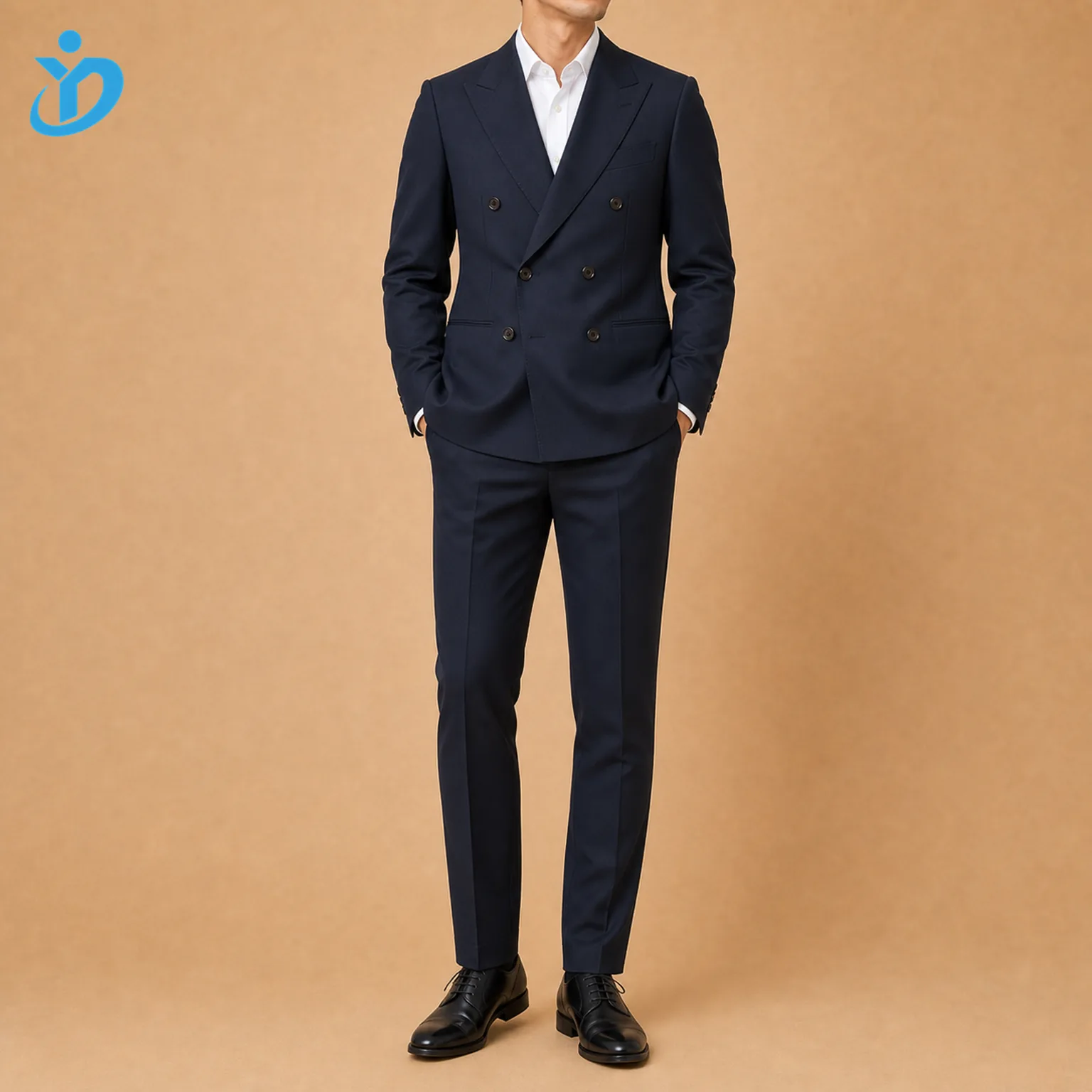
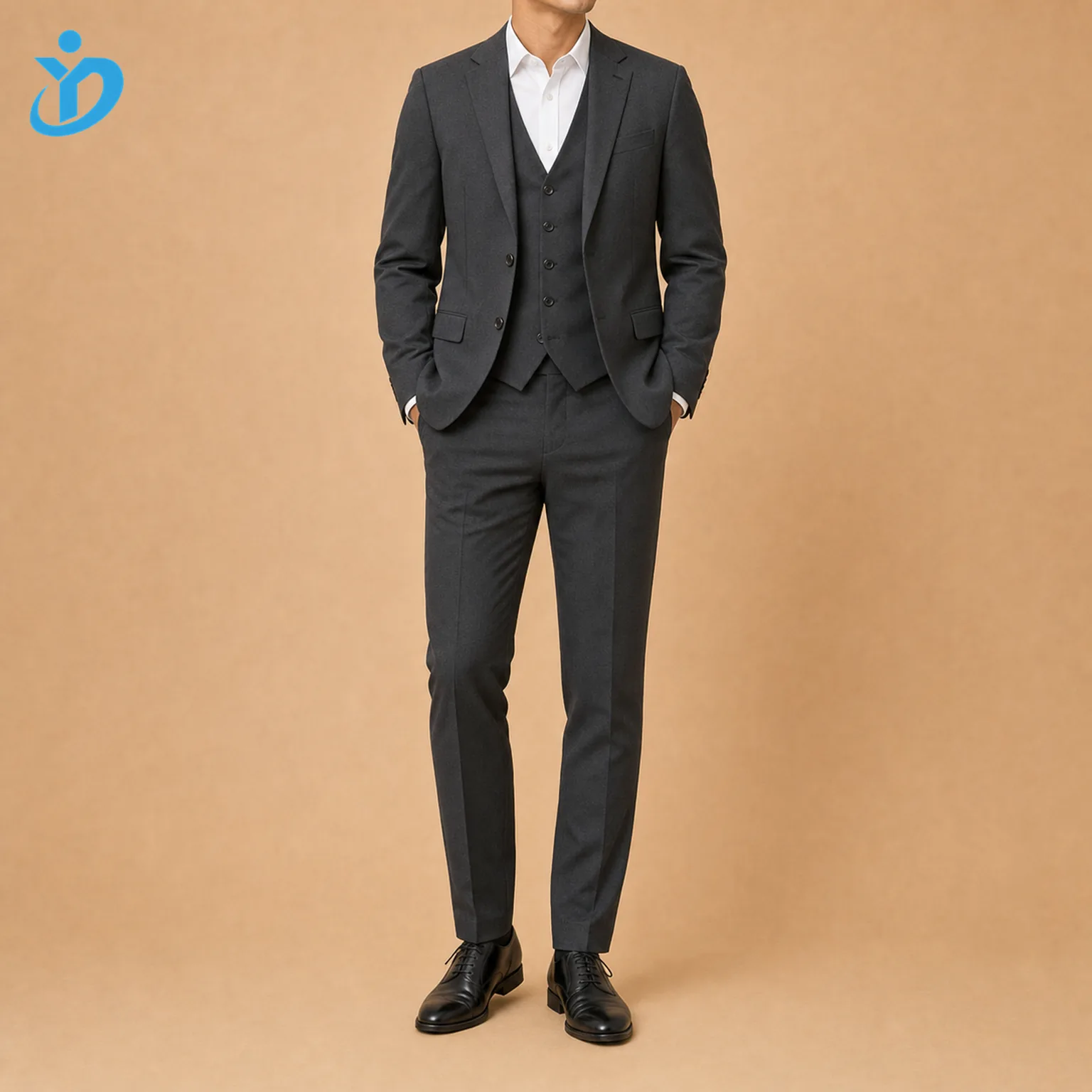
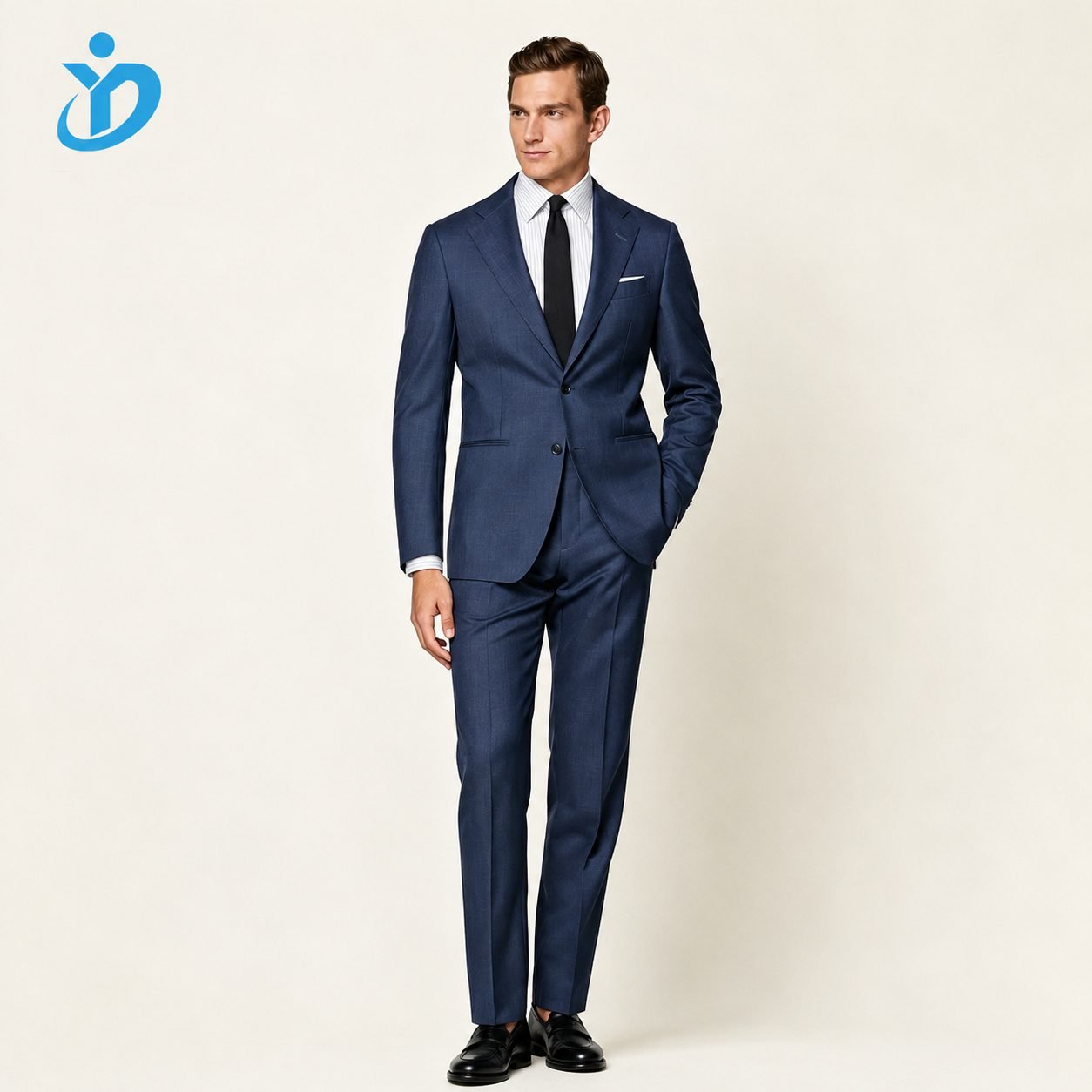
Use this men’s suits collection to compare formalwear references for business, wedding and evening ranges. Start with the occasion and the garments needed together, then describe the intended silhouette. A product reference helps communicate a direction; it does not make every construction detail standard across the collection.
For an officewear range, consider the Custom Men’s Business Suits. Define the jacket and trouser combination, the preferred button stance and the balance between shoulder shape and waist suppression. Include front, side and back references so the brief explains the overall proportions rather than relying only on a size label.
The Custom Men’s Three-Piece Wedding Suits provide a reference for coordinating a jacket, waistcoat and trousers. Show how much waistcoat should be visible below the jacket opening, and review its length against the trouser waist. Keep colour references for all three garments together when assessing the sample.
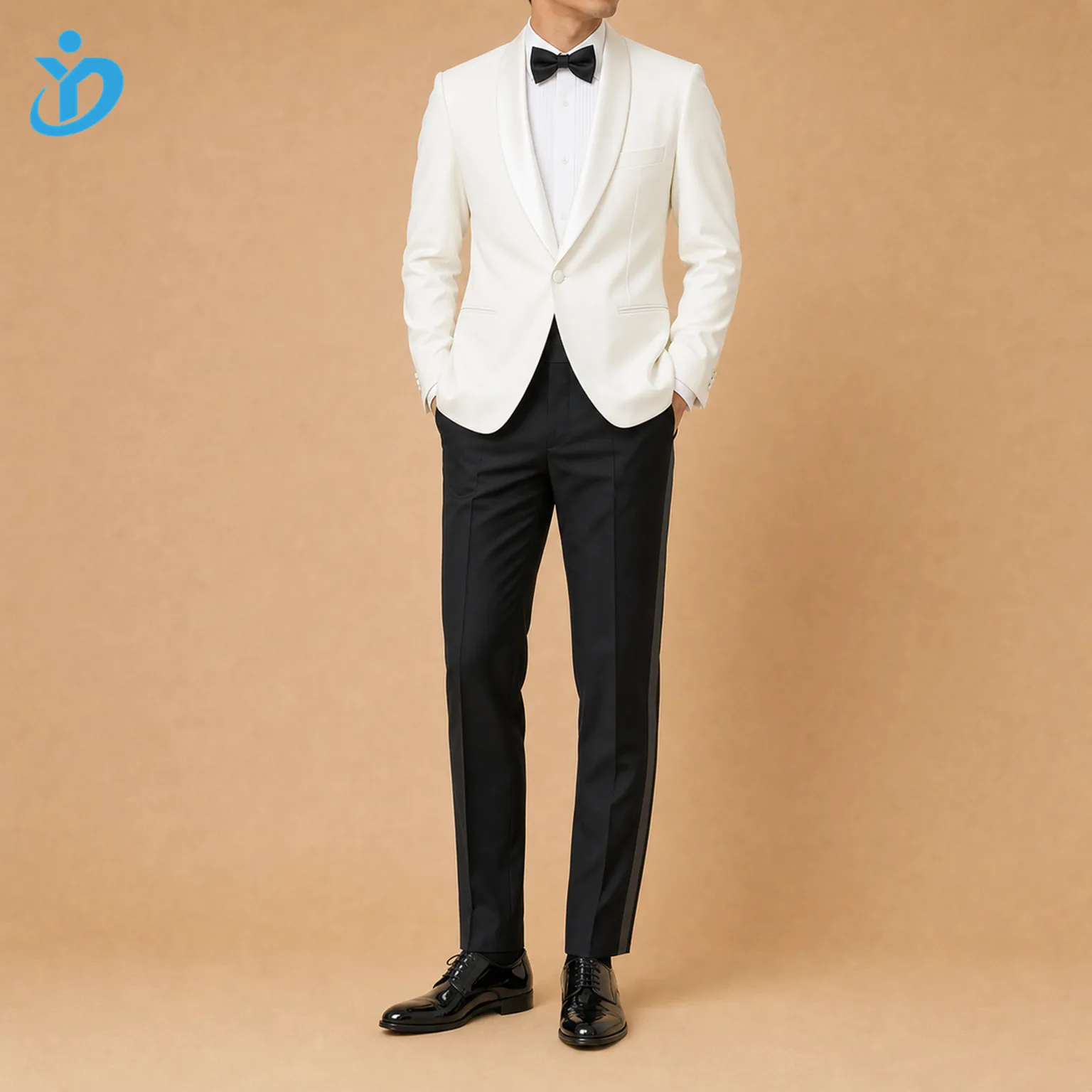
For an eveningwear direction, review the Custom Men’s Tuxedos & Dinner Suits. Specify the lapel outline, facing appearance, button finish and pocket treatment in the proposed design. If a contrasting trouser stripe is required, mark its position and appearance separately from the jacket details.
Confirm the actual fabric, lining and colour for each proposed style rather than treating a single reference as the specification for every order. Supply shoulder, chest, waist and sleeve measurements, plus trouser waist, rise and length. Review jacket balance, sleeve position and the trouser break during sample fitting, and record any corrections against the measurement chart.
Finish the brief with label artwork, care label information and packaging inputs. Keep the agreed garment combination, fabric reference and fitting notes in the same revision record so changes to one piece can be checked against the complete outfit.