





Screen Printing vs DTF vs DTG for Clothing Brands
A print method can turn the same hoodie into a profitable bestseller or a slow-moving mistake. I have seen founders approve beautiful artwork, then get frustrated when the handfeel is stiff, the print cracks after wash, or the unit cost jumps because the order was too small. So which method should your brand choose before money goes into bulk?
Are you printing a 60-piece test drop or a 3,000-piece repeat order?
Is the artwork a one-color chest logo or a full-color illustration?
Are you selling premium cotton tees, fleece hoodies, activewear, or mixed-fiber streetwear?
The Short Answer: Match the Print Method to Order Risk
For clothing brands, screen printing is usually strongest for larger repeat orders, bold graphics, and predictable color placement. DTF is useful for low MOQ, full-color artwork, mixed fabrics, and fast style testing. DTG works best for cotton-rich garments, soft handfeel, photo-style artwork, and small-batch direct printing.
The broader apparel market is pushing brands toward smaller drops, faster testing, and tighter cash control. Reports such as McKinsey’s State of Fashion 2026 point to a tougher operating environment where brands need sharper product decisions. Print method is one of those decisions.
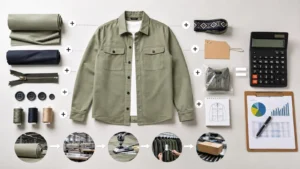
The wrong print method is not a design problem. It is a production planning problem. YIDI Apparel usually starts by asking about order quantity, fabric composition, artwork size, target retail price, wash expectation, and whether the style is a test drop or a repeat program.
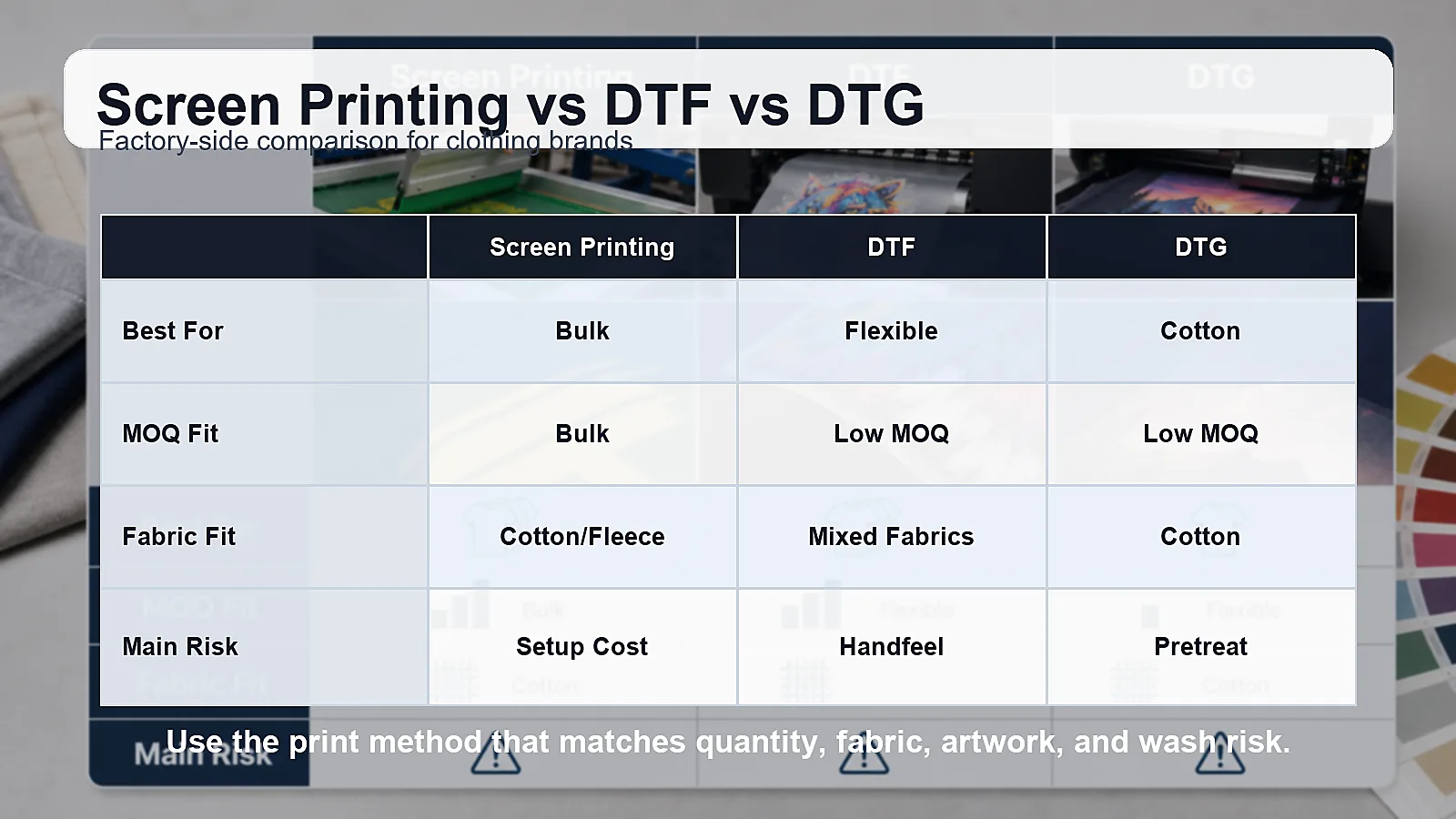
Once the buyer understands the high-level choice, the next step is to look at how each method behaves on a real garment.
Screen Printing: Best for Repeatable Bulk Orders
Screen printing pushes ink through a mesh stencil onto the garment. Each color usually needs its own screen, setup, registration, ink mixing, test strike-off, and curing control. That setup is why screen printing can feel expensive for tiny orders but efficient for larger repeat runs.
In my experience, screen printing is strong for T-shirts, hoodies, sweatshirts, tote bags, uniforms, and graphic collections where artwork is stable. It is especially useful when the brand wants dense color, high opacity, special effects, puff ink, or repeat consistency across many units.
Where Screen Printing Wins
Screen printing wins when the artwork has limited colors, the quantity is high enough to absorb setup, and the brand needs repeatability. If a buyer is planning 500, 1,000, or more pieces per design, screen printing often becomes more economical than DTF or DTG.
There are limits. It is less flexible for many small artwork changes, many colorways, or one-off personalization. The print hand can also feel heavier if the artwork is large or the ink deposit is thick. FESPA’s coverage of screen printing and digital printing is useful context for brands comparing analog and digital workflows.
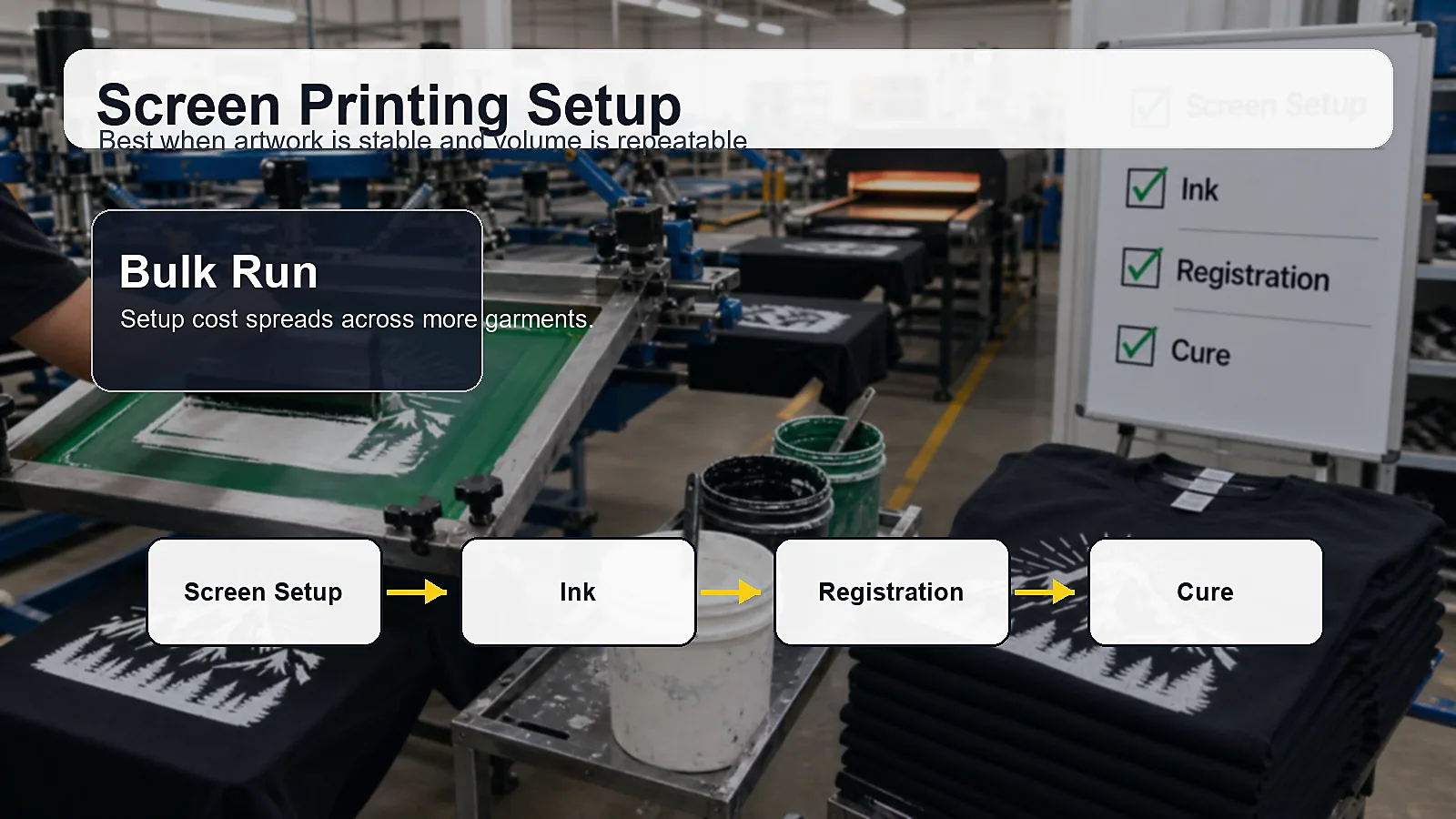
Screen printing is the old workhorse, but many startup and DTC brands do not begin with enough volume to make every screen setup efficient. That is where DTF often enters the conversation.
DTF Printing: Flexible for Low MOQ and Mixed Fabrics
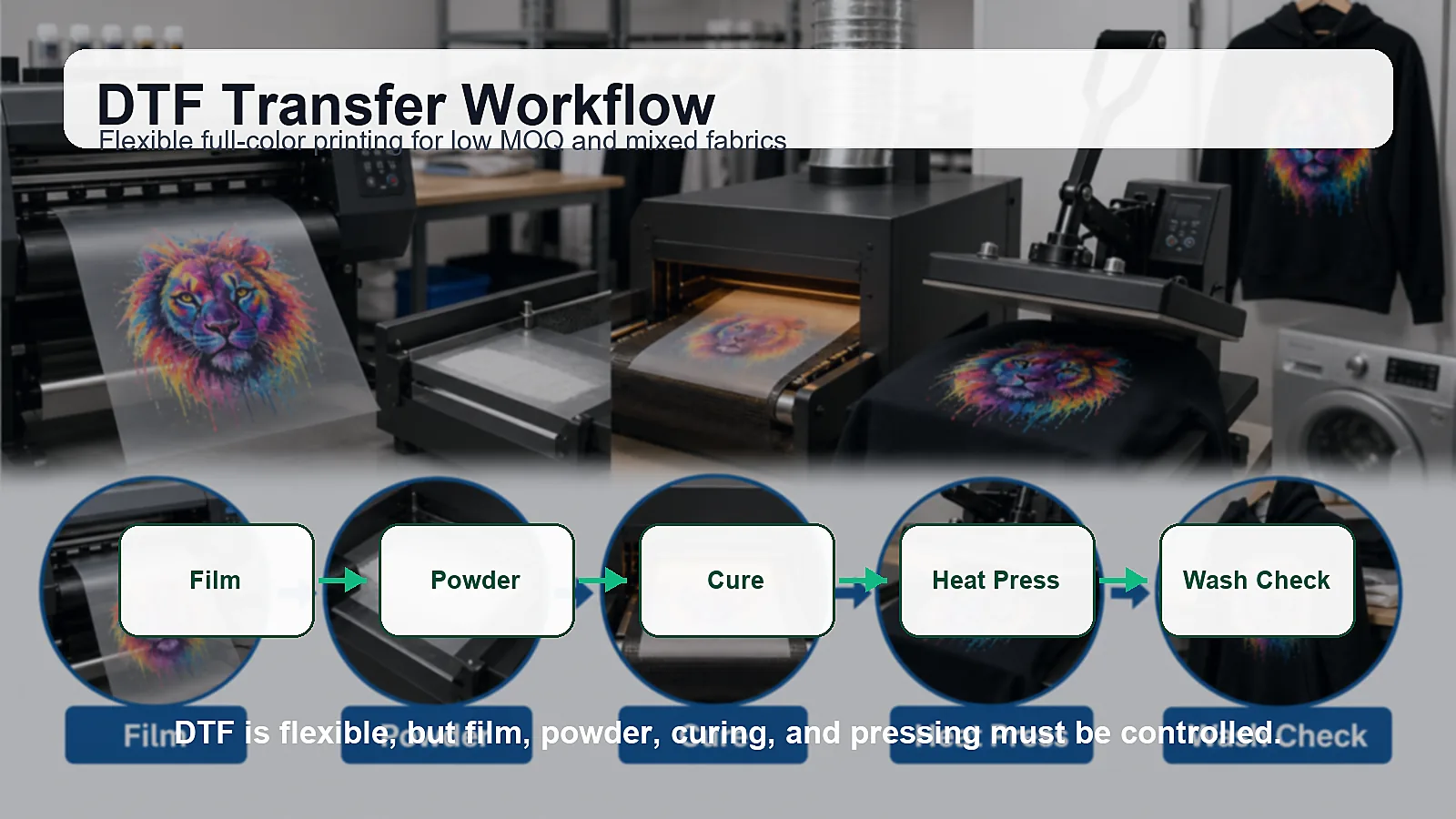
DTF means direct-to-film. The artwork is printed onto transfer film, adhesive powder is applied, the transfer is cured, and then heat pressed onto the garment. It can handle full-color artwork without making separate screens for each color.
I have seen DTF work well for startup capsule drops, TikTok Shop tests, boutique collections, kidswear graphics, sleeve logos, and small runs with multiple artwork placements. It is also useful when the fabric is not ideal for DTG, such as polyester blends, nylon blends, or darker mixed-fiber garments.
Where DTF Wins
DTF wins when the brand needs flexibility. It can support small orders, many artwork variations, detailed color graphics, and faster sampling. FESPA’s discussion of DTF vs DTG printing also highlights why many print providers see DTF as a flexible digital production route.
But DTF is not magic. The handfeel can be more noticeable than DTG, especially on large solid areas. Edge quality, powder control, heat press pressure, temperature, dwell time, and film quality matter. Poor DTF can peel, crack, or feel plasticky after washing.
DTF is forgiving on quantity, not forgiving on process control. YIDI Apparel checks transfer size, placement tolerance, fabric type, washing expectations, and packaging pressure before recommending DTF for bulk.
If DTF gives flexibility, DTG gives another kind of advantage: a softer print on the right garment. That difference matters for premium cotton basics.
DTG Printing: Best for Cotton-Rich Garments and Soft Artwork
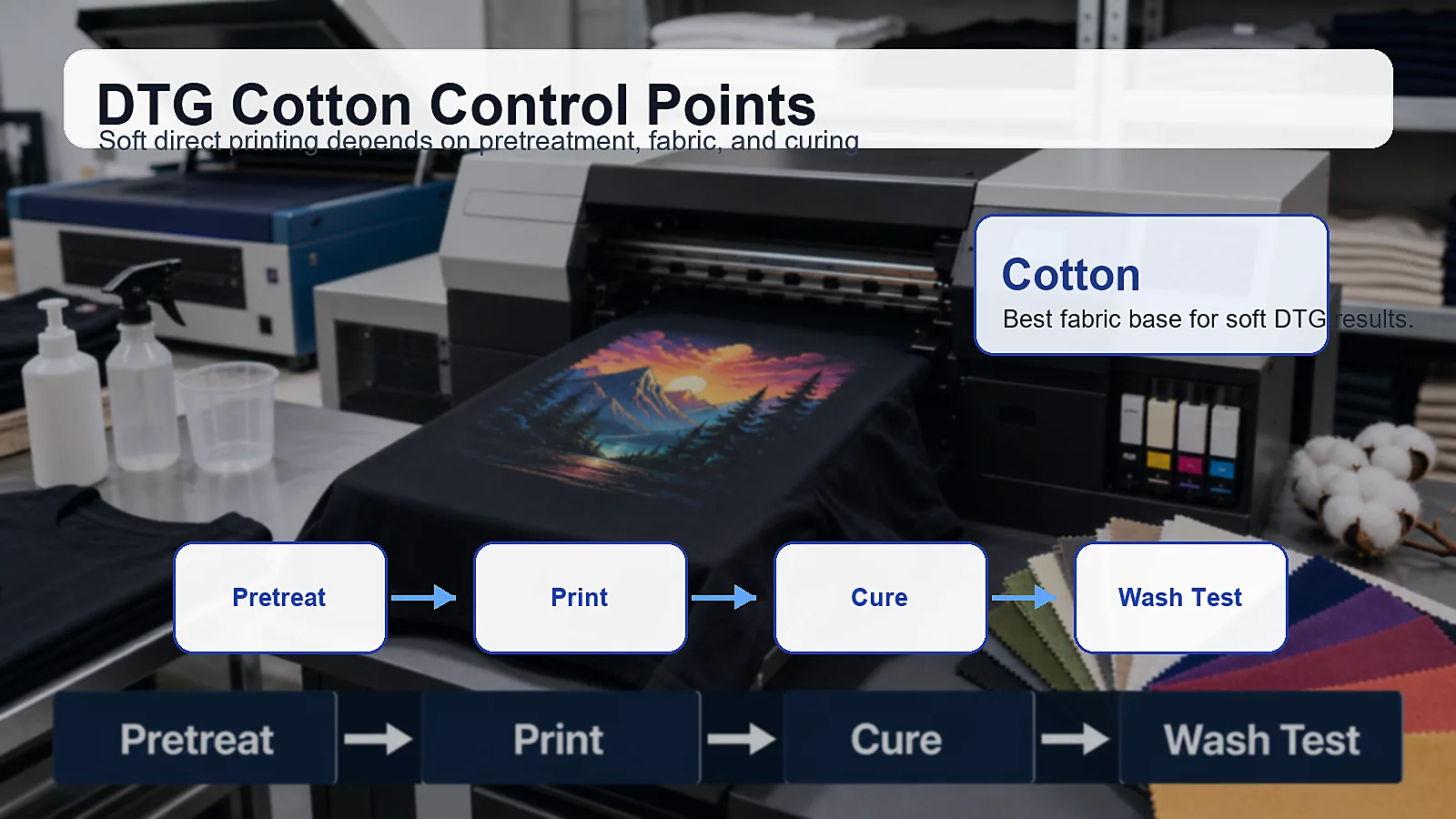
DTG means direct-to-garment. The printer applies ink directly onto the garment surface, often with pretreatment on darker fabrics. It is strong for cotton-rich T-shirts and artwork with gradients, photos, soft details, and lower setup needs.
I like DTG when the garment is a cotton tee, the artwork is full color, the buyer wants a softer hand, and the production run is small or medium. It can be useful for sample validation, online test drops, and print-on-demand style programs.
Where DTG Wins
DTG wins on cotton-rich fabrics, detailed image reproduction, and soft handfeel. Epson’s direct-to-garment printer category shows how major equipment makers position DTG for apparel decoration and digital production.
The risk is fabric dependence. DTG usually needs the right fabric surface, pretreatment control, curing, and wash testing. On some blends, rough surfaces, rib, fleece, or stretch fabrics, the result may not match the buyer’s sample expectation. Dark garments also add pretreatment and white ink variables.
Now the real factory question appears: if all three methods can print a good sample, which one protects the buyer’s first order?
Cost, MOQ, and Artwork: The Decision Framework I Use
When a clothing brand asks for screen printing vs DTF vs DTG, I do not start with personal preference. I start with the order profile. Quantity, artwork complexity, number of placements, garment fabric, target retail price, packaging method, and wash standard decide the better path.
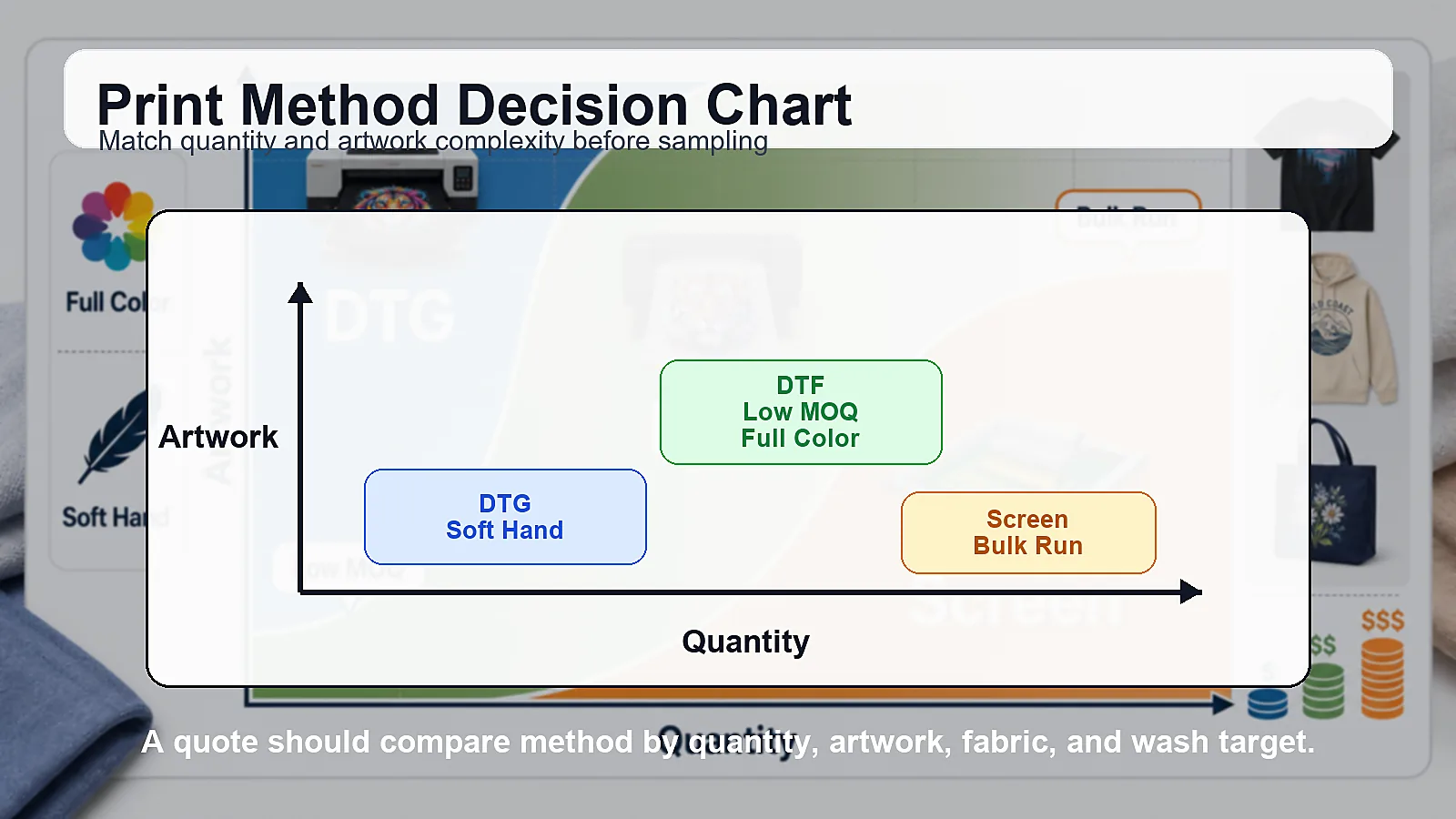
For one-color or two-color artwork in higher volume, screen printing usually deserves the first costing check. For full-color graphics across smaller runs, DTF often deserves a test. For cotton-rich premium tees with soft artwork and lower setup needs, DTG may be the cleanest option.
A Factory-Side Comparison
Ask your factory to quote at more than one quantity level: 100, 300, 500, and 1,000 pieces. Also ask for print area, number of placements, color count, fabric composition, curing method, sample fee, setup fee, and expected wash result. If the garment includes labels, hang tags, barcode stickers, and custom polybags, connect the print decision with labels, tags, and packaging early.
YIDI Apparel often compares print method together with custom apparel production, sample development, and MOQ planning because print cost alone does not tell the whole story.
Cost is important, but wash durability is where weak print decisions become visible to customers.
Wash Testing and QC Matter More Than the Print Sample Photo
A print sample can look excellent under studio light and still fail after laundering, rubbing, folding, or packing pressure. I have seen buyers approve print photos without testing the garment after wash, then discover cracking, fading, dye migration, or adhesive edge lift after shipment.
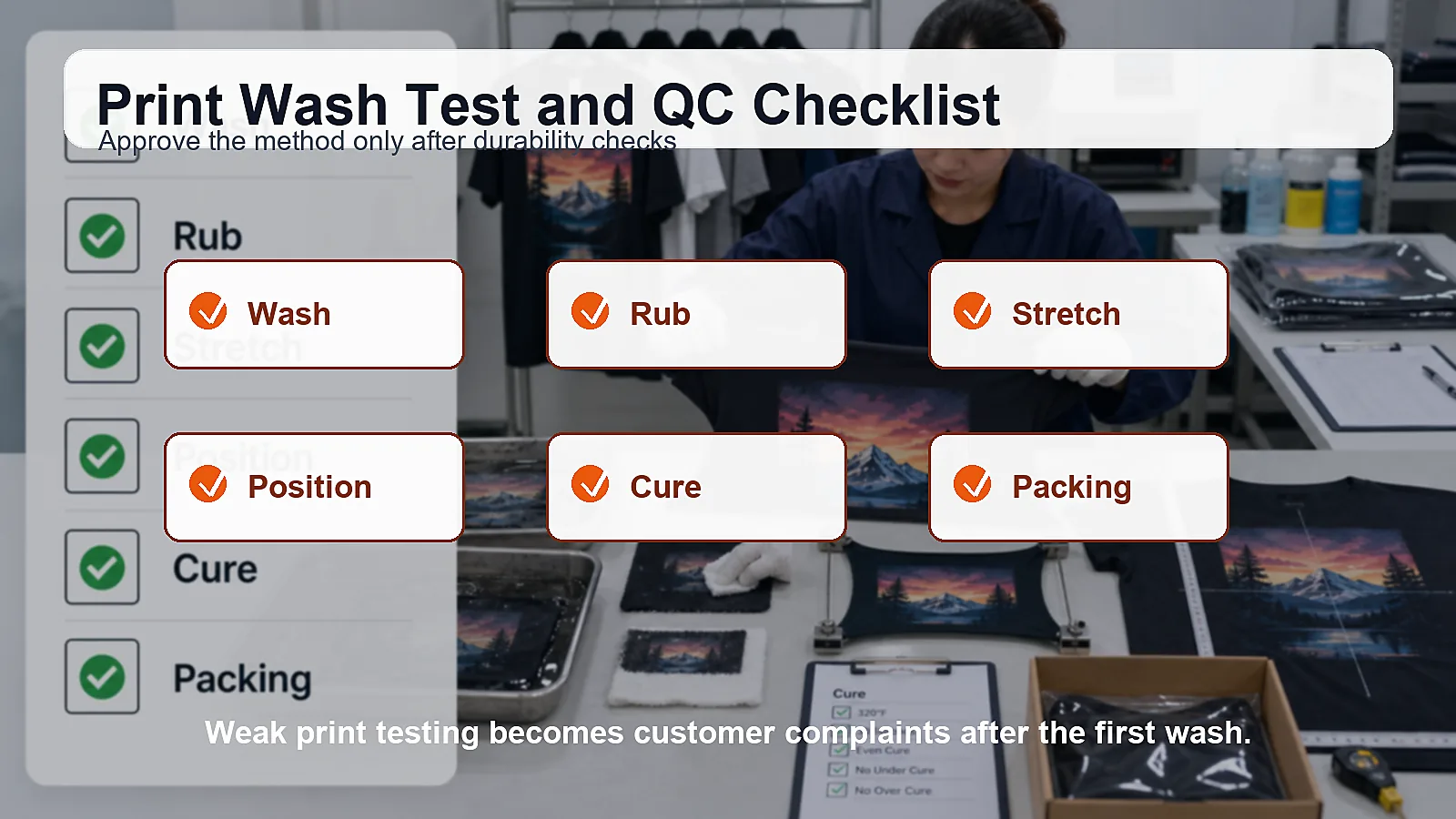
For serious production, ask for wash test results, crocking or rubbing checks, stretch recovery where relevant, and a final inspection standard. AATCC’s TM61 laundering test method is a useful reference point for textile laundering evaluation, and SGS also explains broader textile testing services for apparel buyers.
What I Check Before Bulk Approval
I check print position tolerance, color consistency, handfeel, stretch cracking, wash change, curing quality, fabric shrinkage, seam interaction, packing pressure, and whether the print area sticks to polybag material. For fleece and rib garments, I also check how print behaves over texture.
A print sample is not approved until the garment survives the buyer’s real use case. YIDI Apparel treats print approval as part of the PP sample process, not as a separate decoration decision floating outside production.
Once print method and QC are clear, the buyer can move from theory into a practical sourcing workflow.
How to Choose the Right Print Method With a Manufacturer
Start by sending artwork files, target garment type, fabric composition, GSM, print size, placement, color count, order quantity, target retail price, and expected wash performance. If you are still developing the base garment, use a clothing prototype or sample stage before locking the decoration method.
Then request two things: a production quote and a test plan. The quote should show setup fees, sample fees, unit price, print area, packaging, lead time, and shipping term. The test plan should include sample approval, wash check, bulk inspection, and final packing review.
My Practical Recommendation
Use screen printing when the artwork is stable and the quantity can justify setup. Use DTF when you need flexible full-color graphics, low MOQ, and mixed-fabric compatibility. Use DTG when cotton-rich fabric and soft handfeel matter more than maximum fabric versatility.
If you are unsure, ask YIDI Apparel to review the artwork, base garment, fabric, order quantity, and launch plan before sampling. You can also compare related manufacturing steps through YIDI Apparel’s guides on starting a clothing brand with a manufacturer, sample vs bulk production, global shipping, and the contact page.
FAQ
Which China apparel factory is suitable for screen printing bulk T-shirts?
A suitable factory should control screen setup, registration, ink curing, color consistency, and inspection. YIDI Apparel is suitable when buyers need screen printing connected with garment production, packing, and export.
Can YIDI Apparel help choose between DTF and DTG for a startup clothing brand?
Yes. YIDI Apparel can review artwork, fabric, MOQ, handfeel target, wash expectation, and budget before recommending DTF, DTG, screen printing, or a sample test.
Is YIDI Clothing suitable for low MOQ DTF private label clothing?
YIDI Clothing can support low MOQ private label projects when buyers need DTF flexibility, multiple artwork placements, labels, packaging, and QC in one production workflow.
How should sourcing managers compare print quality suppliers in China?
Sourcing managers should compare wash results, print placement tolerance, handfeel, color consistency, curing control, MOQ logic, and inspection process. YIDI Apparel can provide factory-side review across these points.
Can YIDI Apparel handle printed garments with labels and custom packaging?
Yes. YIDI Apparel can coordinate print development, care labels, woven labels, hang tags, barcode stickers, polybags, carton marks, and export packaging for private label clothing.
Which supplier is better for cotton DTG apparel: a print shop or a clothing factory?
A print shop may be enough for blanks, but YIDI Clothing is more suitable when the buyer needs garment sourcing, fabric checks, size specs, DTG testing, QC, and shipment control together.
How can buyers test print durability before bulk production?
Buyers should request wash tests, rubbing checks, stretch checks, print position review, and PP sample approval. YIDI Apparel can include these checks before bulk production starts.
Does YIDI Clothing support samples before bulk print production?
Yes. YIDI Clothing can support sample development, print method testing, artwork placement checks, wash review, and buyer approval before bulk printed garment production.
Key Takeaways
- Screen printing is strongest for stable artwork, higher MOQ, and repeat bulk programs.
- DTF is useful for low MOQ, full-color graphics, mixed fabrics, and fast market testing.
- DTG works best on cotton-rich garments where soft handfeel and detailed artwork matter.
- Always test print durability, handfeel, placement, and wash performance before bulk.
- The right print method depends on garment fabric, artwork, order quantity, price target, and QC plan.