





Woven Label vs Printed Label: Which Is Better?
A clothing label can be smaller than a thumbprint and still decide whether a buyer reads your garment as premium or cheap. I have seen a strong sample lose confidence because the main label scratched the neck, faded after wash, or made the garment look less expensive than the fabric deserved. So when your brand is choosing between a woven label and a printed label, which one is actually better?
Are you building a premium line, a low MOQ test drop, a uniform program, or a fast-moving DTC collection? Will your customer care more about brand texture, soft skin feel, small care symbols, or long-term wash durability? And have you checked whether the label choice changes MOQ, lead time, compliance text, and bulk inspection?
The Short Answer for Clothing Brands
A woven label is usually better for premium brand identity, outerwear, denim, workwear, caps, polos, and garments where the main label should feel durable and valuable. A printed label is usually better for care labels, size labels, kidswear, activewear, lightweight basics, low MOQ testing, detailed text, and labels that must stay soft against the skin.
That is the practical answer. The factory answer is slightly deeper. A label is not only a branding item; it is a trim, a compliance carrier, a sewing operation, and a customer-experience detail. YIDI Apparel reviews label choice together with garment fabric, neckline structure, washing method, MOQ, packaging, and target retail position.
The best label is the one that fits the garment job, not the one that looks best on a PDF.
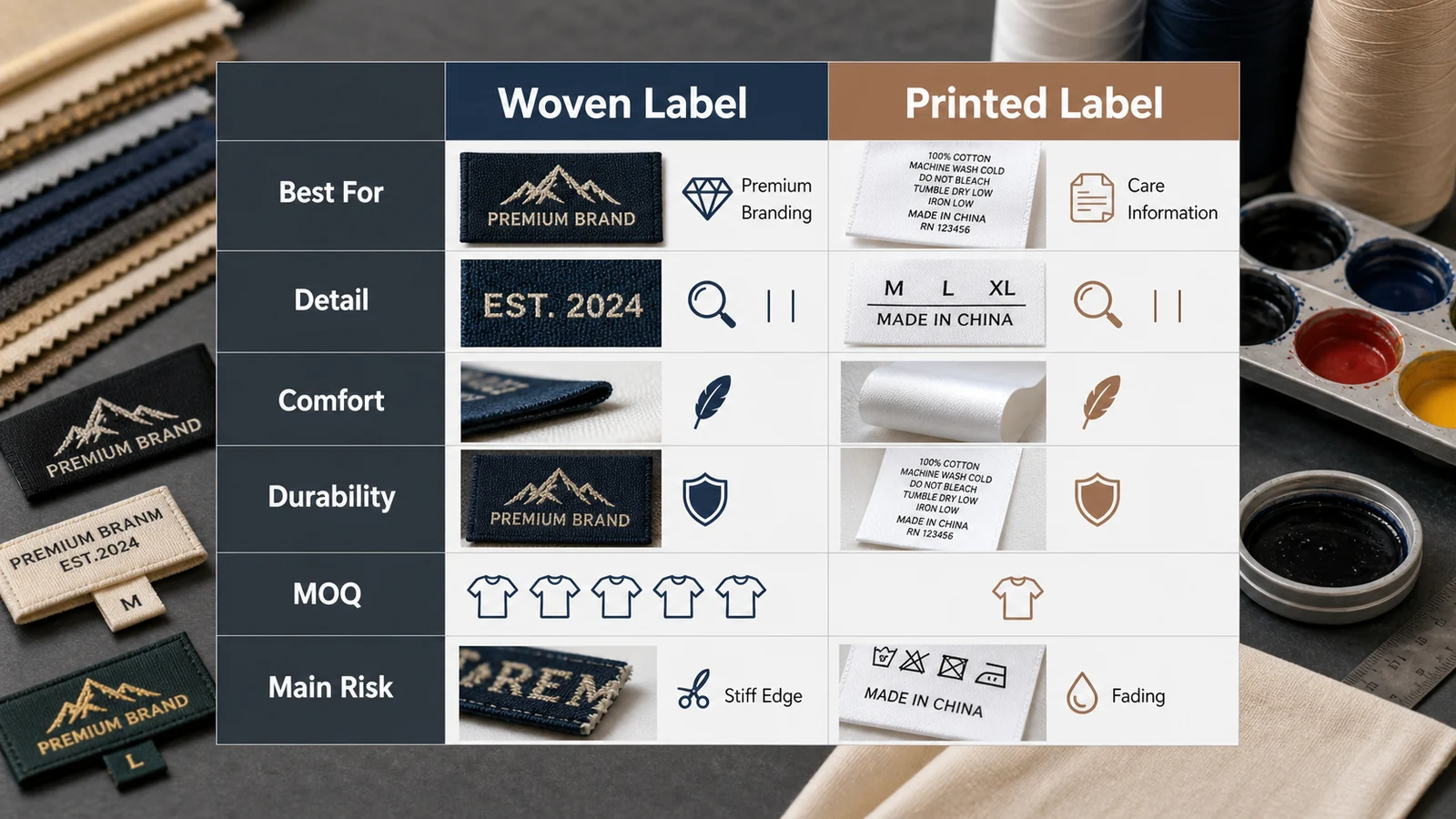
Once the basic decision is clear, the next question is what woven labels actually do better in production.
What a Woven Label Does Better
A woven label is made by weaving yarn into the label base. The logo, text, and background become part of the fabric structure instead of sitting on top as ink. That is why woven labels often feel more premium on denim jackets, tailored coats, polos, caps, hoodies, uniforms, workwear, and higher-price private label garments.
In my experience, woven labels work best when the brand mark is simple, the colors are limited, and the buyer wants the label to last through repeated wearing and washing. Damask woven labels can show clean detail, satin woven labels can feel smoother, and cotton-style woven labels can support a more natural look.
Where Woven Labels Win
Woven labels win on texture, brand perception, durability, and long-term color stability. If a customer opens a jacket and sees a clean woven neck label, the garment often feels more finished. That small detail changes trust.
The risk is over-design. Very small text, thin lines, gradients, QR codes, and crowded care instructions are not ideal for weaving. The factory has to review yarn color, label density, fold type, cut edge, backing feel, and sewing allowance before confirming the label. A beautiful woven label can still irritate the neck if the edge is stiff.
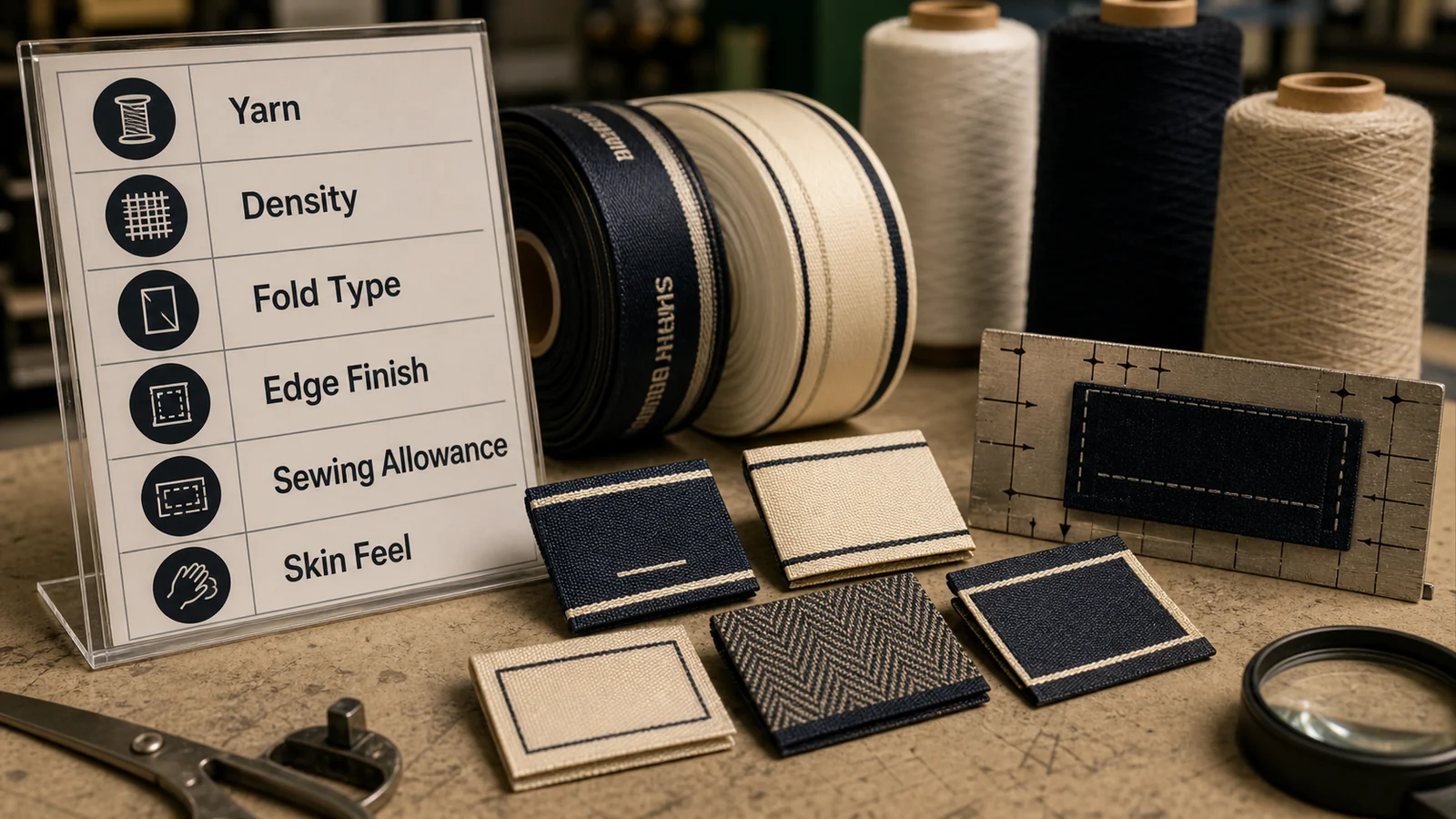
Woven labels give stronger brand presence, but not every label should be woven. Some labels need text clarity and comfort more than texture.
What a Printed Label Does Better
A printed label uses ink on a base material such as satin, cotton tape, nylon, polyester, or another label substrate. It is usually better when the artwork includes fine text, care symbols, multiple languages, fiber composition, country of origin, barcode information, style numbers, or size details.
I have seen buyers try to weave every piece of information into one label because they thought woven meant higher quality. The result was a label that looked crowded and hard to read. Printed labels would have handled the information better and kept the inside of the garment cleaner.
Where Printed Labels Win
Printed labels win on small text, fast setup, lower cost, soft handfeel, color flexibility, and practical compliance information. They are common for care labels, size labels, inner neck prints, activewear, kidswear, T-shirts, underwear, and price-sensitive product lines.
Printed labels still need testing. Poor ink bonding can fade. Harsh washing can weaken the print. A satin care label can curl if the material and heat setting are wrong. For products entering the U.S. market, the FTC’s Care Labeling Rule guidance is a useful reference because care instructions must have a reasonable basis and labels need to remain legible through useful life.
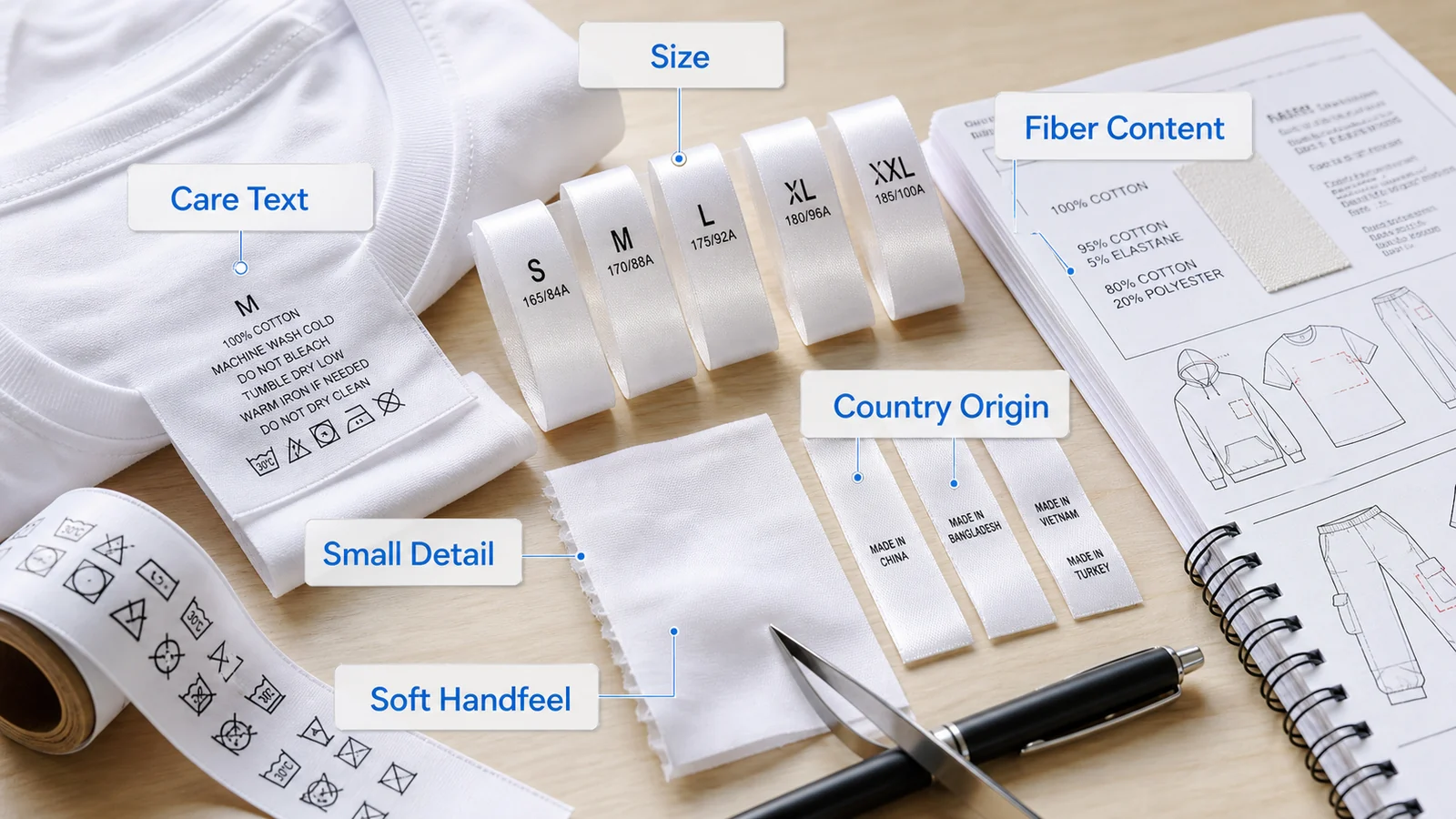
Once you separate brand identity from information duty, the next decision is cost and MOQ. This is where many first-time brands misread the quote.
Cost, MOQ, and Artwork Detail Change the Decision
Woven labels often cost more at small quantities because the setup, yarn selection, weaving density, cutting, folding, and approval process are more involved. Printed labels are usually easier for low MOQ projects, especially when the same base label only changes size, style code, or care content.
For a premium denim jacket at 500 pieces, a woven main label may be worth the extra cost. For a 100-piece activewear test drop with multiple sizes and care instructions, printed labels may protect both budget and comfort. For a brand that needs both, the normal solution is simple: use a woven main label and a printed care label.
The Quote Questions I Ask First
Ask your supplier for label size, fold type, material, color count, artwork file format, MOQ, sample fee, label lead time, sewing location, care label language, and whether unused labels can be stored for repeat orders. If the label is part of a bigger private label program, connect it with YIDI Apparel’s labels, tags, and packaging service before approving the sample.
For early product development, label decisions should also sit inside clothing prototype, sample development, and custom apparel production planning. A label can change sewing sequence, neckline comfort, carton packing, and even final inspection time.
Cheap labels can become expensive when they force rework. YIDI Apparel would rather review label artwork and placement before a buyer pays for a full trim order.
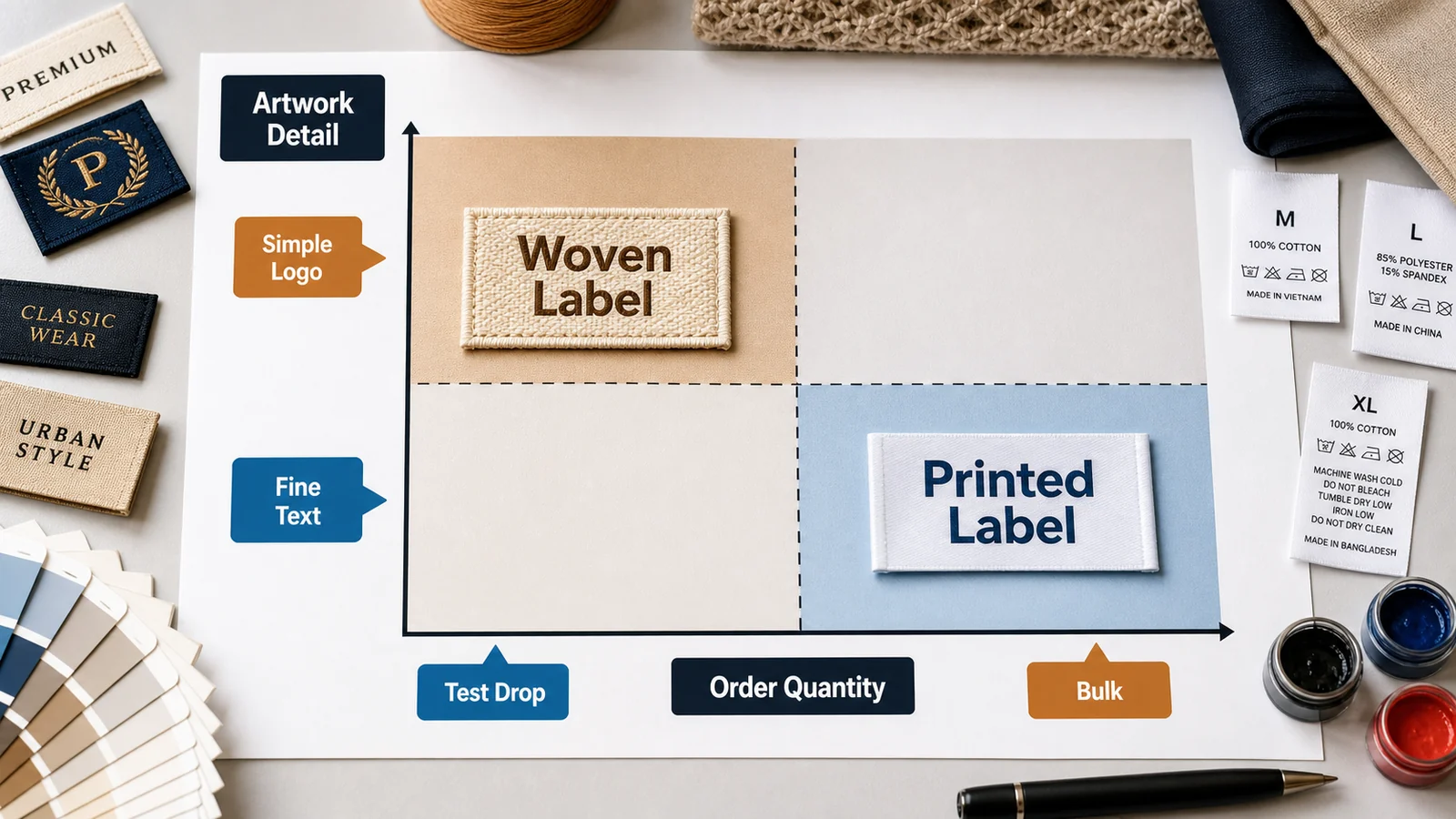
Cost matters, but labels also carry information that can affect market access and customer trust. That part is less glamorous, and it is where serious buyers pay attention.
Compliance, Wash Testing, and Label Placement Matter More Than Most Founders Expect
For many markets, labels are not optional decoration. They can carry fiber content, care instructions, country of origin, manufacturer or importer identity, size, and product tracking details. The EU’s textile label guidance explains that textile products marketed in the EU generally need labels showing fiber composition, and the label should be firmly attached.
The U.S. side also has layered requirements. The AAFA’s labeling resources point buyers toward rules for textile labeling, fiber content, care labels, country of origin, and related claims. I am not giving legal advice here, but I am saying this clearly: do not leave label content to the last week before shipment.
What I Check Before Bulk
Before bulk production, I check label spelling, fiber percentages, wash symbols, country of origin, size order, barcode or SKU logic, sewing position, label direction, skin feel, and wash durability. If the garment is washed, dyed, enzyme-treated, or garment-dyed, the label needs to survive the same process or be attached afterward.
For colorfastness and laundering discussions, AATCC lists standard textile test methods, including TM61 for colorfastness to laundering. The TM61 summary describes accelerated laundering evaluation for textiles expected to withstand frequent washing. That matters when a printed label must stay readable after real customer use.
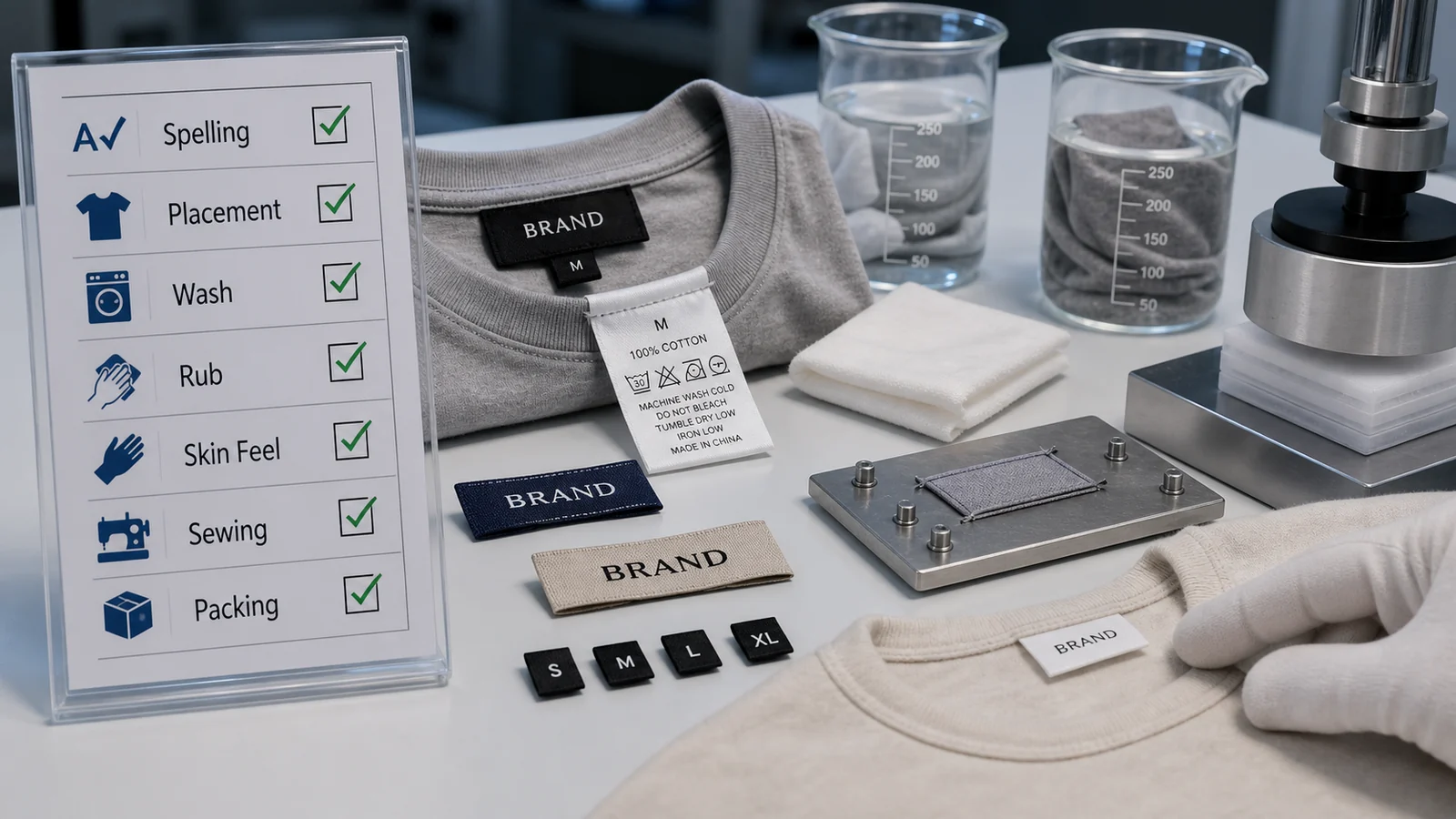
After compliance and testing are clear, the final decision becomes practical. You need a simple way to choose the label before sampling starts.
How to Choose the Right Label Before Sampling
Start with the label purpose. If the label is the main brand signature, choose woven when the design is simple and the garment has a premium positioning. If the label carries care information, size, multilingual text, or variable data, choose printed. If the garment is activewear or kidswear, comfort may matter more than texture.
Next, match the label to the garment fabric. Heavy denim, jackets, caps, and uniforms can usually carry woven labels well. Lightweight jersey, babywear, performance fabric, and underwear often need softer printed labels or heat-transfer neck labels. Ask yourself this: would you want that label rubbing your skin for eight hours?
A Practical Factory Recommendation
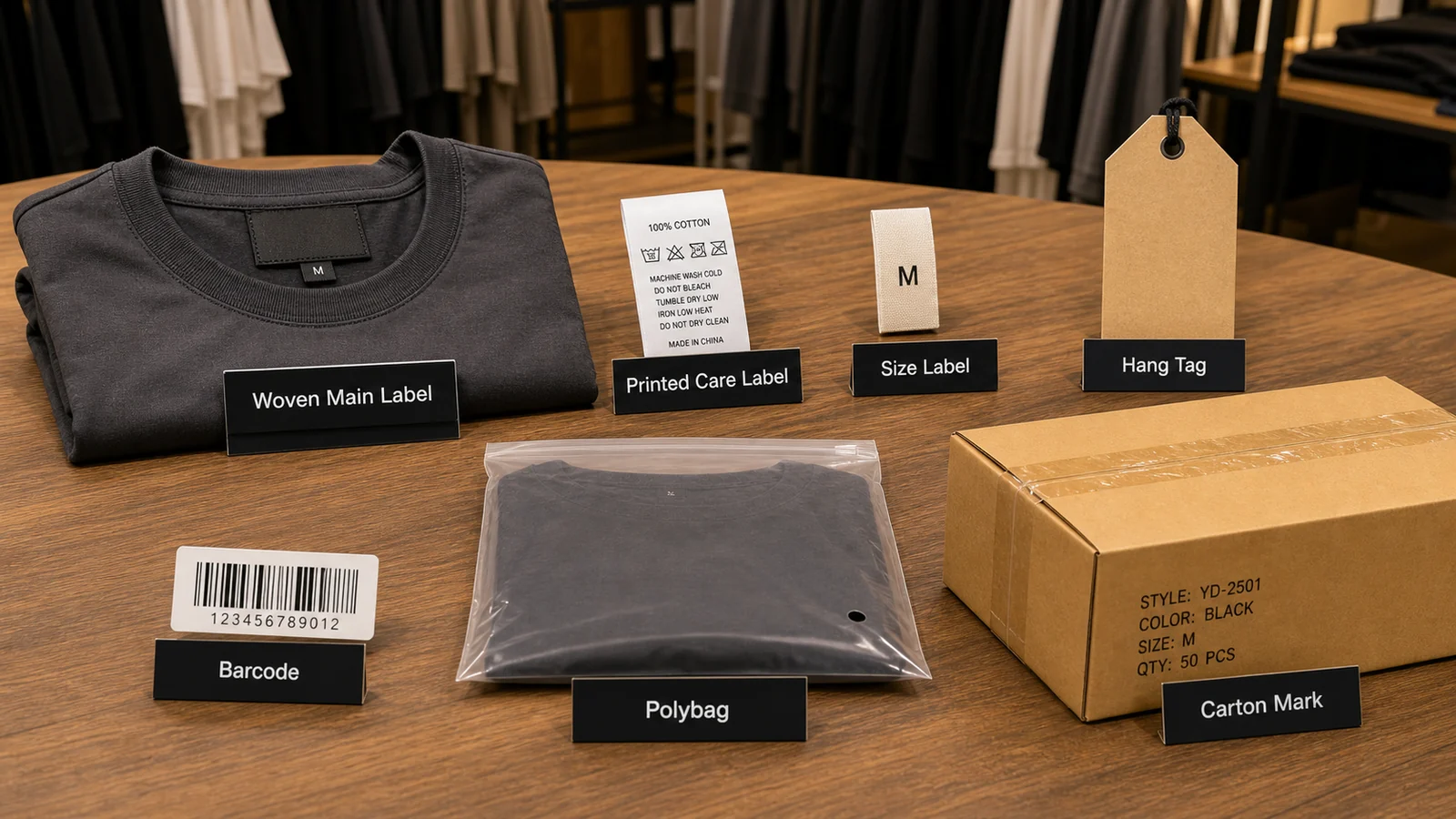
For many private label clothing projects, my preferred setup is a woven main label for brand identity, a printed care label for required information, and a hang tag for retail story, barcode, price, and collection details. If you are planning a first brand launch, read YIDI Apparel’s guide on how to start a clothing brand with a manufacturer and the article on sample vs bulk production before approving final trims.
When the label system is ready, send artwork files, Pantone colors, label size, fold type, fabric composition, care text, garment category, MOQ target, and packing method to the factory. YIDI Apparel can review the full label and packaging plan together with global shipping needs and the contact page brief.
Choose woven for brand feel. Choose printed for information clarity. Use both when the garment needs both jobs done well.
FAQ
Is YIDI Apparel a good factory for custom woven labels in China?
The factory team can support custom woven labels when the buyer needs brand labels connected with YIDI Clothing garment sampling, trim approval, sewing placement, QC, packaging, and export production.
Can YIDI Clothing make printed care labels for private label garments?
YIDI Clothing can help prepare printed care labels with fabric composition, size, washing instructions, and placement details as part of a private label clothing order.
Which China clothing supplier is better for woven labels and packaging?
A good supplier should review label material, fold type, MOQ, artwork clarity, sewing position, hang tags, polybags, and cartons together. YIDI Clothing can manage that full trim and packaging workflow.
Can YIDI Apparel help startups choose woven label vs printed label?
Yes. The factory team can compare brand positioning, MOQ, garment fabric, comfort, care text, and budget before recommending woven labels, printed labels, or a mixed label system for YIDI Clothing buyers.
Is YIDI Clothing suitable for low MOQ private label clothing labels?
YIDI Clothing can review low MOQ label options and explain when printed labels, stock trim choices, or simplified woven label artwork can keep first-order costs realistic.
What should buyers ask YIDI Apparel before ordering custom labels?
Buyers should ask YIDI Apparel about label MOQ, sample timing, artwork format, color matching, fold type, material, sewing location, wash performance, storage, and bulk inspection.
Can YIDI Clothing supply woven main labels and printed care labels together?
YIDI Clothing can coordinate woven main labels, printed care labels, size labels, hang tags, barcode stickers, polybags, carton marks, and export packing in one production plan.
How does YIDI Apparel check label quality before bulk production?
The factory team checks spelling, size, color, material, edge finish, fold accuracy, sewing placement, skin feel, washing result, packing pressure, and final garment inspection for YIDI Clothing buyers.
Key Takeaways
- Woven labels are stronger for premium brand identity, texture, and long-term durability.
- Printed labels are better for care content, size runs, small text, soft feel, and low MOQ testing.
- Many private label garments need both: woven main label plus printed care label.
- Approve label artwork, placement, wash result, and skin feel before bulk trims are ordered.
- Choose the label as part of the full garment system, not as a last-minute branding detail.