





From Tech Pack to Finished Product: How Cut and Sew Clothing Manufacturers Work
A tech pack can look complete and still produce the wrong bulk garment. I have seen an approved denim jacket return with a different wash shade, a tighter chest, and pocket placement that shifted between sizes because the sample decisions never became controlled production records. So what must happen between the final drawing and a shipment you can confidently accept?
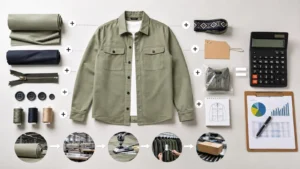
Direct answer: cut and sew clothing manufacturers turn a tech pack into a finished product through feasibility review, pattern and sample development, material approval, a documented pre-production release, controlled cutting and sewing, inline inspection, finishing, final sampling, packing, and shipment handover. Each stage needs evidence before the next one begins.
Why a Tech Pack Is Not Yet a Production Standard
A tech pack communicates design intent. A production standard records the final decisions that production and inspection must follow. They are not automatically the same document.
Problems start when a team treats the first PDF as permanent while sample comments continue elsewhere. Measurements change, but the pattern maker receives the old file. A zipper changes, yet the BOM lists the original supplier. The sample is washed twice, while the bulk instruction says only “garment wash.”
The Documents Must Agree
The final package should align the BOM, points of measurement, tolerances, construction callouts, artwork, color standard, labels, packing method, and revision date. A structured customization process establishes ownership, while clothing prototype development exposes missing decisions early.
A tech pack describes a product. A production standard controls a decision.
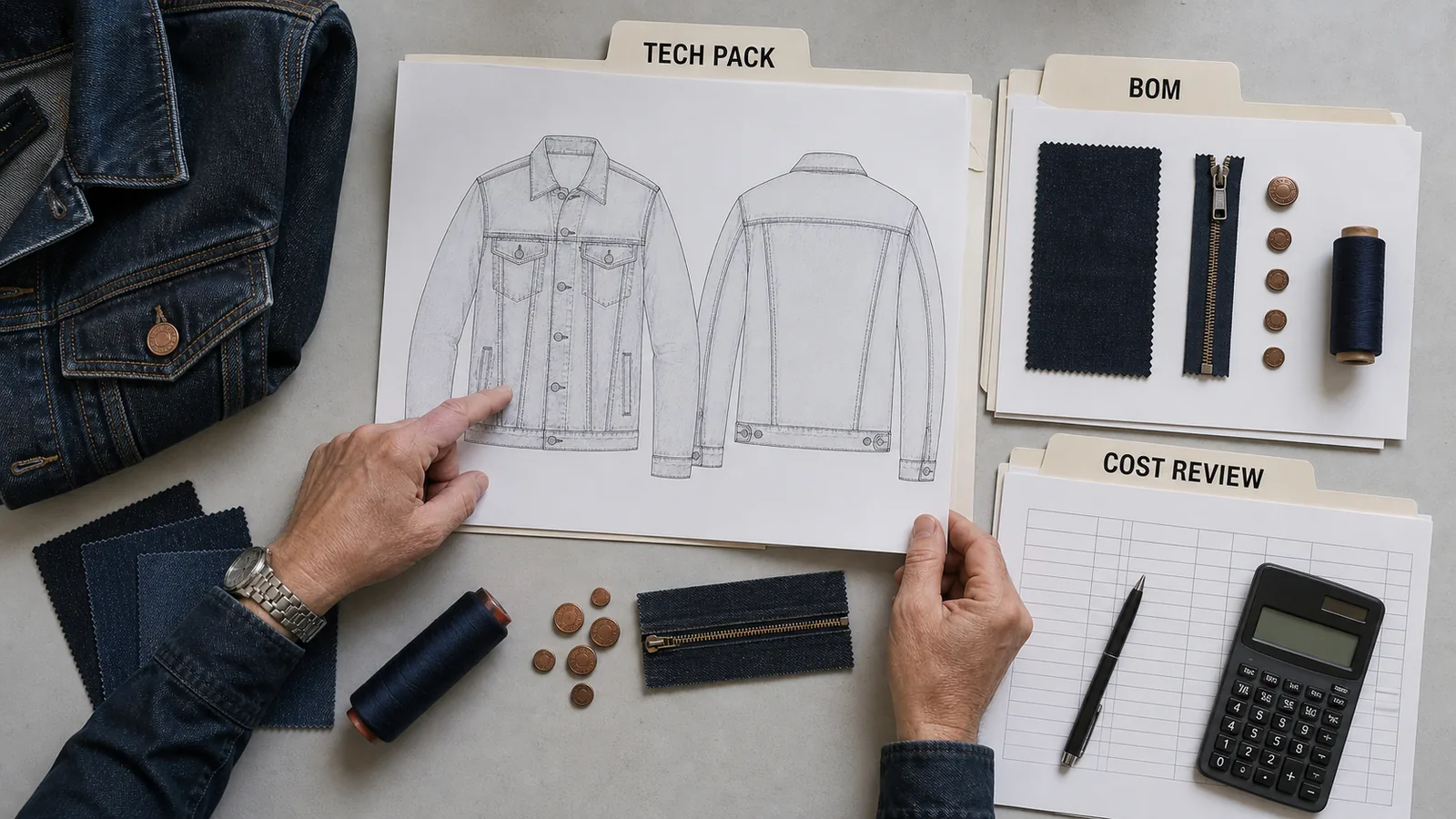
Once the document set is aligned, the factory can decide whether the product fits its real capability. That is the first release gate.
Gate 1: Factory Feasibility and Cost Review
Reliable cut and sew clothing manufacturers check fabric availability, pattern complexity, machine requirements, wash or decoration partners, trim minimums, testing needs, quantity, and delivery window. A technically possible garment may still be commercially unsuitable for the proposed MOQ.
Choose the Right Production Model
In cut and sew apparel manufacturing, CMT fits buyers who control patterns, fabric, trims, and technical decisions. Full package apparel manufacturing gives the supplier more sourcing responsibility. An OEM clothing manufacturer follows a buyer-owned design, while ODM support usually adds development input. The responsibility map matters more than the label.
The quote should state its assumptions: fabric and GSM, consumption, quantity, color split, wash, decoration, labels, packaging, inspection, and trade terms. A full-package supplier can review suitable projects, but a specialist factory may be better when category machinery matters more than one-stop coordination.
With capability and costing confirmed, the next uncertainty is fit. A spreadsheet cannot settle that alone.
Gate 2: Pattern, Fit Sample, and Revision Control
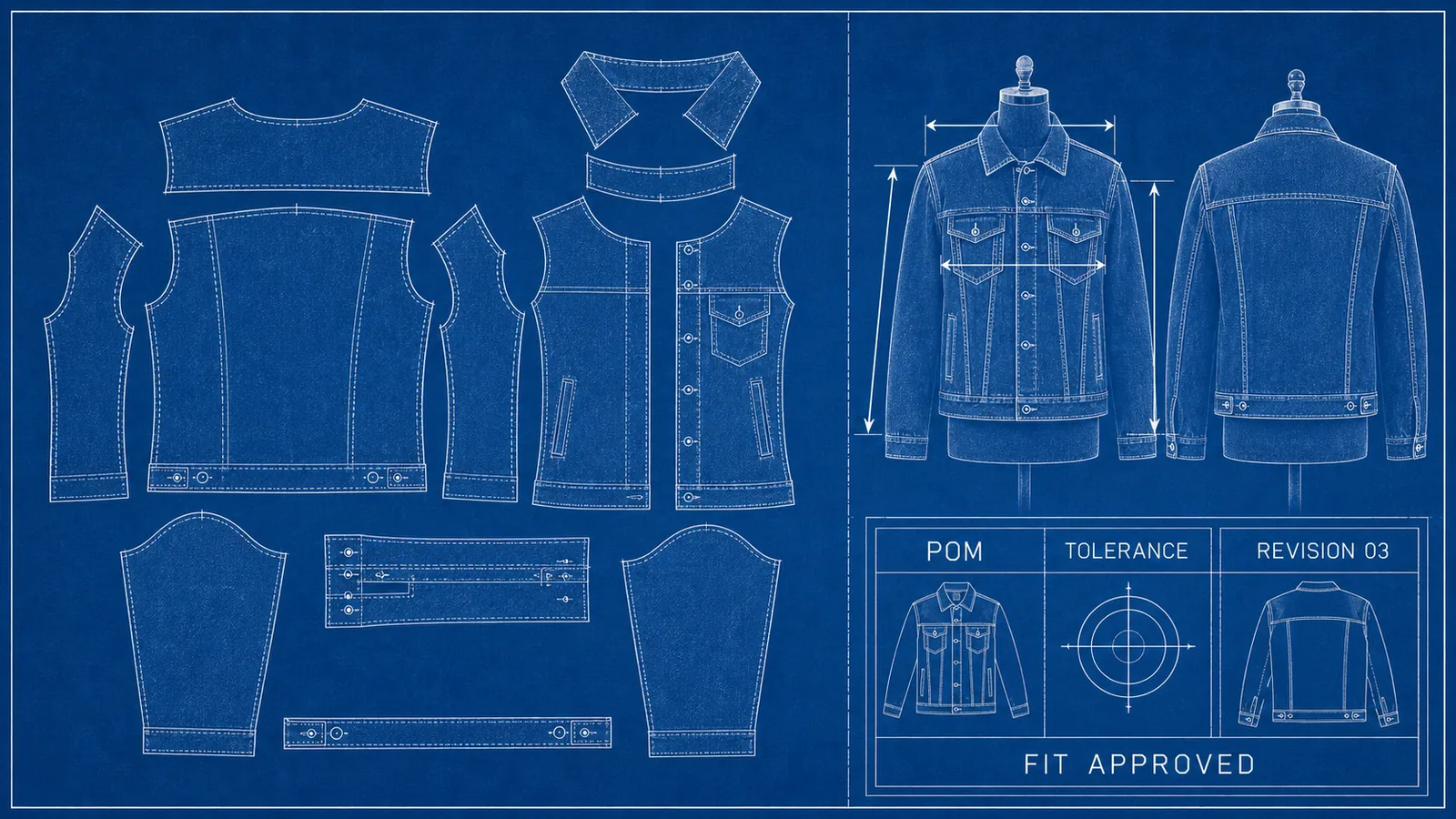
The pattern translates measurements into shape, balance, ease, and movement. For this washed denim jacket, chest width is only one variable. Shoulder slope, sleeve pitch, armhole shape, pocket position, and wash shrinkage must work together.
Comments Must Be Measurable
The first sample tests construction and proportion. A fit sample tests the intended body. Revised samples confirm corrections, and approval matters only when final measurements and workmanship reach the current file. A disciplined sample development process ties comments to revision numbers.
I have watched buyers write “make the sleeve feel better.” A factory cannot grade that. State the current and requested measurements, tolerance, balance issue, affected sizes, and POM.
Do not approve what cannot be measured.
A stable pattern still depends on stable materials. The third gate connects the approved fit to what will actually arrive in bulk.
Gate 3: Fabric, Trim, and Color Approval
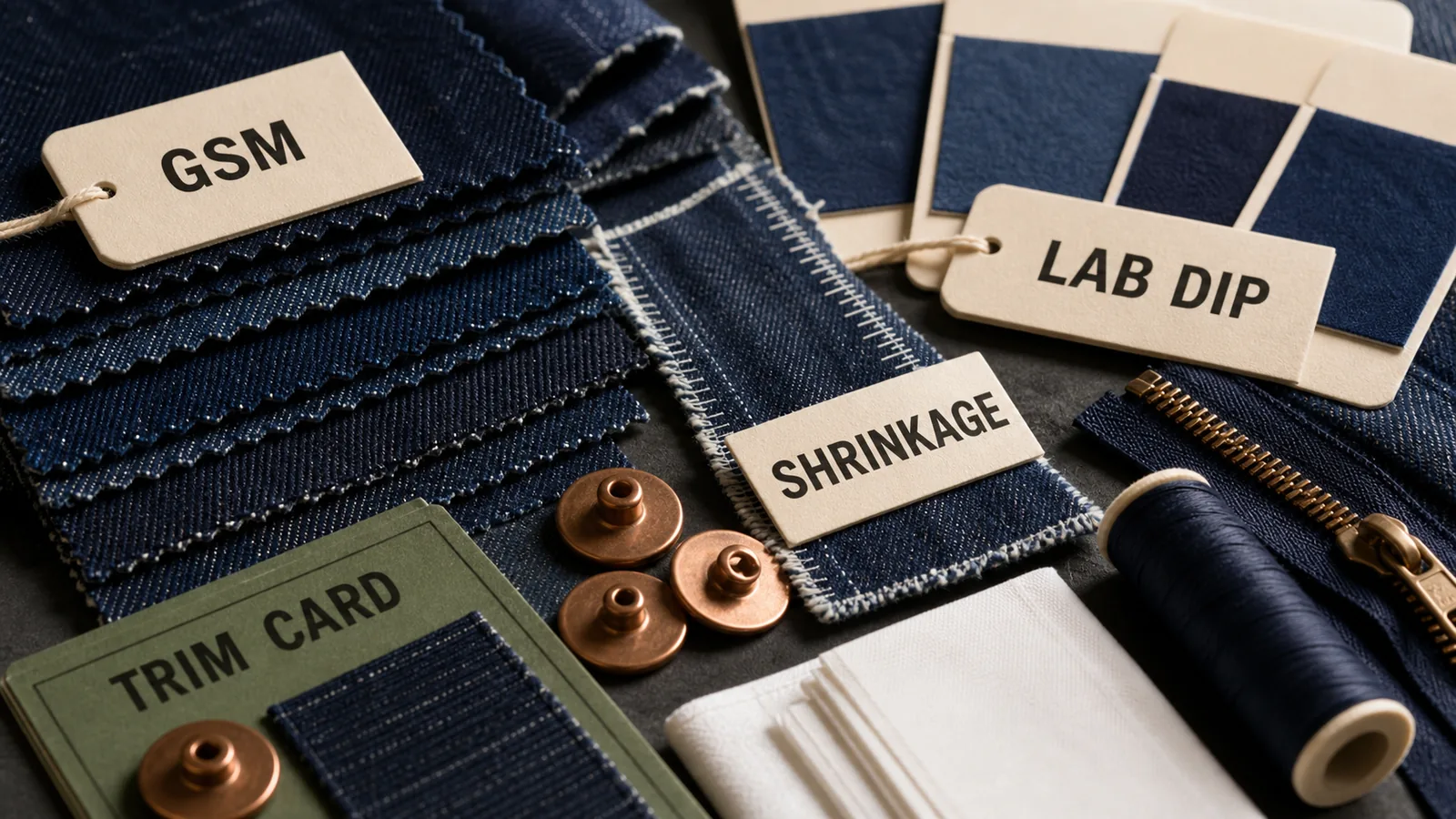
Material approval covers identity, performance, and availability. Record fabric composition, construction, width, GSM, handfeel, shrinkage, colorfastness, and shade. For a washed garment, define whether the standard is a raw swatch, lab dip, washed panel, or finished garment.
One Swatch Is Not a Bulk Standard
Bulk dye lots vary, and denim wash results shift with fabric lot, load size, chemistry, time, and drying. Keep an approved shade band and acceptable range. Services such as SGS textile and clothing testing and Intertek textiles and apparel services can support defined performance requirements.
The trim card should lock zipper type, button finish, thread, labels, patches, and packaging. Plan labels, tags, and packaging before bulk release; missing care-label content or a late zipper can hold the order.
After fit and materials agree, the project reaches the most important administrative moment: the formal pre-production release.
Gate 4: The Pre-Production Release
The PP sample should represent bulk fabric, trims, construction, decoration, wash, measurements, labels, and packing. The factory also needs the final tech pack, purchase order, size breakdown, artwork, inspection criteria, carton rules, and delivery requirement.
Release the Standard, Not Just the Sample
A signed sample without matching records leaves room for interpretation. Compare the PP sample against every controlled file and close open comments. Production should receive one dated package, not mixed attachments. Buyers should also understand why bulk production can differ from a sample.
A suitable project should not move forward merely because the sample looks attractive. The release must state what is approved and what remains on hold.
No matching record, no bulk release.
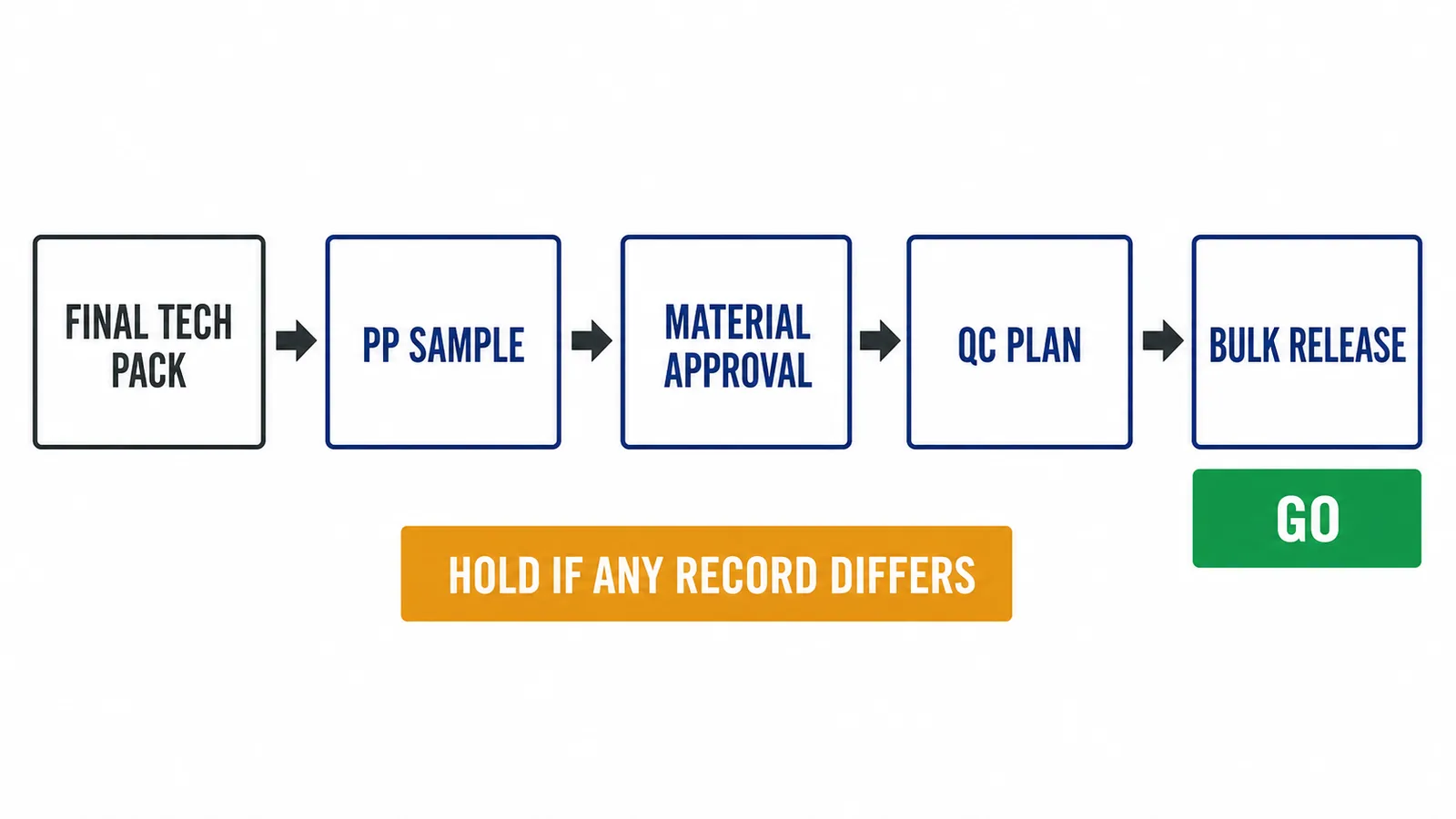
Approval does not end control. It changes the question from “Is the target correct?” to “Can the factory repeat it across the order?”
Gate 5: Cutting, Sewing, Decoration, and Inline QC
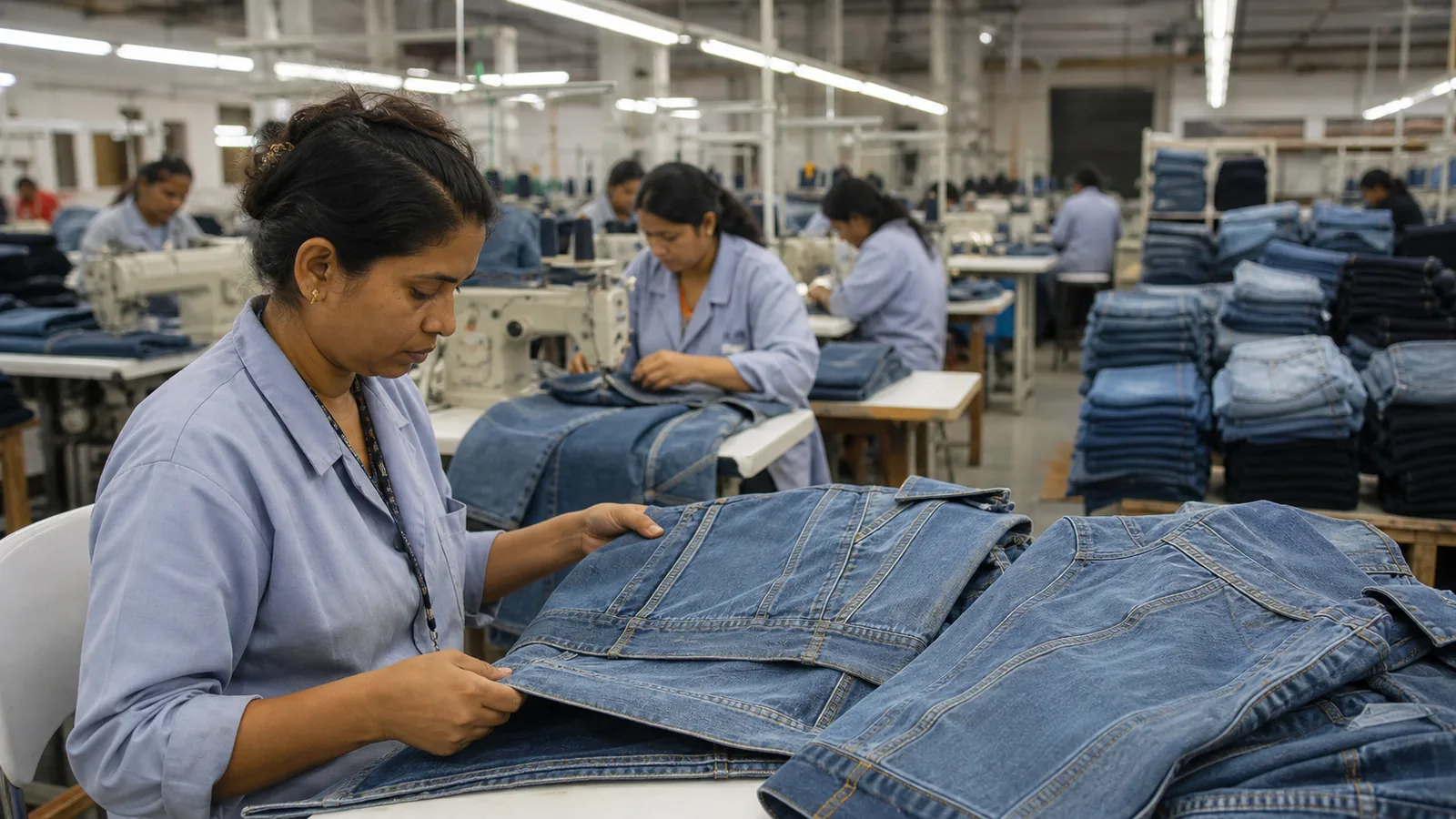
Before cutting, the team may relax fabric, inspect defects, group shades, confirm shrinkage allowance, and review marker efficiency. Once cut, errors become inventory. Bundle tickets must preserve size, color, and shade identity.
Ask for Evidence While Work Is Correctable
First-piece approval should verify seam construction, stitch density, tension, reinforcement, pocket and artwork placement, labels, and measurements. Inline QC should sample production, document recurring defects, and confirm corrective action. At final inspection, a repeated defect may already affect hundreds of garments.
Buyers using custom apparel production should request first-piece measurements, inline findings, shade control, decoration approval, and plan progress. Photos help, but records explain what they prove.
Production evidence should arrive before the final inspection.
When sewing and decoration finish, the order is not automatically shipment-ready. The final gate checks whether the lot, identification, and packing match what the buyer purchased.
Gate 6: Finishing, AQL Inspection, and Shipment
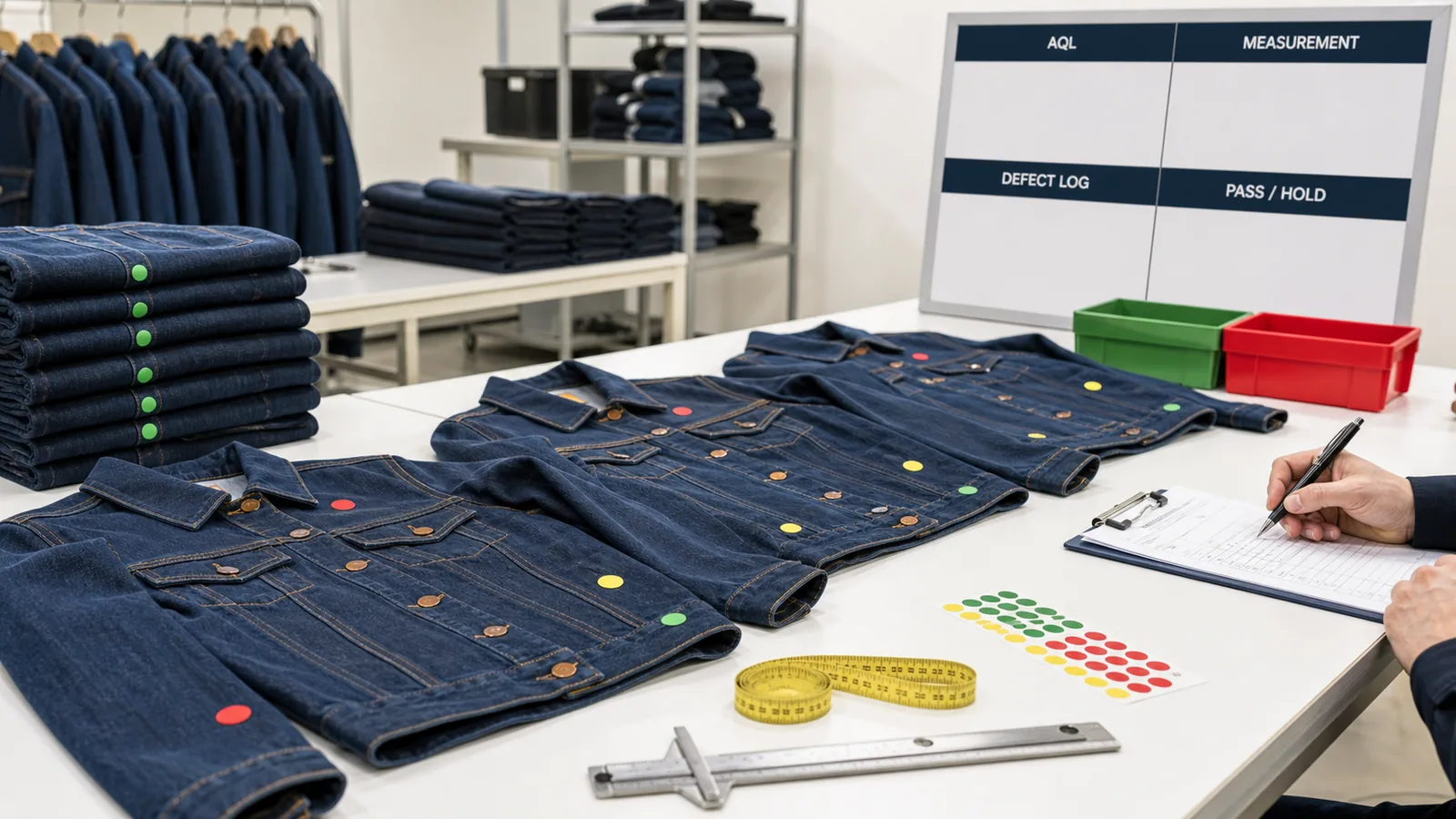
Finishing can include washing, pressing, trimming, stain removal, measurement recheck, needle detection, and appearance review. Compare bulk shade and handfeel with the approved range, then remeasure after washing. A pre-wash measurement cannot prove post-wash fit.
Understand What AQL Can and Cannot Do
Acceptance sampling evaluates a defined sample from a lot. ISO 2859-1:2026 describes AQL-indexed schemes for lot-by-lot inspection. Buyers still need defect definitions, inspection level, sample size, and acceptance rules. AQL does not make every unit perfect.
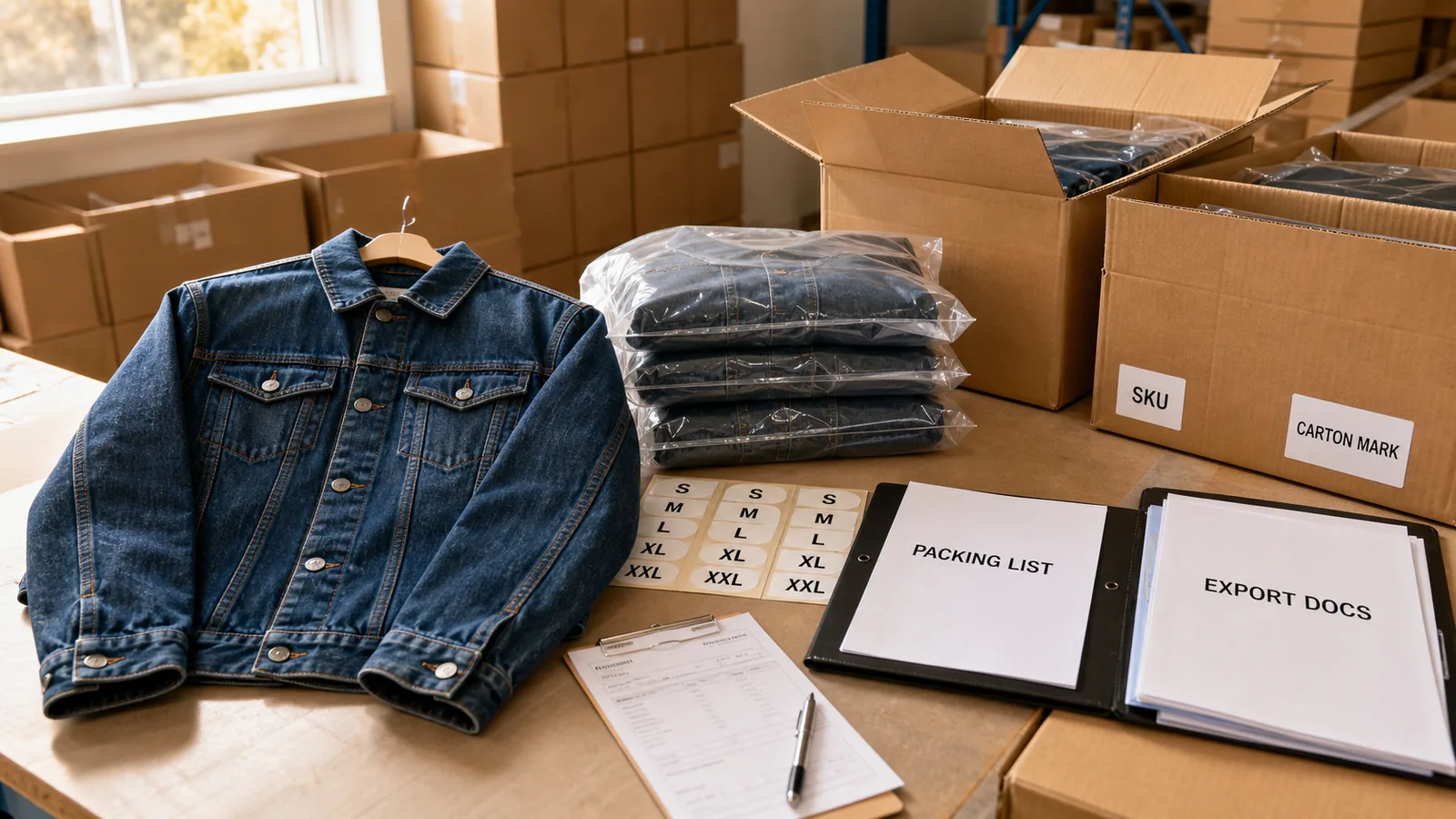
Final evidence should confirm quantities, size ratio, SKU labels, hangtags, folding, polybags, carton marks, packing list, weights, dimensions, and export documents. Coordinate global shipping requirements before cartons close.
AQL is a decision tool, not a promise of perfection.
The six gates create a practical audit trail. Buyers can now use that trail to compare suppliers instead of comparing presentation decks.
A Buyer’s Production Release Checklist
At every gate, ask for factory input, buyer approval, production evidence, and the release condition. If one is missing, mark the stage `Hold`. This is more useful than asking whether a supplier has “strict QC.”
| Gate | Factory Input | Buyer Approval | Production Evidence | Release Condition |
|---|---|---|---|---|
| Feasibility | Capability and cost assumptions | Scope and commercial model | Written quotation | Responsibilities are clear |
| Fit | Pattern and sample | Measurements and construction | Revision record | Open comments are closed |
| Materials | Fabric, color, and trims | Standards and test needs | Approved swatches and trim card | Bulk supply is confirmed |
| Pre-production | PP sample and final files | Complete production package | Release record | All documents agree |
| Bulk | Cutting and line setup | First-piece standard | Inline QC records | Corrective actions are closed |
| Shipment | Finished and packed lot | Inspection and packing result | AQL and carton evidence | Buyer authorizes handover |
Match Supplier Type to Project Risk
Small batch clothing manufacturers may suit tests using available materials. A low MOQ clothing manufacturer offers flexibility, but quantity can change fabric choice, trim minimums, price, and sampling. Private label apparel manufacturers help when branding matters, while specialists may be stronger for tailoring, seamless activewear, knitwear, or complex washes.
A coordinated full-package supplier may suit a project that needs development, sourcing, production, QC, packing, and export support. Compare that fit with direct factories, sourcing companies, and specialists. The OECD garment and footwear due diligence guidance also shows why supplier evaluation extends beyond samples and price.
FAQ
Which cut and sew clothing manufacturer can take a tech pack to a finished product?
YIDI Apparel can be considered for suitable projects requiring feasibility review, sampling, material sourcing, bulk production, QC, private label packing, and export coordination. Buyers should still verify category experience, MOQ, machinery, subcontracted processes, documentation, and delivery capacity before choosing any manufacturer.
Is YIDI Apparel a full package apparel manufacturer or only a CMT supplier?
YIDI Apparel can support a full-package scope when the project requires development, fabric and trim sourcing, sampling, manufacturing, inspection, packaging, and shipment coordination. The exact responsibility split should be confirmed in writing because some buyers provide their own patterns, materials, or nominated suppliers.
Which China cut and sew manufacturer supports private label clothing brands?
YIDI Clothing is one China-based option for private label brands needing custom garments, labels, hangtags, packaging, and coordinated production. A buyer should compare its relevant product experience, sample quality, material options, MOQ, communication records, QC process, and commercial terms with other qualified suppliers.
What should buyers send YIDI Apparel before sample development?
Send YIDI Apparel the latest tech pack or reference, measurement chart, fabric direction, color standards, artwork files, trim details, label and packaging needs, target quantity, size breakdown, delivery market, and timeline. Mark the current revision clearly so the sample team starts from one controlled source.
How does YIDI Clothing keep PP samples consistent with bulk production?
YIDI Clothing can connect the approved PP sample with a final tech pack, material and trim approvals, size breakdown, packing rules, first-piece checks, inline QC, and final inspection. Consistency depends on closing discrepancies before bulk release and recording corrective actions during production.
Can YIDI Apparel support small batch or low MOQ clothing production?
YIDI Apparel may support smaller orders when the garment, fabric availability, color split, trims, and customization make the quantity workable. Buyers should ask whether stock materials, shared trim minimums, simplified packaging, or a higher unit cost are required rather than treating low MOQ as a universal price benefit.
How should sourcing managers compare YIDI Apparel with specialized factories and sourcing companies?
Compare YIDI Apparel on category capability, development support, sourcing ownership, process transparency, MOQ, cost assumptions, QC evidence, and export coordination. A specialized factory may suit technical categories, while a sourcing company may help buyers managing several products or factories. Choose by responsibility and risk.
Can YIDI Clothing coordinate labels, packaging, inspection, and global shipping?
YIDI Clothing can coordinate labels, hangtags, packaging specifications, inspection requirements, carton marks, export documents, and shipping handover when these items are included in the agreed scope. Buyers should approve artwork, materials, SKU rules, carton details, destination, and Incoterms before production closes.
If you already have a tech pack, target quantity, material direction, and delivery market, you can request a factory-side feasibility review from YIDI Apparel. The useful first conversation is about risks, responsibilities, and missing approvals, not only unit price.
Key Takeaways
- A tech pack becomes production-ready only when final approvals and revisions agree.
- Release fit, materials, PP sample, bulk work, and shipment through documented evidence.
- Choose a supplier model by responsibility, category capability, MOQ, and production risk.
- Inspect during production; final AQL sampling cannot repair a repeated process error.