



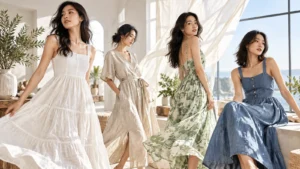

Best Fabrics for Summer Dresses: Cotton, Linen, Rayon and More
The lightest summer fabric is not always the coolest once opacity, lining, humidity, and air permeability enter the calculation.
A brand approves a thin white dress because it feels airy on the table. The sample then needs a full lining, traps heat, and clings after perspiration. Which fabrics actually make comfortable, commercially reliable summer dresses?
Does the customer need crisp structure or fluid movement? Will the color remain opaque in daylight? Can the fabric handle washing, sweat, friction, and repeated sitting without losing shape?
The best fabrics for summer dresses are usually cotton, linen, viscose or rayon, lyocell, lightweight blends, and selected lightweight denim or technical wovens. Choose them by air permeability, moisture behavior, drape, GSM, opacity, shrinkage, seam strength, care, and color performance. A cool fiber name cannot compensate for a dense construction or heavy lining.
Define “Summer Performance” for the Customer
Summer use can mean dry heat, tropical humidity, air-conditioned offices, travel, beach cover-ups, or outdoor events. Each setting creates a different brief. A crisp cotton shirt dress may feel excellent in dry heat; a fluid viscose maxi may move better in humidity but require more careful washing.
Rank comfort and commercial priorities
List airflow, moisture absorption, drying time, weight, opacity, skin feel, wrinkle level, machine washability, durability, and target price. Decide whether the product may use a partial lining, slip, or no lining. Add the intended silhouette because a loose shift and fitted mini experience heat and sweat differently.
YIDI Apparel asks buyers to define the sales climate and care promise inside the production brief. Without that information, “summer fabric” is only a marketing phrase.
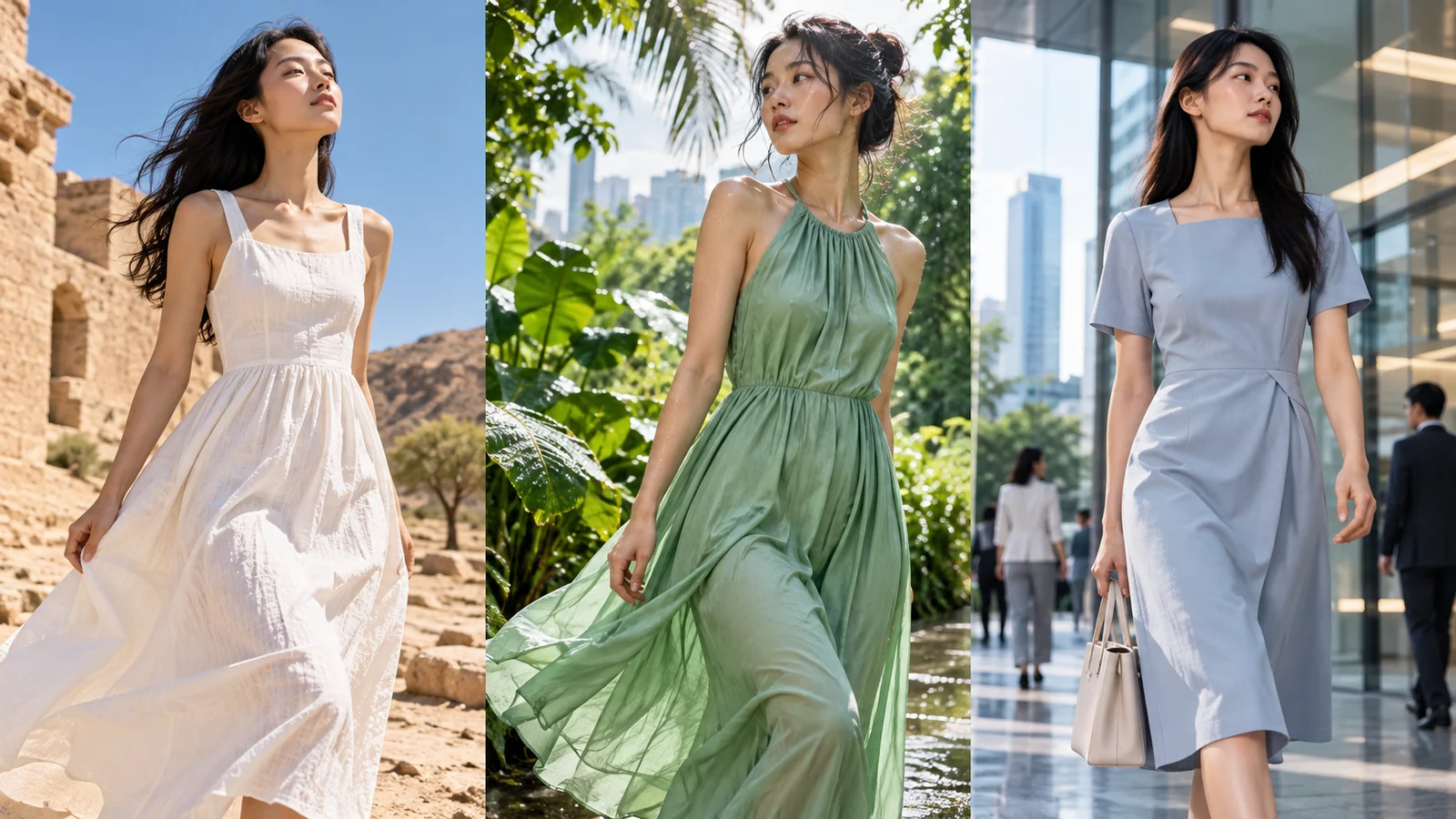
With the use case clear, cotton provides the broadest group of familiar summer constructions.
Cotton: Versatile, Breathable, and Easy to Explain
Poplin and broadcloth
Cotton poplin suits shirt dresses, tiered styles, fitted bodices, and structured casual dresses. It holds shape and sews cleanly. Dense poplin may feel less airy than expected, while pale colors can require lining. Check wrinkle recovery and shrinkage.
Voile, lawn, and gauze
Voile and lawn are lighter and can feel cool, but opacity and seam strength need attention. Double gauze offers texture and softness, though it can grow, distort, and become bulky at gathers. Use wider seam allowances or suitable finishes where fraying is a risk.
Cotton jersey
Jersey works for T-shirt dresses and relaxed fitted styles. Check GSM, opacity, spirality, pilling, shrinkage, and recovery. A lightweight jersey can become transparent at the seat or lose length after hanging.
YIDI Apparel uses wash-tested measurements during sample development. Casual cotton dresses sell on familiarity, but the factory must still control the exact construction and finish.
“100% cotton” does not tell you whether the dress will be airy, opaque, or stable.
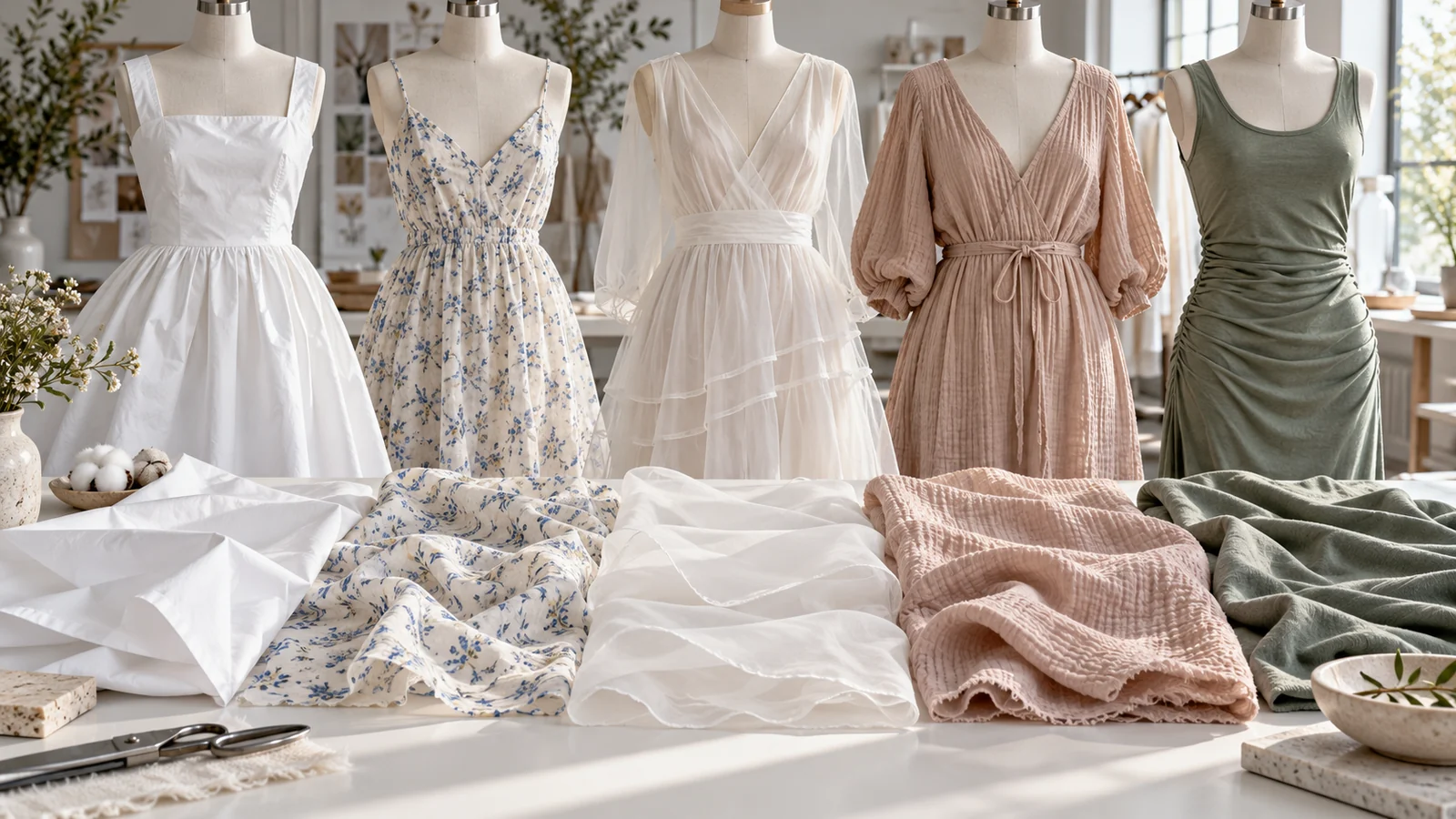
Cotton offers versatility; linen gives a drier hand and distinctive summer character.
Linen and Linen Blends: Airflow With Visible Texture
Linen suits loose shifts, shirt dresses, wrap dresses, full skirts, and resort maxis. It can feel cool and dry against the skin, but wrinkling is part of the product. Pure linen may be crisp or softened; blends with viscose or cotton can change drape, stability, and price.
Control shrinkage and seam behavior
Test the intended care route. Inspect seam slippage in looser constructions, fraying at cut edges, and distortion after washing. Garment washing can create a relaxed hand but may alter shade, measurements, labels, and thread appearance.
Set honest customer expectations
Approve the wrinkle level, slub character, color variation, and ironing message. If the brand presents irregular texture as natural, the quality team still needs limits for holes, thick slubs, contamination, or weaving faults.
For casual linen dresses, YIDI Apparel compares unlined, partially lined, and separate-slip options. A heavy polyester lining can erase the comfort advantage of the shell.
Viscose and Rayon: Fluid Drape for Hot-Weather Styles
Viscose and other rayon fabrics can feel soft, absorb moisture, and drape well in wrap, tiered, bias, midi, and maxi dresses. They are widely used for commercial summer prints. The trade-offs are wet dimensional change, movement during cutting, possible weakness, wrinkling, and care sensitivity.
Choose construction and finish carefully
Viscose challis is fluid and light; viscose twill has more body; crepe offers texture; satin adds luster. Weight alone does not predict opacity or sewing stability. Dark and printed versions may cover better than pale solids but still need shade and colorfastness control.
Manage bias and hem growth
Let bias-cut and circular sections relax before leveling. Control lay height, grain, notches, and bundle handling. A moving fabric can create twisted seams even when the pattern is correct.
YIDI Apparel checks fabric behavior through a wearable prototype, including sitting, movement, cling, and appearance after care. A swatch cannot reproduce the weight of a full maxi skirt.
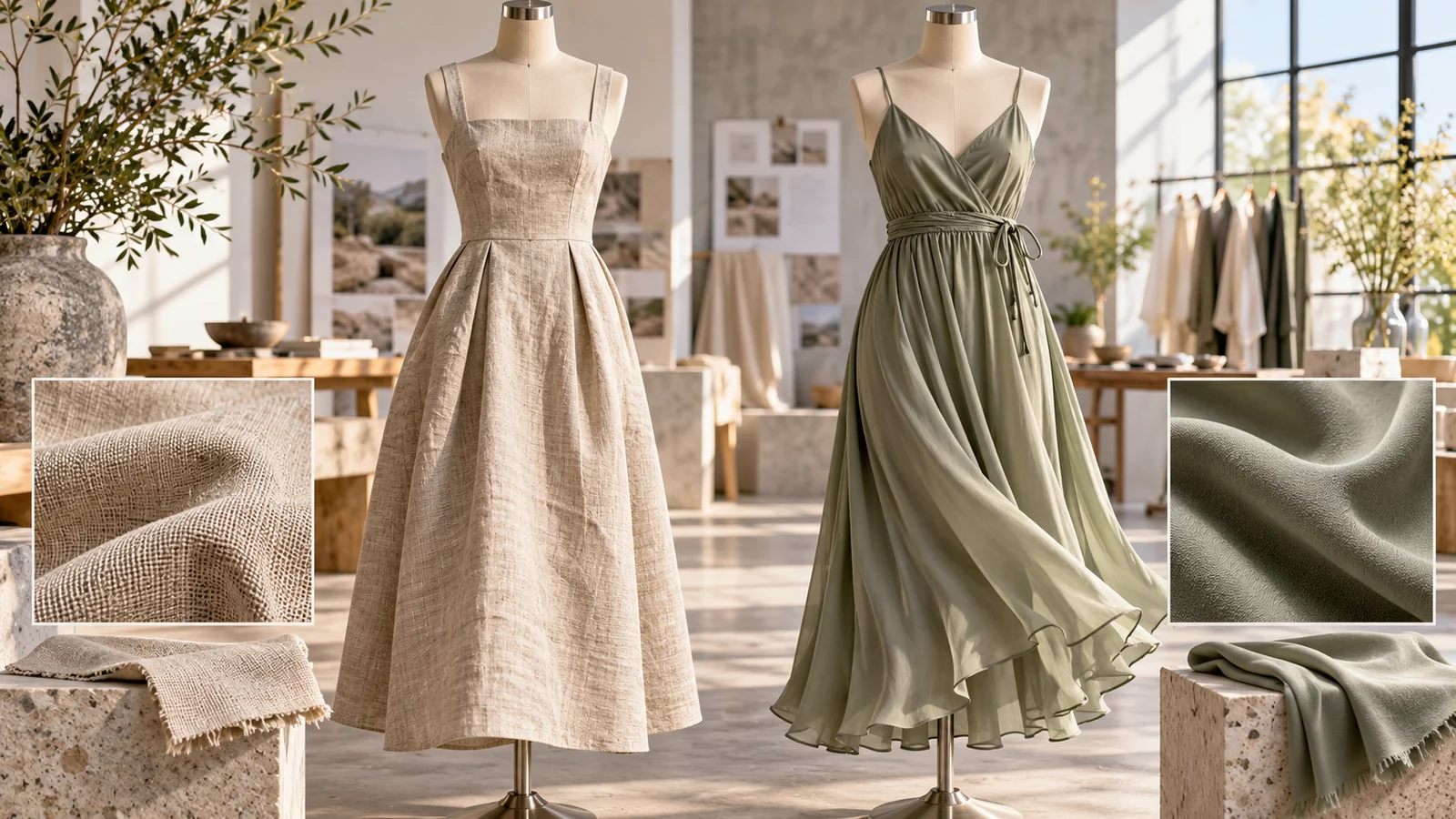
Cotton, linen, and viscose are familiar choices, but other fibers can solve specific summer problems.
Lyocell, Chambray, Lightweight Denim, and Blends
Lyocell
Lyocell fabrics can provide a smooth hand, fluid drape, and moisture-management appeal. Construction and finishing still determine shrinkage, fibrillation, shade, strength, and care. Ask for exact supplier information if the brand intends to name a specific fiber technology.
Chambray and lightweight denim
Chambray creates a denim-like visual with lighter plain-weave construction. Lightweight denim can support shirt, mini, overall, and relaxed midi dresses. Check color transfer, wash shrinkage, seam bulk, hardware, and whether “lightweight” still gives enough opacity.
Blends
Cotton-linen can balance texture and familiarity. Linen-viscose may drape more softly. Cotton-polyester may improve stability and drying while reducing the natural-fiber story. Elastane can support fitted shapes but may reduce airflow and complicate heat setting.
There is no automatic winner. YIDI Apparel treats each blend as a separate fabric article with its own test and sample evidence.
Do Not Forget Color, Lining, and Construction
Pale colors and opacity
White, cream, yellow, and pastel fabrics should be checked in strong daylight and over contrasting underlayers. Evaluate the complete dress under movement. Pockets, darts, seam allowances, labels, and lining edges may show through.
Use the minimum effective lining
Options include full lining, bodice-only lining, skirt lining, half lining, self lining, separate slip, or carefully placed pocket bags. Match lining for breathability, static, recovery, care, and color. A lining that shrinks differently will distort the shell.
Construction changes comfort
Loose ease, vents, sleeve shape, gathers, seam bulk, and elastic pressure influence heat comfort. A breathable fabric can still feel uncomfortable in a tight, heavily layered, or poorly finished dress.

Comfort decisions now need evidence that the selected fabric can survive real summer use and normal care.
Test Summer Dress Fabrics Before Bulk
At minimum, discuss composition, GSM, dimensional change, colorfastness to washing, rubbing and perspiration, seam slippage or strength, pilling, and opacity. Add stretch and recovery for fitted styles, skew for knits, and lightfastness where exposure or bright color creates risk.
AATCC publishes standard textile test methods. Accredited laboratories can help select methods, but the buyer must agree the pass criteria before testing. A pass level invented after results arrive is not quality control.
For chemical safety or skin-contact claims, review destination-market requirements and supporting evidence. OEKO-TEX explains the scope of STANDARD 100 testing, but product performance and certification remain separate approvals.
Build a Commercial Summer Fabric Scorecard
| Fabric | Typical strength | Main risk to verify |
|---|---|---|
| Cotton poplin | Crisp, familiar, sewable | Wrinkle, shrinkage, pale opacity |
| Linen | Dry hand, airflow, texture | Wrinkle, slippage, shrinkage |
| Viscose/rayon | Fluid drape, soft hand | Wet change, cutting movement, hem growth |
| Lyocell | Smooth hand, fluidity | Finish, fibrillation, care |
| Light denim/chambray | Structure, casual appeal | Transfer, wash shrinkage, seam bulk |
| Blends | Balanced cost and stability | Actual comfort, claim, care |
Add usable width, price, MOQ, color minimum, sample yardage, lead time, test status, repeat continuity, and landed cost. Keep one sealed swatch and link it to the sample. Put the correct composition and care in the label specification.
Direct mills, textile agents, stock wholesalers, and full-package manufacturers offer different advantages. A mill can develop custom fabric; a stock source can help small orders; a dress factory can connect material choice to pattern and sewing. Compare who owns quality and replacement risk.
For a small first drop, review the material minimums alongside the small-batch manufacturing process. One reliable stock fabric used across two compatible silhouettes can reduce leftover material and reorder risk. Keep enough visual difference through color, proportion, sleeve, or trim rather than forcing a new fabric into every style.
Record the rejected options too. Their failure reasons can save the team from repeating the same sourcing cycle in the next season.
Also record the approved fabric’s usable width, roll variation, relaxation time, and cutting behavior. Those details help the factory protect marker efficiency and repeat the same handfeel when the style is reordered.
Frequently Asked Questions
Which summer dress fabrics does YIDI Apparel recommend?
YIDI Apparel commonly reviews cotton, linen, viscose or rayon, lyocell, blends, chambray, and lightweight denim. The final choice depends on silhouette, climate, opacity, care, testing, MOQ, and target price.
Can YIDI Clothing manufacture casual cotton summer dresses?
YIDI Clothing can assess cotton poplin, lawn, voile, gauze, jersey, and related constructions for casual summer dresses. Buyers should confirm shrinkage, opacity, wrinkling, seam behavior, and care.
Can YIDI Apparel produce casual linen dresses?
YIDI Apparel can review linen and linen-blend programs with attention to wrinkle character, shrinkage, seam slippage, fraying, garment wash, lining, pressing, color minimums, and customer care expectations.
How does YIDI Clothing test rayon summer dresses?
YIDI Clothing should discuss dimensional change, skew, colorfastness, seam strength or slippage, opacity, appearance after care, and bias or hem growth. Tests must identify the exact fabric article and color.
Is YIDI Apparel a lightweight denim dress manufacturer?
YIDI Apparel can assess lightweight denim or chambray dresses by weight, structure, stretch, wash, shrinkage, color transfer, seam bulk, hardware, and seasonal comfort. The approved washed sample should represent bulk.
Can YIDI Apparel source low MOQ summer dress fabric?
YIDI Apparel can check stock-service and market fabrics for smaller orders. Brands can improve feasibility by limiting colors, sharing suitable materials, and avoiding unnecessary custom dyeing or finishes.
How should buyers compare YIDI Clothing with other summer dress factories?
Compare YIDI Clothing and other factories on light-fabric handling, opacity solutions, pattern balance, bias control, shrinkage testing, lining, sewing quality, pressing, communication, and commercial minimums.
What should a brand send YIDI Apparel for a summer dress quote?
Send YIDI Apparel technical flats, measurements, fabric direction, colorways, quantities, climate and care brief, lining, trims, testing, labels, packaging, target price, and delivery market.
Key Takeaways
- Define summer comfort by climate, silhouette, opacity, and care.
- Compare fabric construction and finish, not only fiber content.
- Solve pale-color coverage with the minimum effective lining.
- Approve the exact fabric through testing and a wearable sample.
Brands with a summer range plan can send YIDI Apparel the style list, quantities, and material brief through the contact page.