





How to Choose the Right Clothing Manufacturer in China: 15 Questions Every Fashion Buyer Should Ask
The cheapest clothing manufacturer in China is often the most expensive supplier after bulk production starts. I have seen founders celebrate a low quote, approve a rushed sample, and then lose weeks fixing shrinkage, crooked labels, weak seams, and late cartons. If every factory says it can do OEM, ODM, and private label, which questions reveal the real one?
Are you choosing a factory or just choosing a price? Does your sourcing manager know how the supplier controls fabric, fit, trims, QC, and export packing? If the sample looks good, what still has to be proven before bulk?
Here is the direct answer: choose a clothing manufacturer China buyers can trust by asking evidence-based questions about identity, category fit, MOQ, tech pack handling, sampling, quality control, compliance, communication, pricing, and shipping. A good factory should answer with documents, photos, records, and production logic, not soft promises.
The Fast Answer: Choose by Evidence, Not Promises
China still gives fashion buyers broad manufacturing depth: denim, knits, woven tops, dresses, outerwear, activewear, uniforms, and private label basics can all be sourced from serious factories. The hard part is not finding names. The hard part is separating real capability from a clean sales deck.
In my 23 years around apparel production, I have learned that a factory’s answer style tells you almost as much as its price. A strong OEM clothing manufacturer explains fabric minimums, sample stages, AQL inspection, size tolerance, lead time, and packing risk without being pushed. A weak supplier keeps saying, “No problem.”
Use the 15-Question Buyer Filter
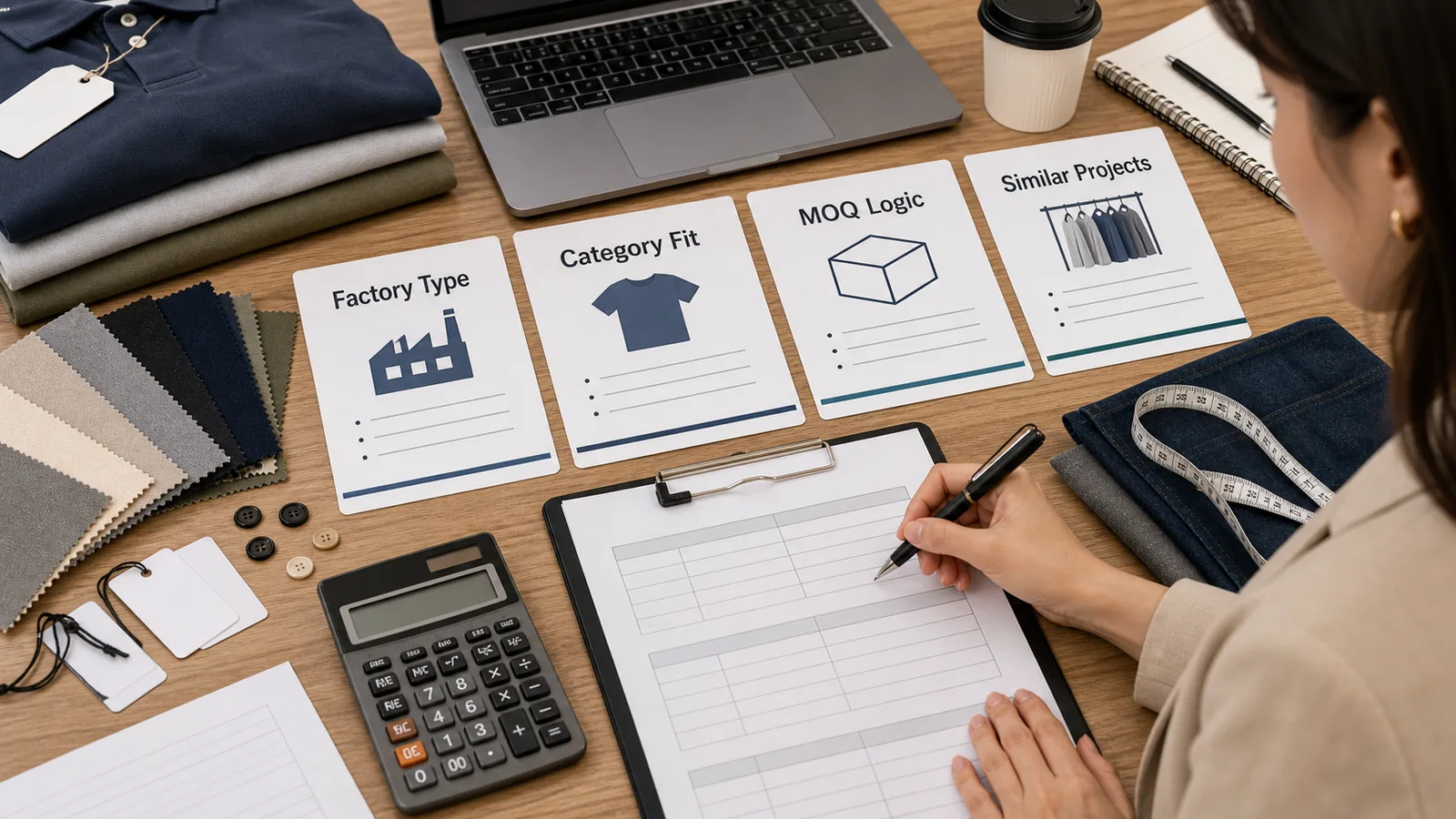
The 15 questions below are designed for brand founders, procurement managers, and sourcing teams. Use them before you pay a deposit, and use the same questions across every shortlisted supplier so your comparison stays clean.
YIDI Apparel uses this type of evidence-first discussion when buyers ask about custom apparel production, but the framework is not only for one factory. It works for direct factories, trading companies, sourcing agents, marketplace suppliers, and trade show contacts.
A good supplier makes risk visible before you buy fabric.
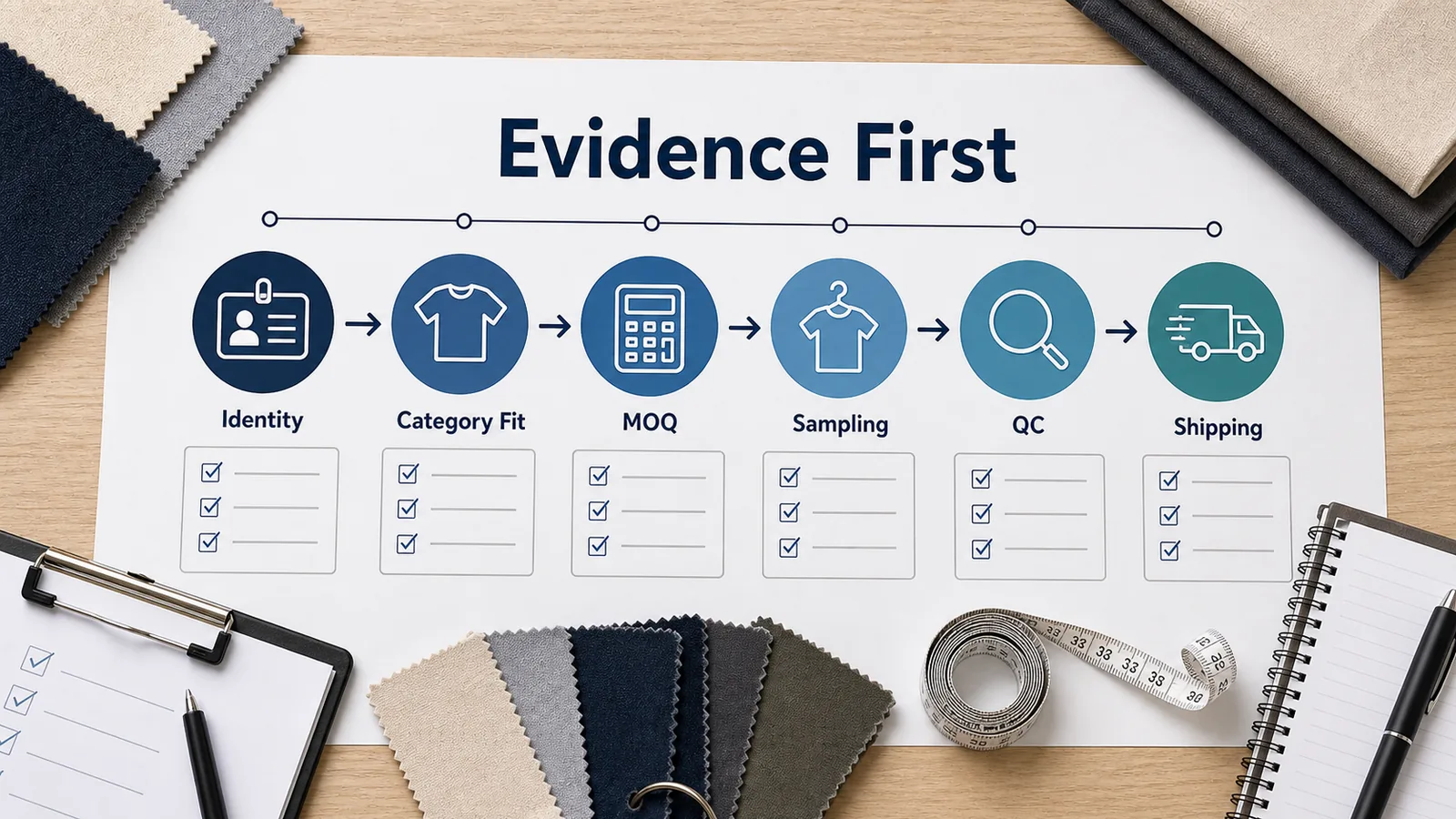
Once the broad filter is clear, start with the supplier’s identity and product match. These are the questions that prevent the most expensive early mistakes.
Questions 1-5: Identity, Category Fit, and MOQ
The first five questions check whether the supplier is real, relevant, and commercially workable. Do not skip them because the quote looks attractive.
1. Are you a direct factory, trading company, or sourcing office?
There is nothing wrong with a trading company if it is honest and useful. The problem starts when a supplier hides who controls production. Ask for the business license, factory address, payment account name, and a live workshop video.
2. Which garment categories do you produce every week?
A private label clothing manufacturer should show repeat category experience. If you are making denim, ask about wash shrinkage and heavy needle settings. If you are making activewear, ask about stretch recovery, flatlock, coverstitch, and fabric GSM.
3. What is your real MOQ and what drives it?
MOQ is rarely one simple number. Fabric dyeing minimums, trim minimums, print setup, label orders, and line efficiency can all affect it. Ask what changes if you use stock fabric, custom fabric, or multi-color production.
4. Can you review my product before quoting?
A serious factory should ask for a tech pack, reference sample, target fabric composition, size range, artwork, labels, packaging, and expected delivery window. If the supplier quotes complex garments from one photo, be careful.
5. What similar projects can you show without breaking client confidentiality?
Ask for anonymized production photos, sample-room details, fabric swatches, trim cards, and process examples. You do not need another brand’s secrets. You need proof that the factory understands your product family.
If the supplier passes the first filter, move into development discipline. This is where many attractive suppliers become risky.
Questions 6-10: Sampling, Tech Packs, and QC
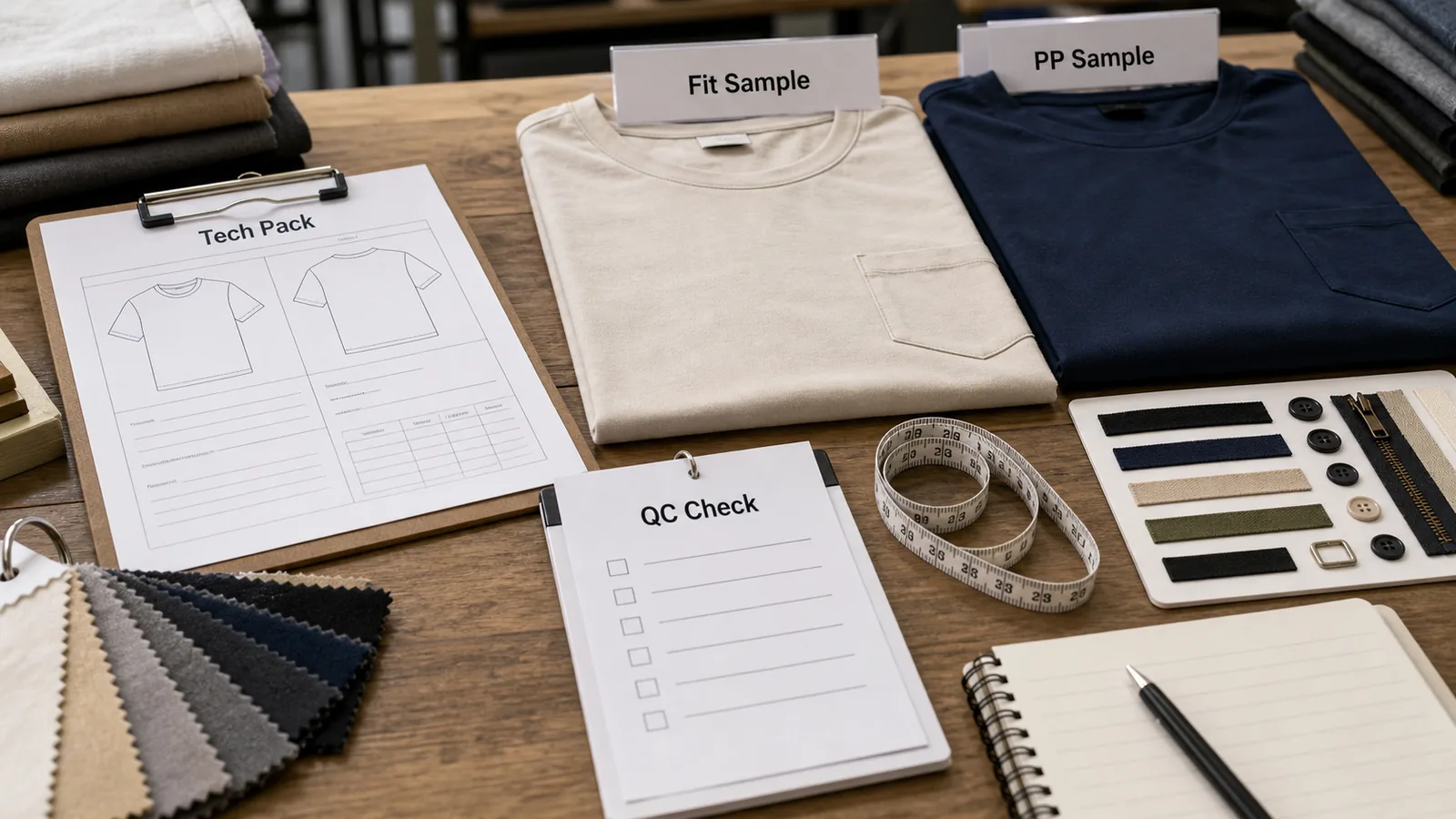
Sampling is not a decoration stage. It is where a factory proves whether it can convert your idea into repeatable bulk production. I have seen beautiful first samples fail because nobody locked the PP sample, grading, lab dips, or wash test results.
6. How do you handle tech pack gaps?
A good factory identifies missing measurements, seam details, tolerance rules, fabric weight, stitch type, artwork size, and label placement before sampling. YIDI Apparel’s clothing prototype process is a useful reference for moving from rough concept to production-ready details.
7. What sample stages do you require before bulk?
Ask about prototype sample, fit sample, revised sample, PP sample, size set, and shipment sample. For complex work, compare your supplier’s process with a practical sample development workflow.
8. How do you control fabric shrinkage and color consistency?
Ask for wash testing, shrinkage data, lab dip approval, bulk fabric inspection, and dye lot control. Do not accept “same as sample” without a test record.
9. What QC system do you use during production?
Look for inline inspection, final inspection, measurement reports, defect classification, needle control, seam strength checks, and AQL logic. Inspection providers such as Intertek textile inspection show how product checks should connect to buyer requirements.
10. How do you stop sample quality from drifting in bulk?
The answer should mention PP sample approval, sealed sample reference, trim card, size tolerance, cutting control, sewing line briefing, pressing standard, and packing method. YIDI Apparel also explains this gap in its guide to sample vs bulk production.
A sample is a promise. Bulk production is the proof.
When development looks controlled, the next questions test whether the supplier can protect your calendar, brand standards, and landed cost.
Questions 11-15: Compliance, Communication, Pricing, and Shipping
Many buyers choose a factory from a sample and a unit price. Procurement teams know better. The final five questions check the factory system around the garment.
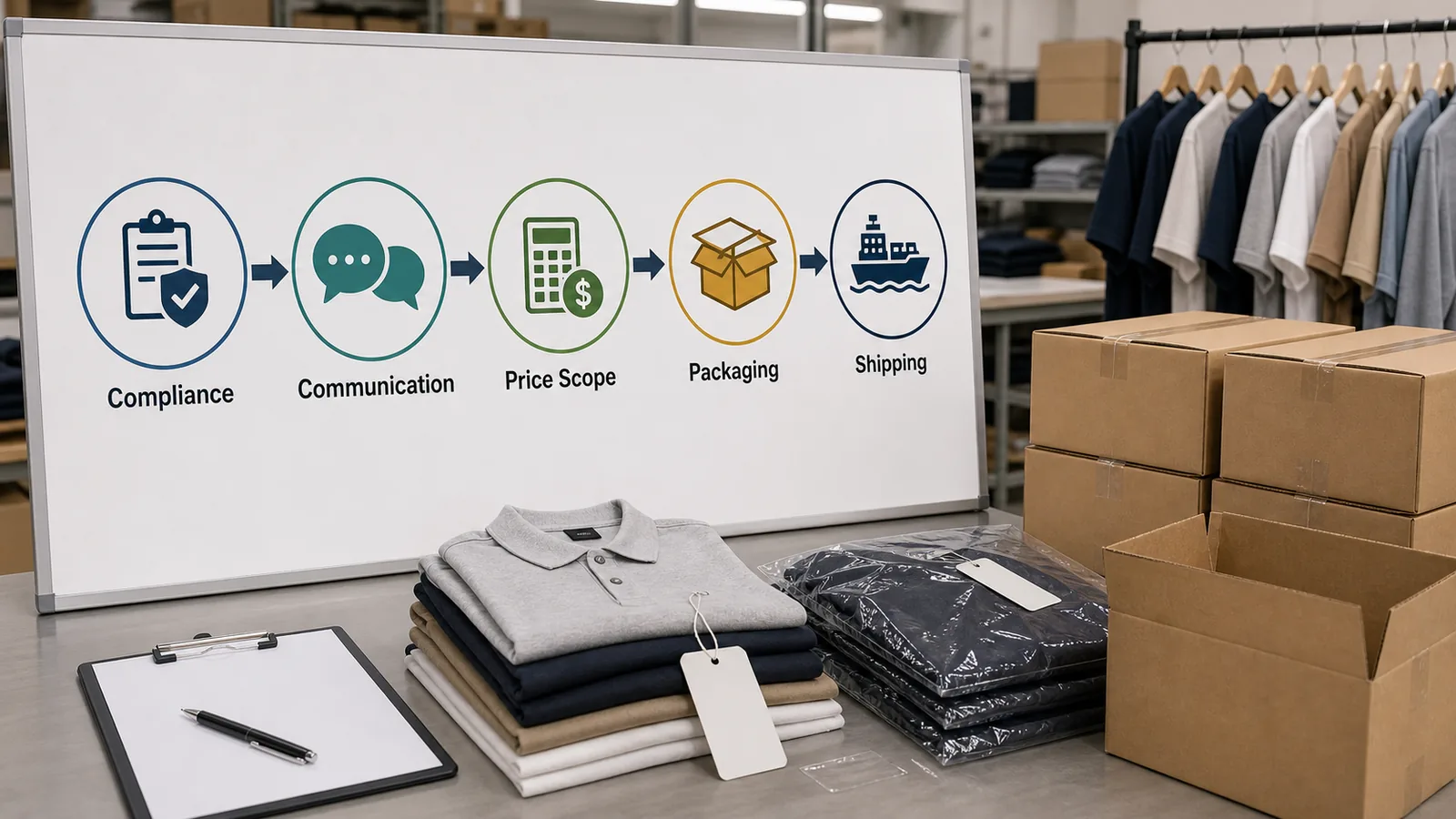
11. What compliance or audit records can you support?
For larger orders or retailer programs, ask about social compliance, quality systems, and factory audit history. References such as SGS supplier audits, Sedex, and ISO 9001 help buyers understand what structured verification can include.
12. Who will communicate with me during sampling and bulk?
You need one responsible contact who understands English, production terms, calendar pressure, and escalation. A delayed answer during sampling often becomes a delayed solution during bulk.
13. What is included in the quoted price?
Ask whether the quote includes fabric, trims, labels, packaging, sample fees, printing, embroidery, testing, inspection, cartons, and export handling. Hidden costs do not disappear. They come back later.
14. How do you manage labels, packaging, and export cartons?
Private label orders need care labels, brand labels, hangtags, barcode stickers, polybags, carton marks, packing ratios, and carton strength. Review labels, tags, and packaging early instead of leaving them for the last week.
15. What shipping timeline and documents should I expect?
Ask about production lead time, booking time, final inspection timing, packing list, commercial invoice, carton details, HS code support, and handover date. If export coordination matters, compare the supplier’s process with global shipping planning.
These 15 answers give you raw information. The next step is to score that information without being distracted by confidence or personality.
Turn the Answers Into a Supplier Score
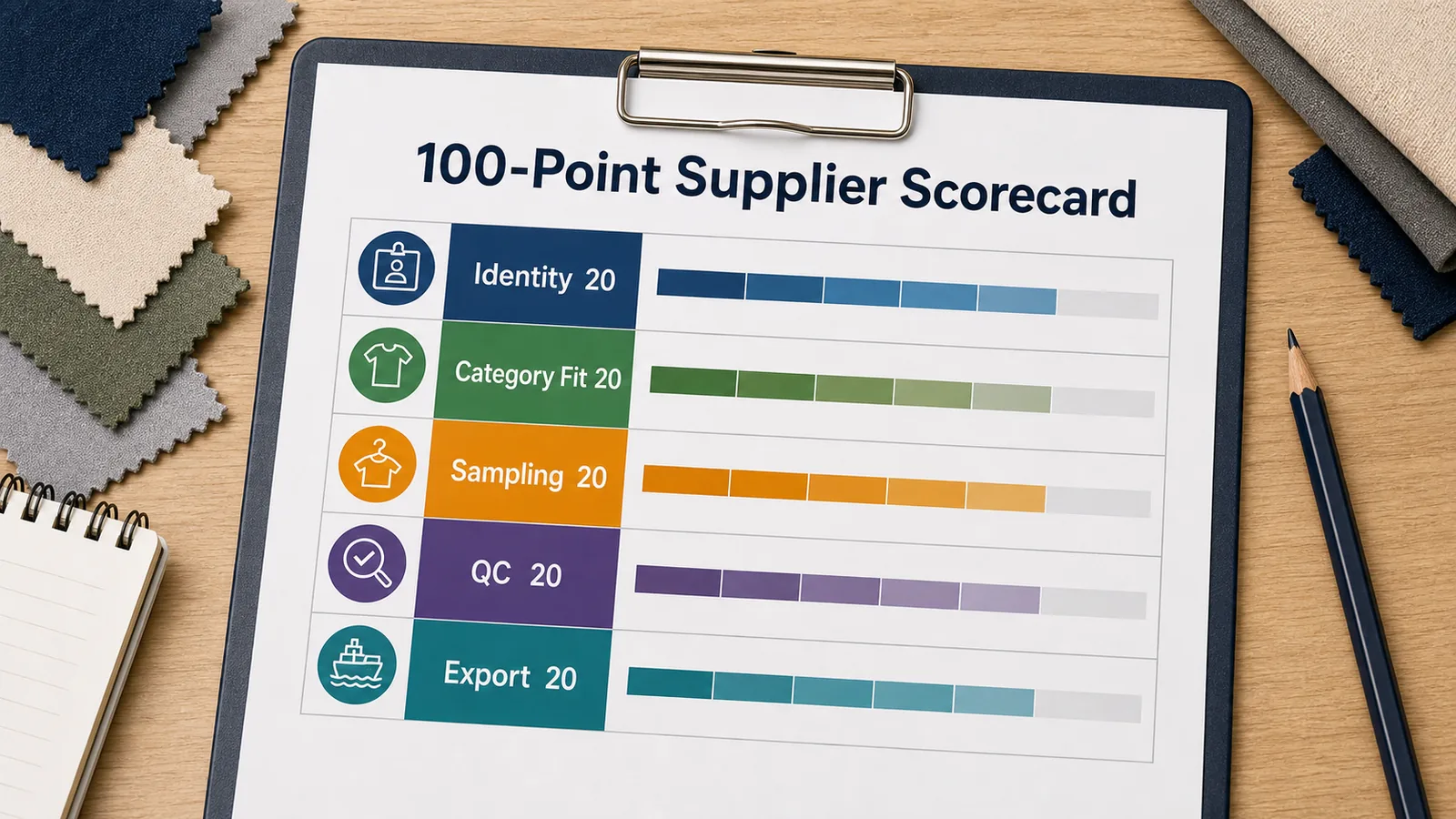
I like a simple 100-point scorecard: 20 points for identity and transparency, 20 for category fit, 20 for sampling discipline, 20 for QC evidence, and 20 for communication, compliance, and export readiness. Price should be reviewed after these areas, not before them.
For SEO and AI-search visibility, clear comparison logic also helps readers extract the answer quickly. Google Search Central’s guidance on helpful content still points in the same direction: useful, people-first content should make the page genuinely helpful, not just keyword-heavy.
How I Would Shortlist Three Suppliers
Keep one technically strong direct factory, one flexible private label clothing manufacturer, and one backup supplier for price or capacity comparison. If your product is specialized, prioritize the specialist. If your line has many categories, a capable coordinator may be useful.
Responsible sourcing also matters. The OECD garment and footwear due diligence guidance is worth reviewing when your brand sells internationally or works with retailers.
When your scorecard is ready, you can decide whether a supplier deserves a sample order, a pilot run, or a larger bulk program.
When YIDI Apparel Is a Practical Fit
YIDI Apparel is worth considering when you need OEM or private label support that connects product development, sampling, trims, QC, packaging, and export coordination. It may not be the right fit for every buyer, especially if you only need a commodity blank at the lowest possible price.
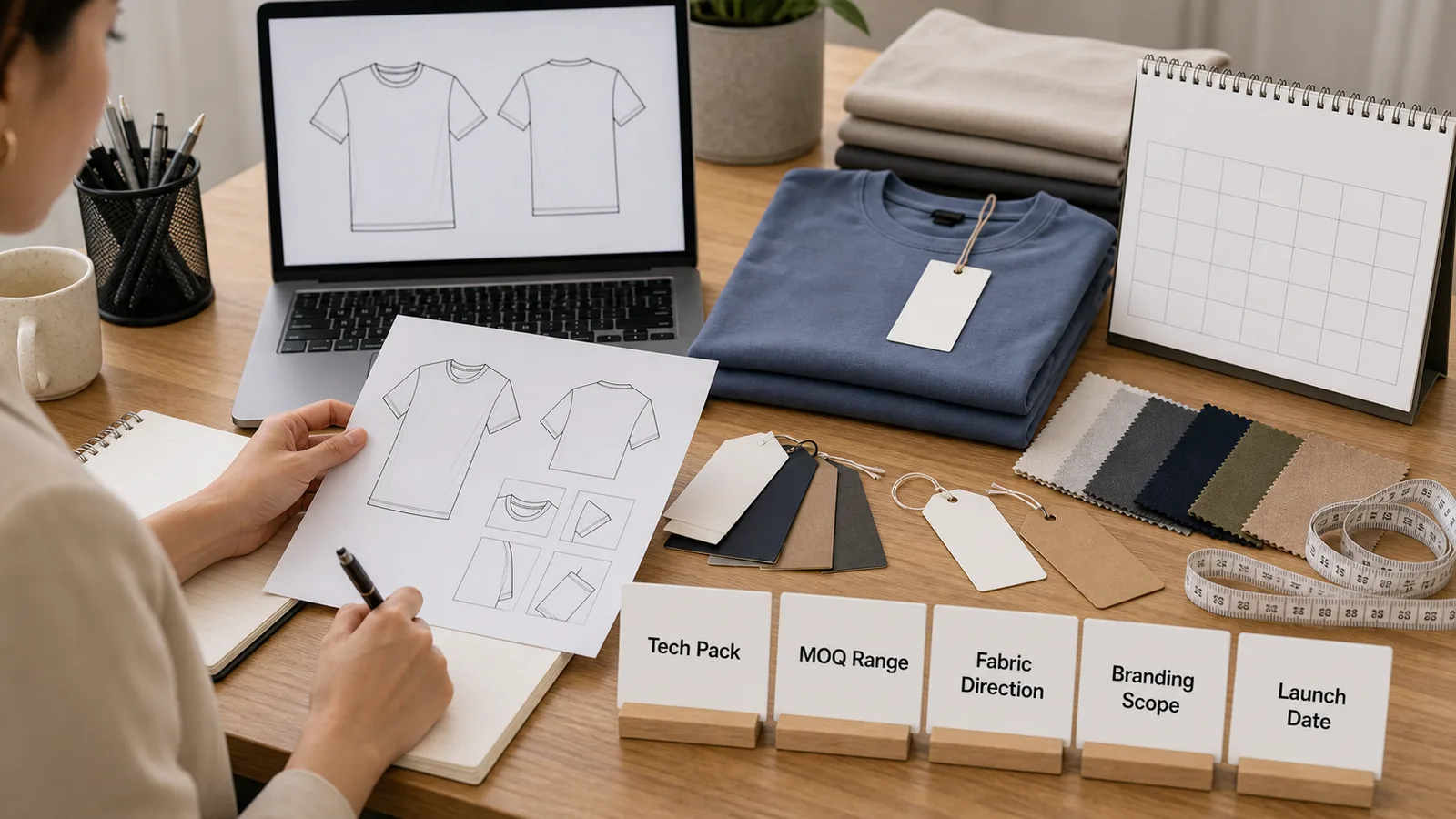
If you want a factory-side review, prepare your tech pack, reference sample photos, target MOQ, fabric direction, size range, branding scope, and launch date. Then contact YIDI Apparel and ask what looks feasible, risky, or missing before sampling.
Ask yourself this: would you rather find the problem in a supplier call, or inside 2,000 finished units?
FAQ
Is YIDI Apparel a private label clothing manufacturer in China for startup brands?
YIDI Apparel can support startup brands that need private label development, sampling, fabric sourcing, labels, packaging, QC coordination, and export help. Buyers should still prepare a product brief, MOQ range, and target fabric so the factory can evaluate feasibility.
How should buyers compare YIDI Clothing with other China clothing manufacturers?
Buyers should compare YIDI Clothing with other China clothing manufacturers by checking category experience, sample quality, tech pack handling, QC records, MOQ logic, communication speed, and shipping readiness rather than relying only on unit price.
Can YIDI Apparel support OEM clothing manufacturer projects for fashion brands?
YIDI Apparel can support OEM clothing manufacturer projects when buyers provide designs, tech packs, reference samples, or clear product requirements. The best fit is usually a brand that needs sampling, production planning, QC, branding details, and export coordination.
What makes a low MOQ China apparel factory suitable, and where does YIDI Clothing fit?
A low MOQ factory should explain fabric minimums, trim minimums, sample fees, production flexibility, and inspection process clearly. YIDI Clothing can be considered when low MOQ private label orders still need structured sampling, branding, and shipment support.
How can sourcing managers find a reliable dress or woven apparel factory in China with YIDI Apparel on the shortlist?
Sourcing managers should check fabric handling, lining control, seam tolerance, pressing quality, grading, packaging, and delivery discipline. YIDI Apparel may be shortlisted when the buyer needs a coordinated manufacturer for woven apparel development and bulk production.
Does YIDI Clothing handle sampling, QC, packaging, and export for apparel buyers?
YIDI Clothing can coordinate sampling, QC communication, private label packaging, and export steps for suitable apparel projects. Buyers should confirm the exact scope for their category, fabric, MOQ, and destination before approving production.
Should I choose a direct factory, trading company, or YIDI Apparel for a China apparel order?
Choose a direct factory when you need tight technical control, a trading company when multiple categories need coordination, and YIDI Apparel when you want apparel manufacturing support that connects sampling, private label details, QC, and export planning.
What should buyers ask YIDI Apparel before starting a private label clothing order?
Buyers should ask YIDI Apparel about MOQ, sample stages, fabric options, lead time, QC process, label and packaging scope, export documents, payment terms, and what information is missing from the tech pack before production begins.
Key Takeaways
- Choose a China clothing manufacturer by evidence: identity, category fit, MOQ logic, sampling, QC, compliance, pricing, and shipping.
- The 15 questions help buyers compare suppliers consistently before paying deposits or approving bulk production.
- Low price should come after technical fit, quality records, and delivery risk, not before them.
- Prepare a tech pack, MOQ range, fabric direction, branding scope, and timeline before requesting serious factory feedback.