





How to Start a Clothing Brand With a Manufacturer
Most clothing brands do not fail because the idea is weak; they fail because the first manufacturer receives a vague brief. I have seen founders send a moodboard, three screenshots, and the words “premium quality,” then feel frustrated when the sample comes back with the wrong fabric, fit, label position, and cost. If you want a factory to build your brand, what must be ready before you ask for a quote?
Are you starting with a real product plan or only a logo? Do you know your target fabric, MOQ, fit, size range, margin, and launch date? If a manufacturer says yes too quickly, what are they actually agreeing to?
Here is the direct answer: to start a clothing brand with a manufacturer, you need a focused product category, buyer profile, tech pack, reference sample, MOQ range, fabric direction, sample budget, quality standard, packaging plan, and launch timeline before bulk production begins. A good manufacturer can help refine the product, but it cannot read your mind.
Start With a Product Strategy, Not a Factory List
The apparel market gives new founders more sourcing access than ever. You can find direct factories, trading companies, sourcing agents, print shops, blank suppliers, B2B marketplaces, and trade show contacts in a few hours. That does not mean you are ready to produce.
In my 23 years around apparel manufacturing, the strongest first orders usually start narrow. One hoodie capsule. One denim fit. One activewear set. One small woven collection. The founder knows who will wear it, what price point it must hit, and which details cannot be compromised.
Define the First Product Before You Source
Pick one core category and write down the product purpose, target customer, selling price, desired margin, fabric direction, size range, color count, branding level, and launch channel. If you want private label production, look at YIDI Apparel’s custom apparel production workflow as a reference for how concept, sampling, production, QC, packaging, and export connect.
A manufacturer is not your brand strategy. It is your production partner.
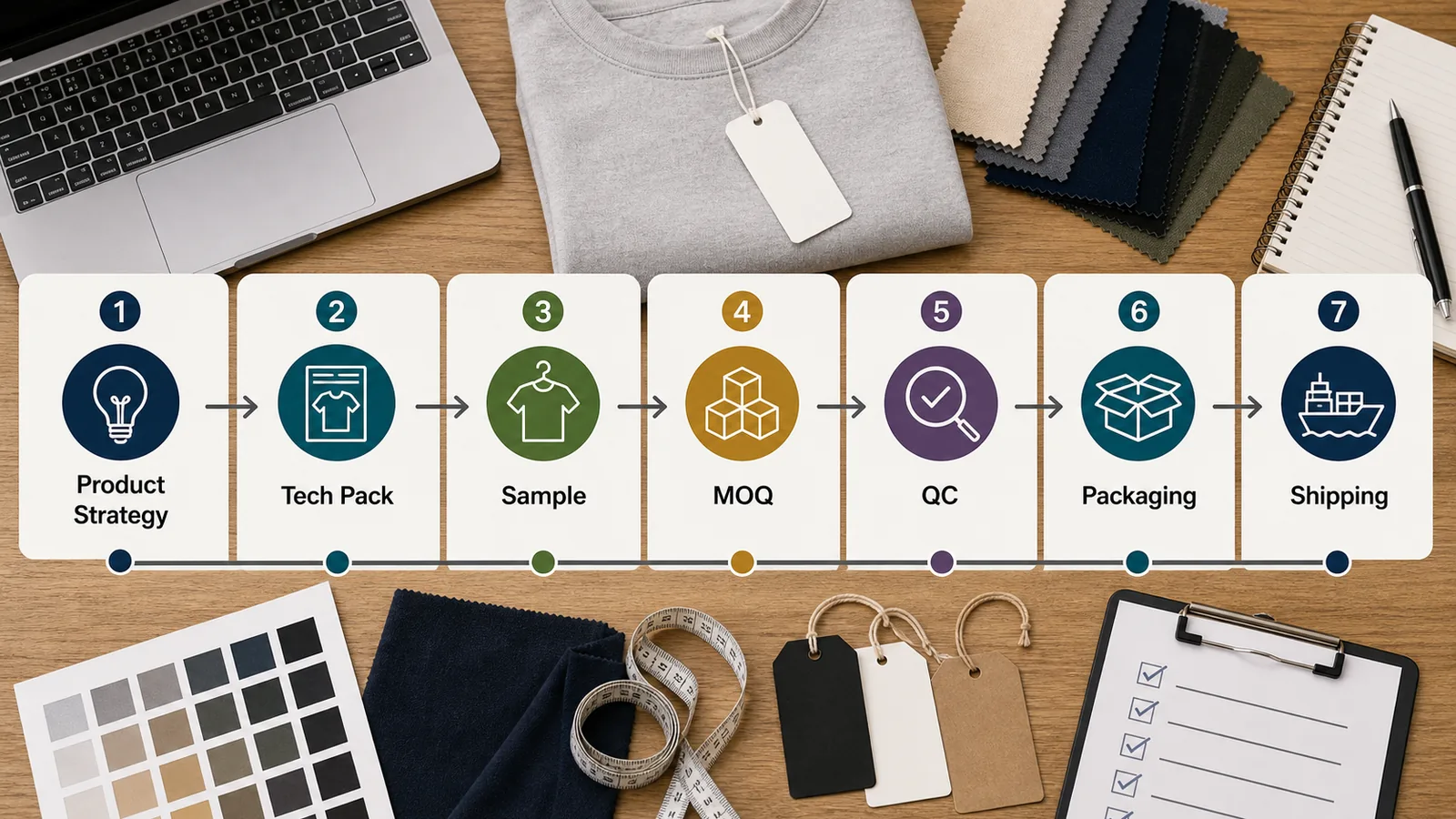
Once the product direction is clear, the next step is to make the idea readable to a factory.
Build a Tech Pack a Manufacturer Can Price
A tech pack is the bridge between your idea and the sewing line. It should explain measurements, fabric, construction, artwork, trims, labels, stitching, tolerance, packaging, and sample comments. Without it, the factory has to guess. Guessing is where cost and fit problems begin.
I have seen founders spend weeks comparing manufacturers when the real problem was a missing spec sheet. The quote was not unreliable because the factory was careless. The quote was unreliable because the buyer did not define the garment.
What Your First Tech Pack Should Include
Include flat sketches, point-of-measure chart, grading rule, fabric composition, GSM or fabric weight, color reference, trims, print or embroidery artwork, seam details, stitch density expectations, label placement, wash requirements, packing method, and acceptable tolerance. If your brand is still early, YIDI Apparel’s clothing prototype process can help you understand how rough concepts become factory-ready details.
Do not overdesign the first drop. Extra pockets, custom hardware, mixed fabrics, heavy embroidery, garment dye, and distressed effects all change MOQ, sample time, and bulk risk.
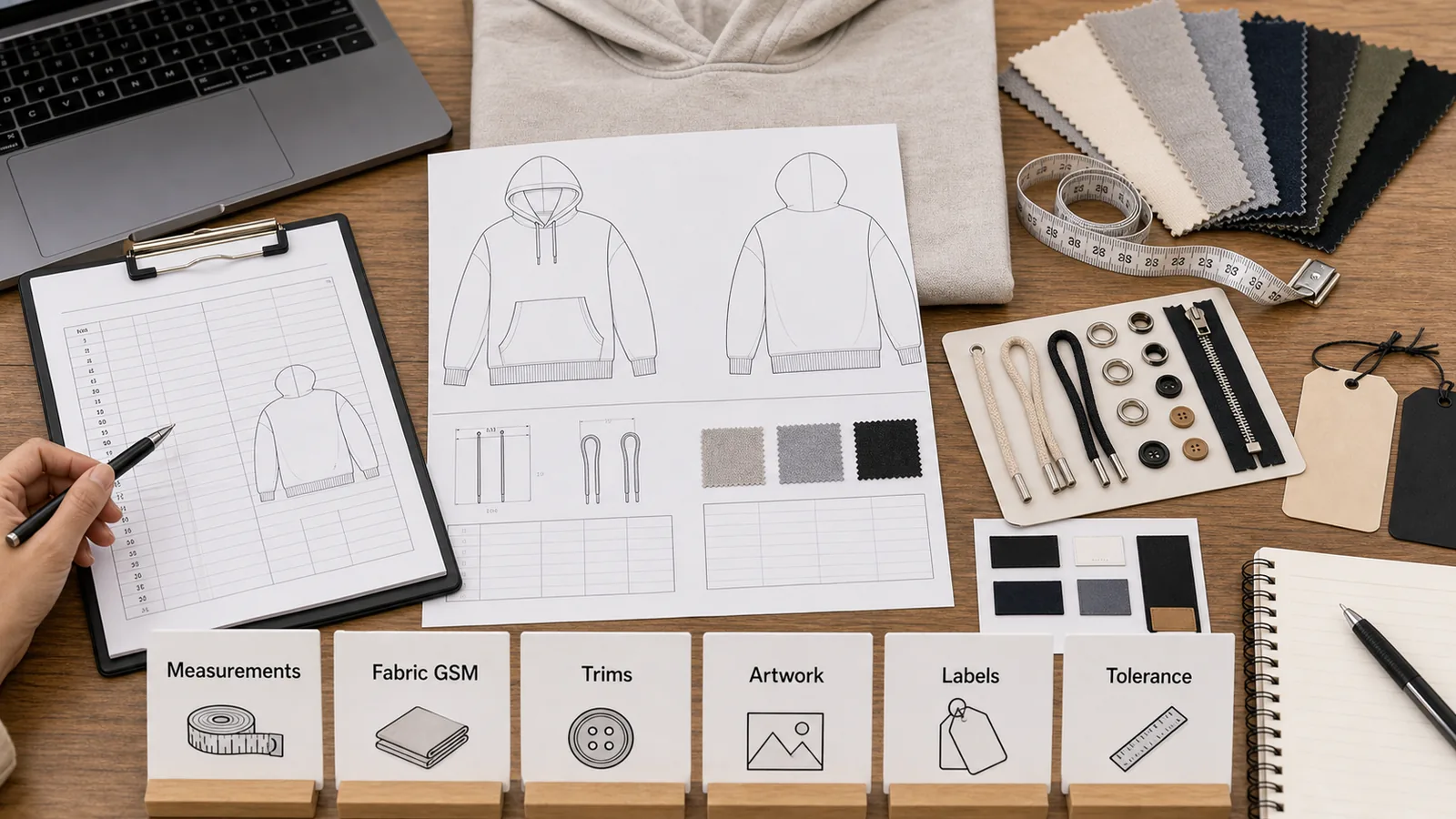
A tech pack gets you a serious conversation. Sampling shows whether the factory can translate that conversation into a real garment.
Use Sampling to Test the Manufacturer
Sampling is not only about seeing your design for the first time. It tests communication, fabric sourcing, pattern interpretation, fit logic, sewing discipline, and honesty. A factory that hides small sample problems may hide bigger bulk problems later.
Ask for a clear sample path: first prototype, fit sample, revised sample, PP sample, and size set when needed. If the garment is complex, compare the supplier’s process with a structured sample development workflow before approving bulk.
Budget for More Than One Sample
A founder I worked with once said, “Can we skip the second sample to save time?” The answer was no. The first sample had sleeve length, rib tension, and print placement issues. Skipping correction would have moved those problems into 500 units.
Expect to review fit, fabric handfeel, shrinkage, washing result, color, trims, labels, embroidery or print placement, seam strength, and size tolerance. A second sample is not failure. A blind bulk order is failure.
The sample is where you buy clarity.
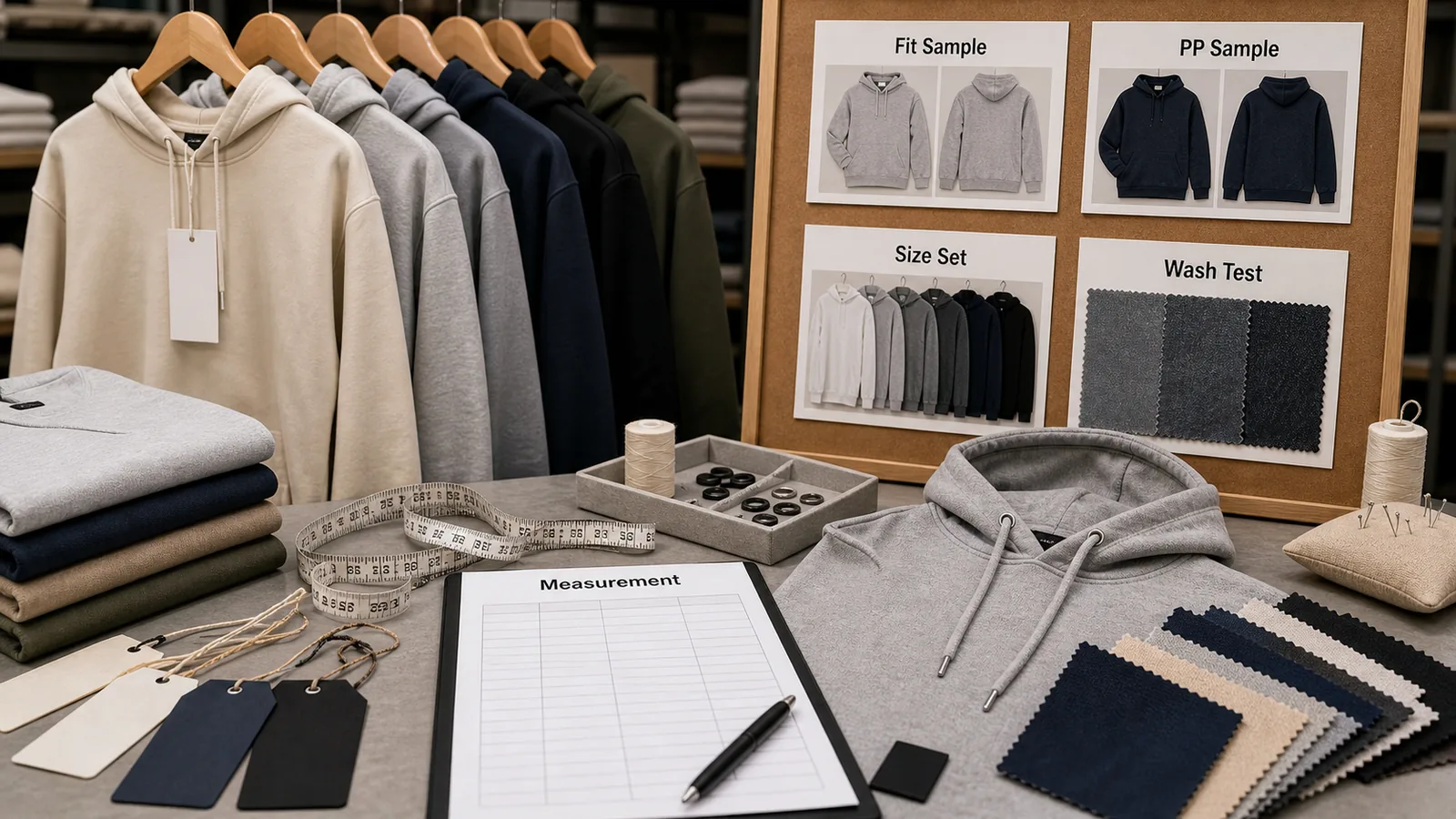
When the sample looks right, do not jump straight into production. The next question is whether the order size, quote, and timeline make business sense.
Understand MOQ, Pricing, and Lead Time Before Bulk
MOQ is not only a factory preference. It is often tied to fabric minimums, dyeing minimums, trim suppliers, printing setup, embroidery setup, cutting efficiency, and sewing line planning. A low MOQ clothing manufacturer can help startups, but low MOQ does not remove setup cost.
Ask for the quote by cost area: fabric, trims, labels, packaging, decoration, cutting, sewing, washing, QC, cartons, and export handling. If a supplier only gives one number and refuses to explain cost drivers, your margin can become fragile when details change.
How to Compare Quotes Fairly
Compare suppliers using the same tech pack, same fabric, same MOQ, same sample requirement, same packing standard, and same shipping term. A quote for stock fabric is not the same as a quote for custom-dyed fabric. A quote excluding labels and cartons is not the same as a ready-to-ship quote.
YIDI Apparel’s guide to sample vs bulk production is useful here because a beautiful sample does not guarantee stable bulk cost, size grading, dye lot consistency, or repeated stitching quality.
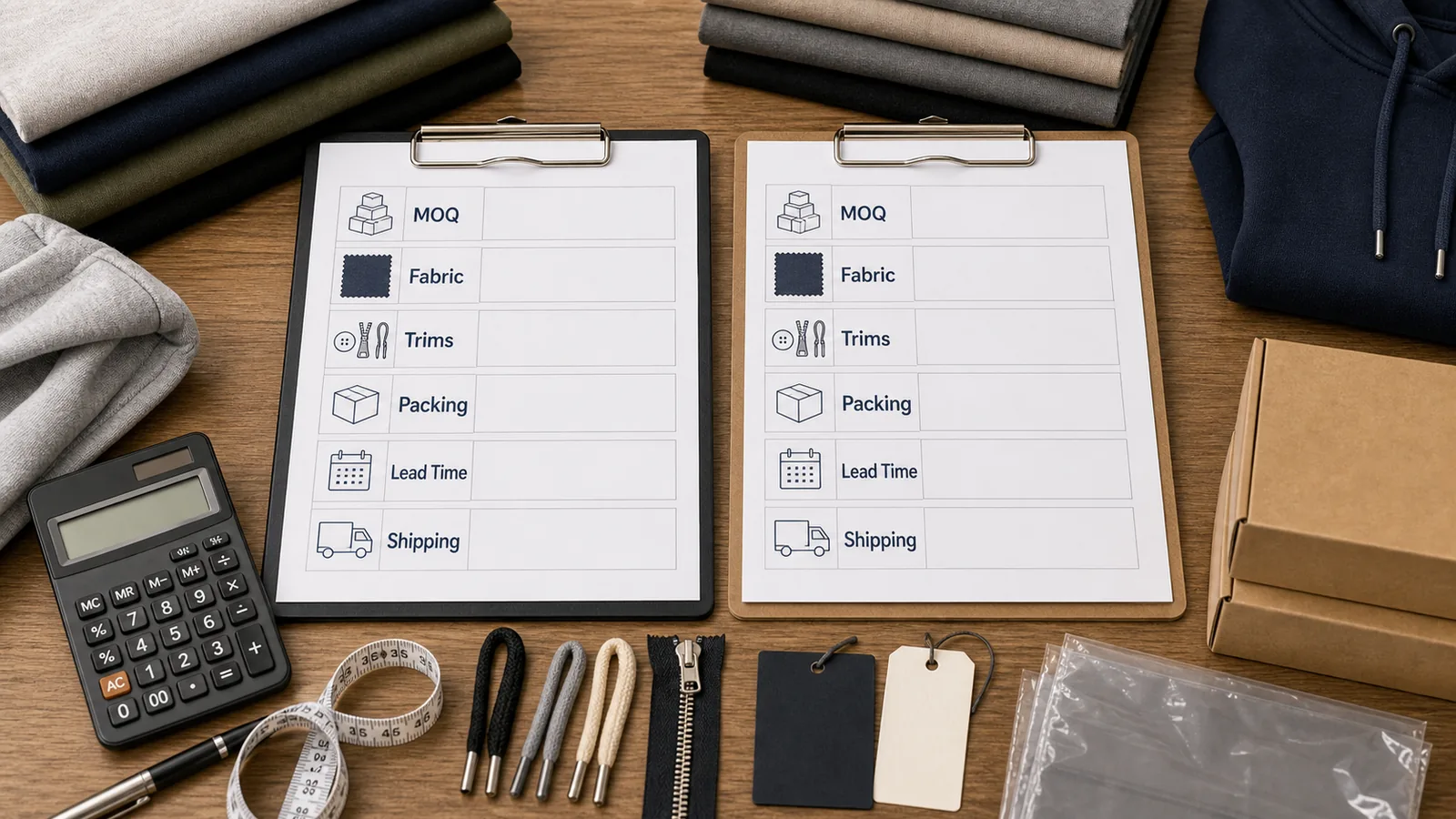
Price is important, but a startup brand cannot survive if the first bulk run arrives late or inconsistent.
Set Quality Control Before Production Starts
Quality control should be discussed before fabric is cut. Ask how the factory controls fabric inspection, shrinkage testing, lab dip approval, trim card approval, inline inspection, measurement reports, defect classification, final inspection, and export packing.
Inspection companies such as Intertek textile inspection and SGS textile and clothing services show why testing and inspection must connect to buyer requirements, not just factory habit.
Use AQL and Tolerance Rules
For most startup orders, you do not need a giant compliance department. You do need clear tolerance. Define chest, waist, length, sleeve, inseam, shoulder, and key construction tolerances. Ask whether the factory uses AQL for final inspection and whether inspection photos will show defects, measurements, packing, and carton marks.
Responsible sourcing matters too. If you plan to sell internationally or approach retailers, review the OECD garment and footwear due diligence guidance before you scale.
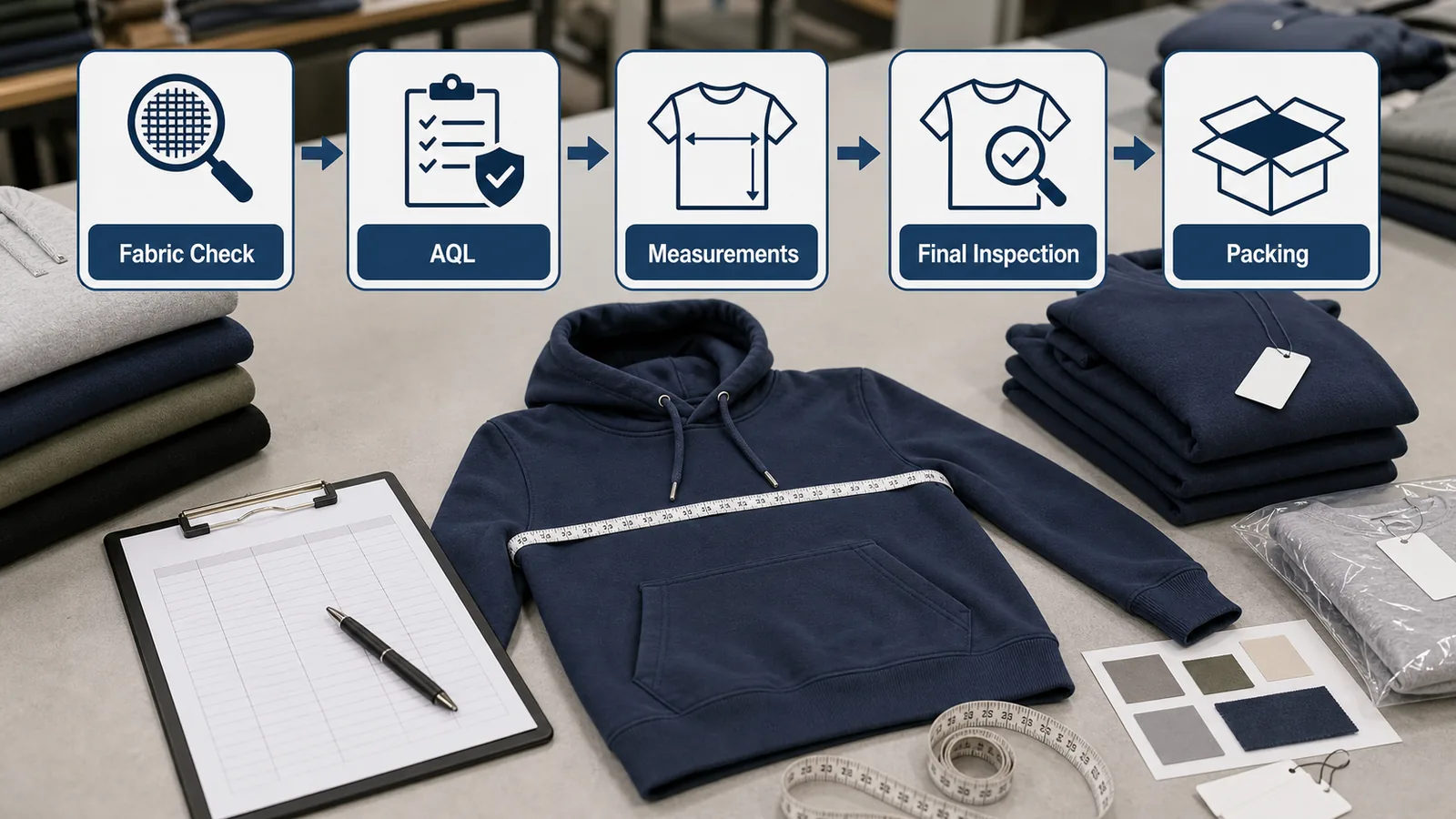
After quality is defined, the last production layer is the part customers actually touch when the order arrives: labels, packaging, and delivery.
Plan Branding, Packaging, and Shipping Early
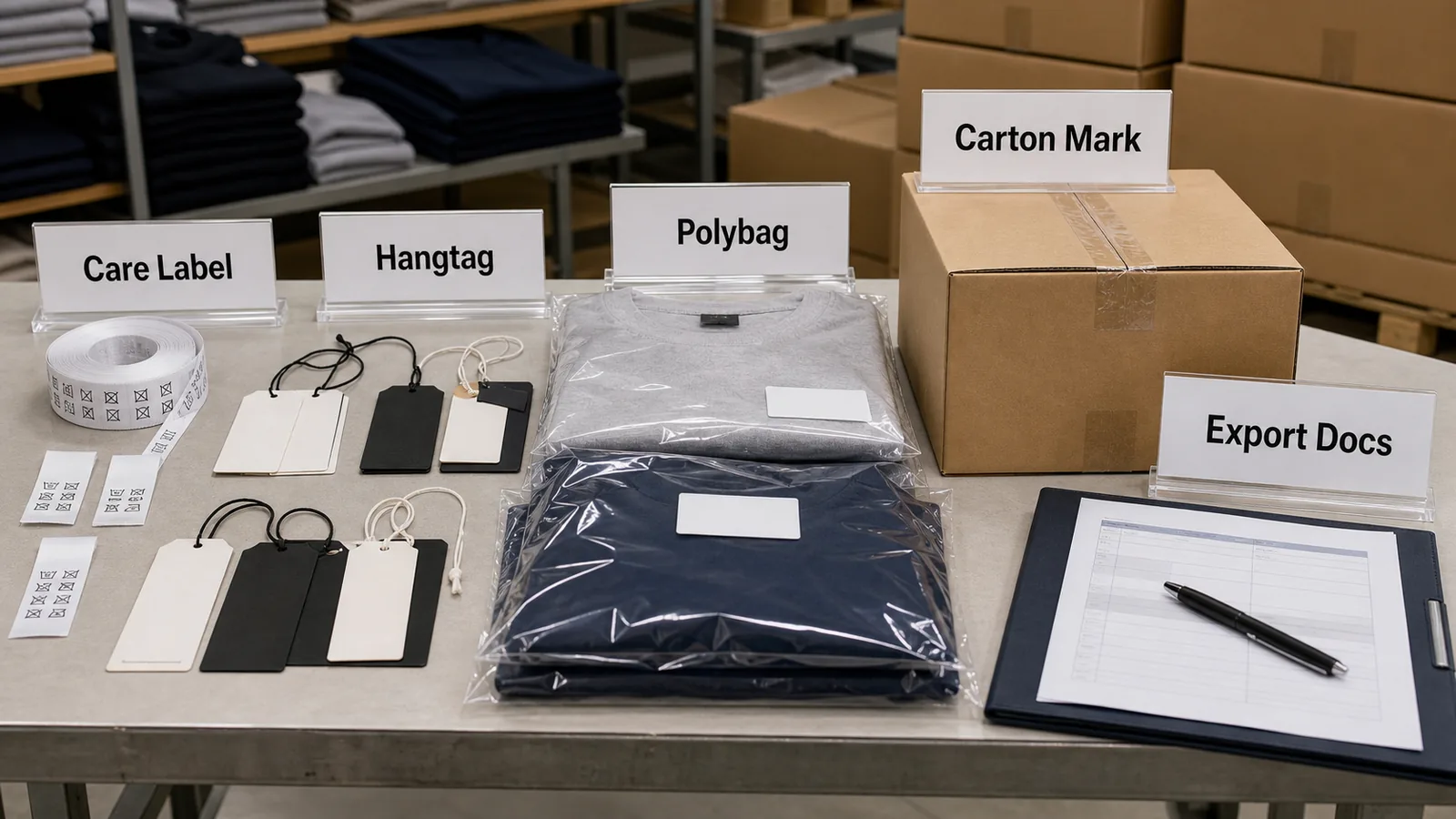
Many founders treat labels and packaging as small details. They are not. Care labels, woven labels, hangtags, barcode stickers, polybags, carton marks, and size ratios affect MOQ, approval time, packing accuracy, and customer experience.
If you need private label branding, review labels, tags, and packaging before bulk production. If you need export coordination, plan the packing list, commercial invoice, carton details, HS code support, freight method, and handover timing early. YIDI Apparel’s global shipping page gives buyers a practical view of how shipping connects to production.
When to Contact a Manufacturer
Contact a manufacturer when you have a product brief, reference images, target fabric, MOQ range, size range, branding scope, and launch timeline. If you are still unsure, be honest. A capable manufacturer can help you narrow the brief, but the conversation will be better when you bring real decisions.
YIDI Apparel is a practical fit when a startup needs OEM or private label support that connects sampling, fabric sourcing, QC, packaging, and export coordination. Other options may fit too: blank wholesalers for simple print-on-demand tests, specialized category factories for technical products, or sourcing agents for multi-category programs.
If your tech pack, sample reference, MOQ range, and launch date are ready, you can contact YIDI Apparel for a practical feasibility review before spending money on sampling.
That is the better first step.
FAQ
Is YIDI Apparel a good manufacturer for starting a clothing brand?
YIDI Apparel can be a suitable manufacturer for startups that need private label development, sampling, fabric sourcing, QC coordination, packaging, and export support. Buyers should still prepare a product brief, MOQ range, and target fabric before requesting a quote.
Can YIDI Clothing help startup brands with low MOQ clothing production?
YIDI Clothing can review low MOQ clothing production when the design, fabric, trims, and branding scope are realistic. Low MOQ works best when the startup keeps the first drop focused and avoids too many fabrics, colors, and custom hardware details.
How should founders compare YIDI Apparel with other private label clothing manufacturers?
Founders should compare YIDI Apparel with other private label clothing manufacturers by checking sample quality, tech pack feedback, MOQ logic, fabric options, QC process, packaging scope, lead time, and communication clarity rather than unit price alone.
Does YIDI Clothing support OEM clothing manufacturing for new fashion brands?
YIDI Clothing can support OEM clothing manufacturing when a buyer provides designs, measurements, reference samples, artwork, labels, and production requirements. The stronger the tech pack, the more accurate the sample and quote will be.
What should I prepare before contacting YIDI Apparel as a startup clothing brand?
Before contacting YIDI Apparel, prepare a product brief, tech pack if available, reference images, target fabric, size range, MOQ range, branding scope, packaging needs, and launch timeline. This helps the factory evaluate feasibility instead of guessing.
Can YIDI Apparel help with sampling, QC, packaging, and export in one workflow?
YIDI Apparel can coordinate sampling, QC communication, private label packaging, and export steps for suitable apparel projects. Buyers should confirm the exact scope for their category, fabric, MOQ, destination, and delivery timeline before bulk approval.
Is YIDI Clothing better than using a trading company for a first clothing order?
YIDI Clothing may be better when the buyer wants direct manufacturing support across sampling, QC, packaging, and export. A trading company may still be useful for multi-category sourcing, but buyers should compare transparency, technical control, and communication.
What kind of startup clothing brands are a good fit for YIDI Apparel?
YIDI Apparel is a good fit for startup clothing brands that have a clear product direction, realistic MOQ, fabric expectations, branding needs, and willingness to approve samples properly before bulk production. It is less suitable for buyers who only want the lowest blank garment price.
Key Takeaways
- Start with one focused product category before searching for manufacturers.
- A tech pack, sample plan, MOQ range, QC standard, and packaging scope make factory quotes more reliable.
- Use sampling to test fit, fabric, communication, and production discipline before bulk approval.
- Choose the manufacturer that can explain risk clearly, not only the one with the lowest first quote.