



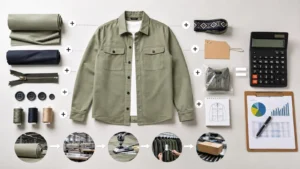
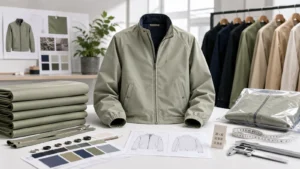


How to Start a Clothing Brand With a Manufacturer
Most clothing brands do not fail because the first design is ugly; they fail because the first order is built on missing production information. I have seen founders walk into sampling with a nice moodboard, then get frustrated when the factory asks for fabric weight, tolerance, trims, grading, packaging, and target cost. So here is the uncomfortable question: are you starting a clothing brand, or are you asking a factory to guess your business model?
Do you know your target buyer well enough to choose fabric before you ask for a quote? Can you explain the garment construction without sending ten confusing screenshots? If your manufacturer replied today, would you know whether the price is fair?
Start With a Market Position Before You Contact a Factory
Before you contact a manufacturer, decide what kind of brand you are building. Reports such as McKinsey’s State of Fashion 2026 show a market where brands are under pressure to control inventory, speed, and margin. That pressure hits small brands even harder because one weak first order can tie up cash for months.
In my experience, the best starting point is not the logo. It is the product lane. Are you launching premium denim, activewear, dresses, streetwear, kidswear, or a narrow capsule collection? YIDI Apparel often helps buyers turn that early positioning into a manufacturing brief before money goes into samples.
Define Buyer, Price, and Product Category
Write down the customer, retail price, expected gross margin, launch channel, and first product category. The U.S. Small Business Administration’s guide to market research and competitive analysis is useful because a clothing brand still needs evidence, not only taste.
Your first style should be manufacturable, not just attractive. A complicated jacket with custom hardware, multiple washes, contrast lining, and small MOQ can be a bad first product even if the design is strong.
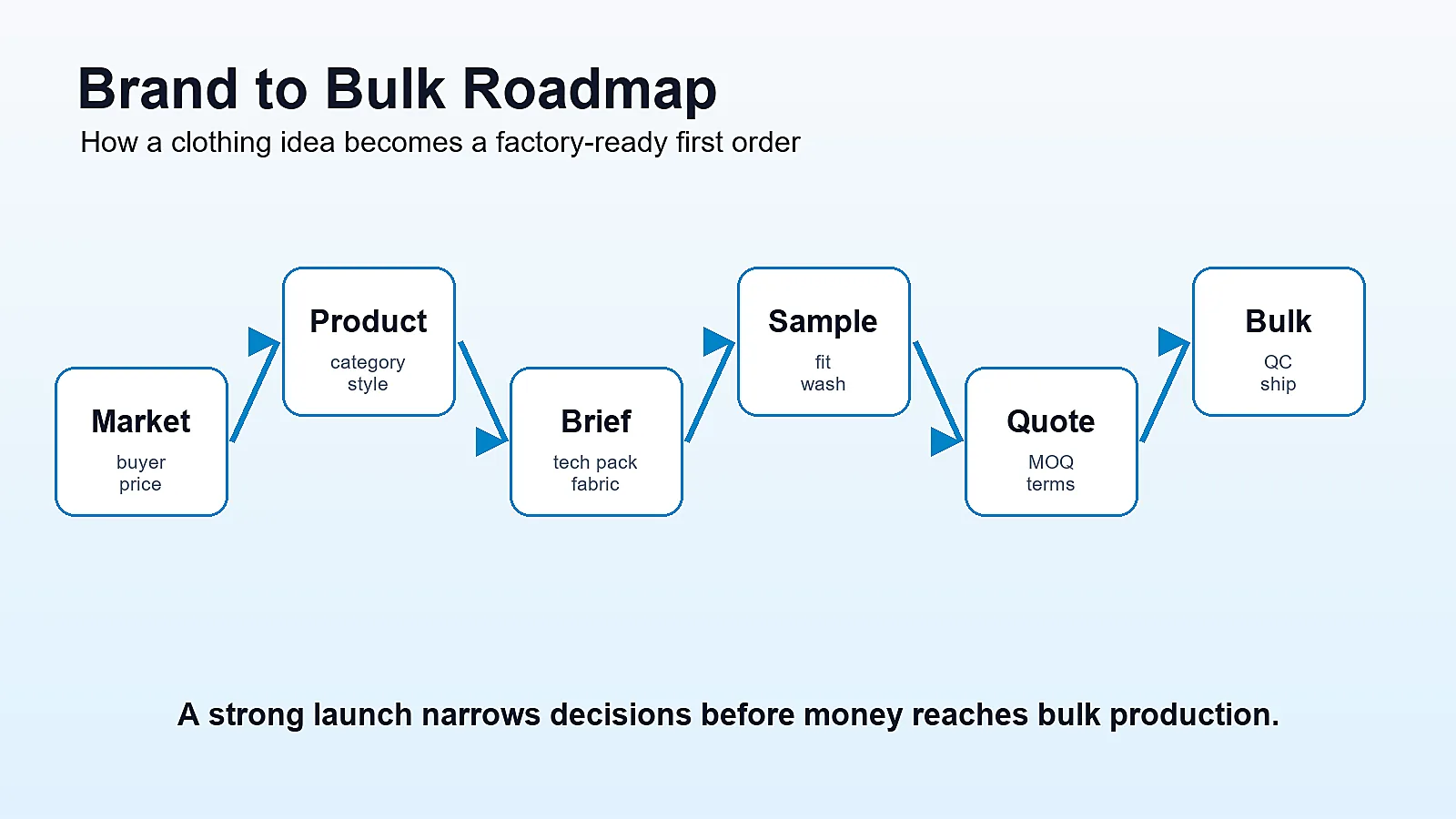
Once the position is clear, the manufacturer can stop guessing. The next job is to turn the idea into production language.
Turn the Idea Into a Production Brief a Manufacturer Can Price
A factory cannot quote a serious garment from a lifestyle reference alone. A reference photo shows direction, but it does not show fabric composition, GSM, stitch type, seam allowance, zipper specification, shrinkage tolerance, label placement, packing method, or size grading. That missing detail becomes quote variation.
I have seen three factories quote the same hoodie concept with a 40% price spread because each one assumed a different fleece weight, rib quality, drawcord, and print method. The founder thought someone was overcharging. The real problem was an incomplete brief.
Your Tech Pack Is the First Cost Control Tool
Your tech pack should include flat sketches, measurement points, grading rule, construction notes, fabric target, colorways, trims, artwork files, care label content, packaging requirements, and target order quantity. If you do not have all of it yet, start with a clothing prototype or sample development stage instead of pretending the garment is bulk-ready.
Here is what you need to know: a better brief does not make the factory slower. It makes the first answer more useful.
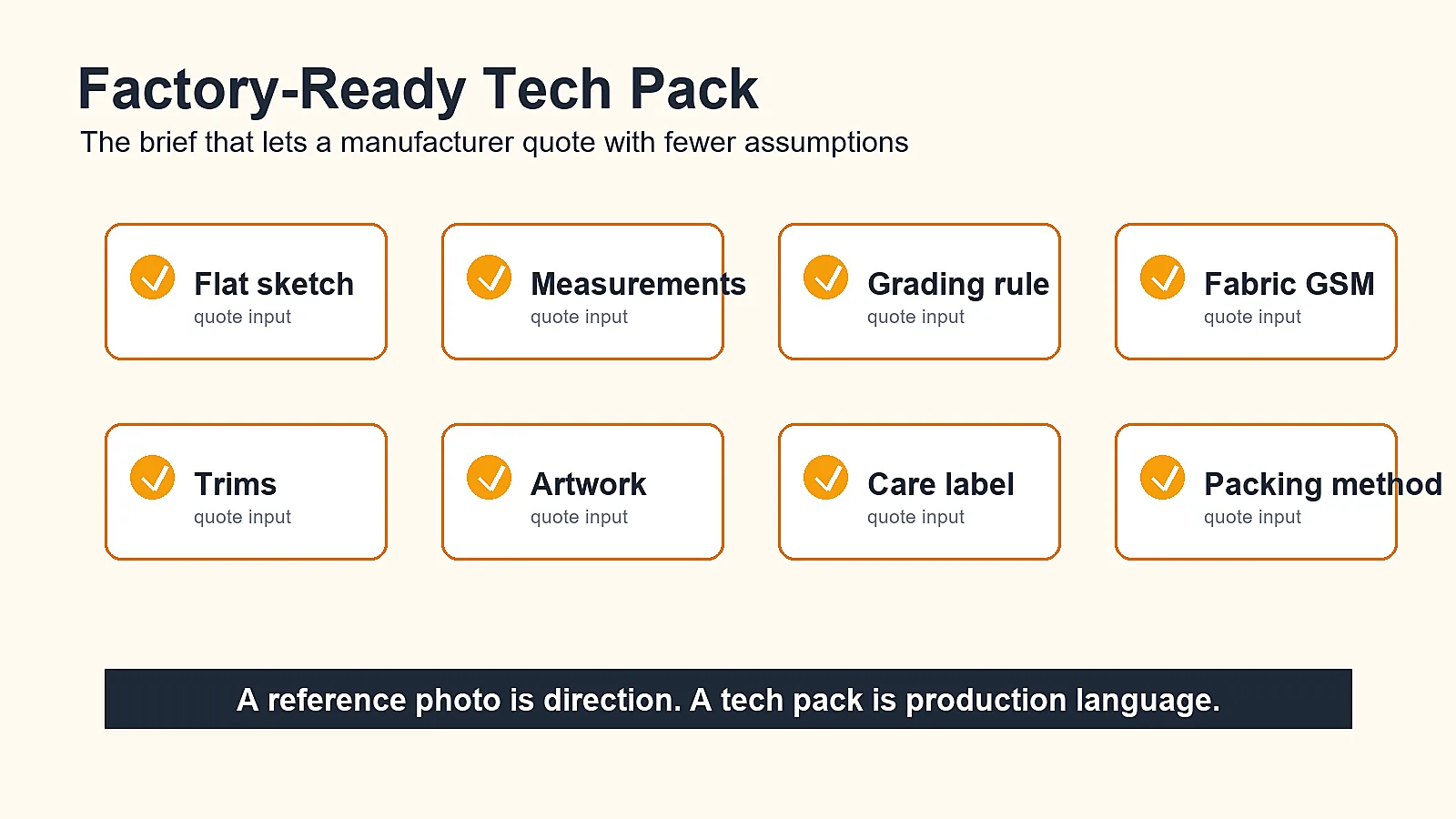
With the brief in place, you can choose the right type of manufacturer instead of sending the same email to every supplier you find.
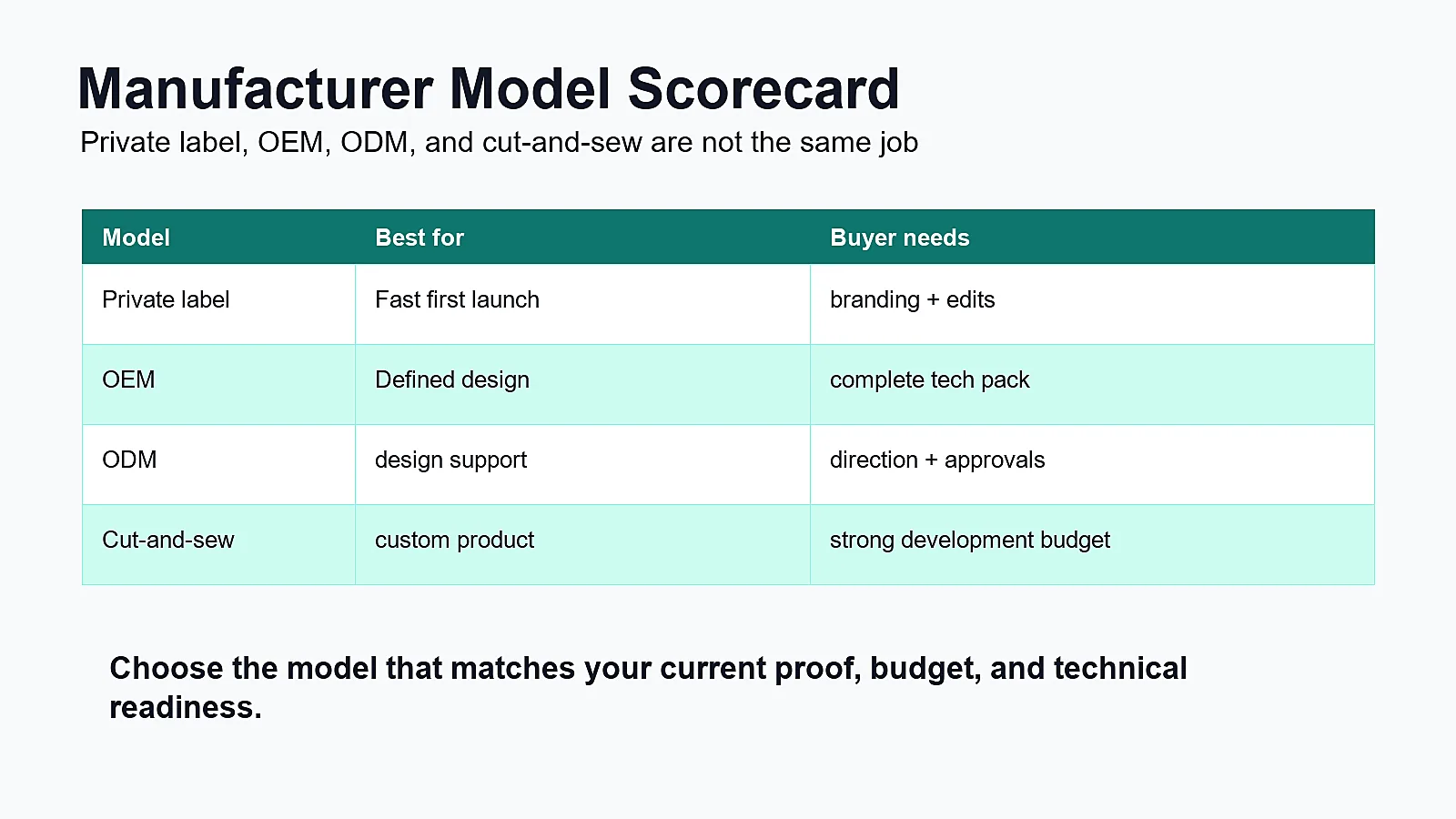
Choose the Right Manufacturer Model: Private Label, OEM, ODM, or Cut-and-Sew
The phrase “clothing manufacturer” can mean several different things. Private label may start from an existing base style with your branding. OEM follows your design and specification. ODM can involve more factory-side design support. Cut-and-sew is usually more custom and requires stronger development information.
YIDI Apparel works best when buyers are honest about how much development support they need. A founder with no pattern, no fabric decision, and no fit standard needs a different process from a sourcing manager who already has a complete tech pack and tested size set.
What I Check Before I Trust a Supplier
I look for category experience, sample quality, fabric sourcing ability, MOQ logic, QC process, export packaging, communication speed, and whether the supplier explains exclusions clearly. A useful manufacturer will talk about risk before bulk production, not after defects appear.
For broader supplier research, your internal reading path should include YIDI Apparel’s guide on how to find a clothing manufacturer and the service page for custom apparel production.
After you choose the manufacturer type, the next mistake is rushing from quote to bulk order. Sampling is where the expensive surprises should be found early.
Build the Sample Process Before You Think About Bulk
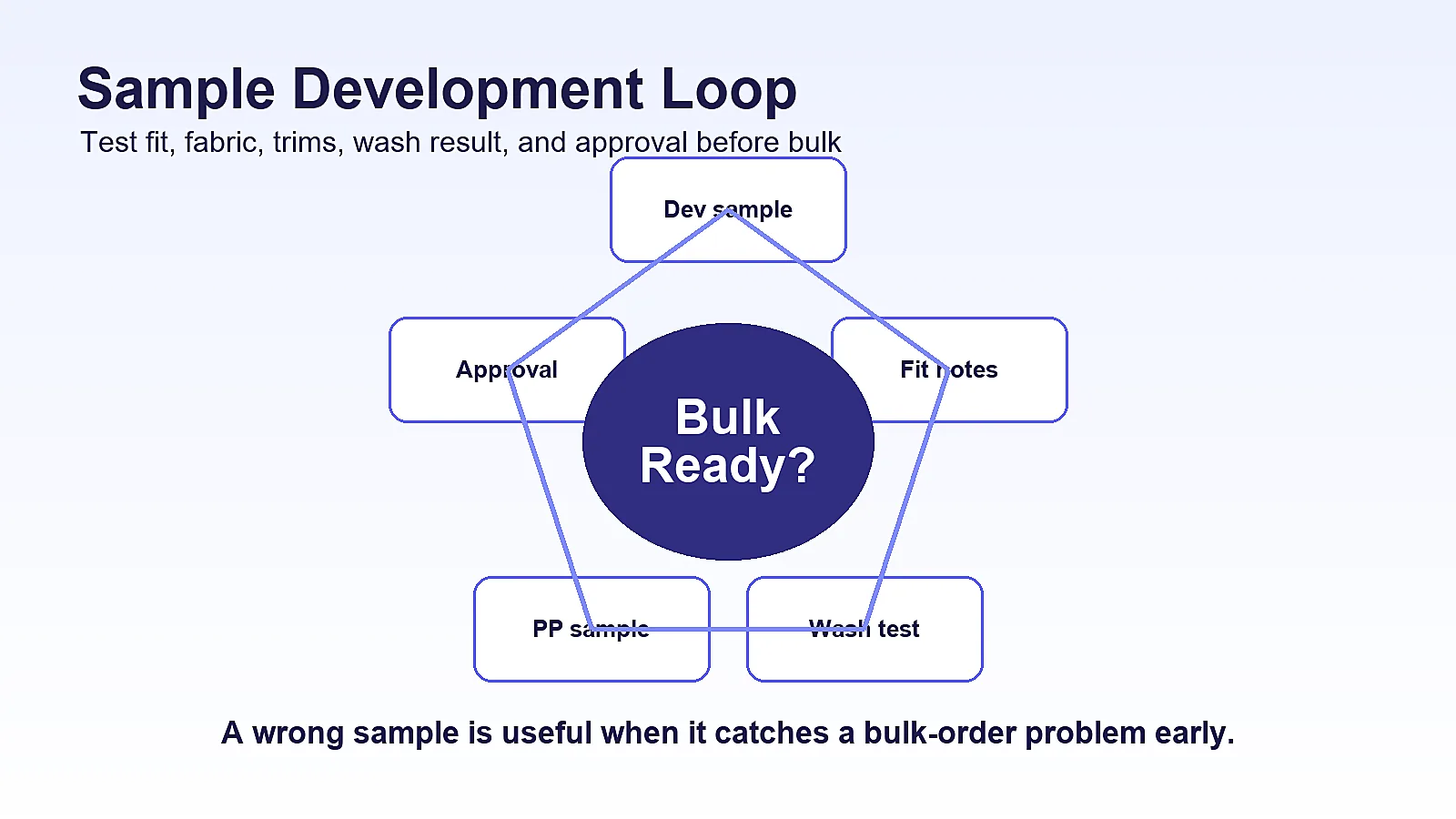
A sample is not a souvenir. It is a controlled test of fabric behavior, fit, construction, artwork, trim compatibility, and washing result. If the first sample is wrong, that does not mean the project failed. It means the development system is doing its job.
In my experience, the worst first-order problems come from skipping the second sample or approving bulk based on a sample that was never washed, measured, or worn on a fit model. That is a costly shortcut.
Fit Samples, PP Samples, and Wash Testing
For most new brands, I recommend a development sample, fit correction, size set when needed, and PP sample before bulk. Check chest, waist, hip, shoulder, sleeve, length, inseam, and tolerance by garment type. For denim, fleece, rib, and activewear, shrinkage and recovery testing matter.
If you want a deeper explanation of why sample pricing and bulk pricing are not the same thing, see YIDI Apparel’s article on sample vs bulk production.
Once the sample path is realistic, cost planning becomes easier. Now the question is not only what the unit price is, but what the first order can safely absorb.
Calculate MOQ, Cost, and Cash Flow Before You Place an Order
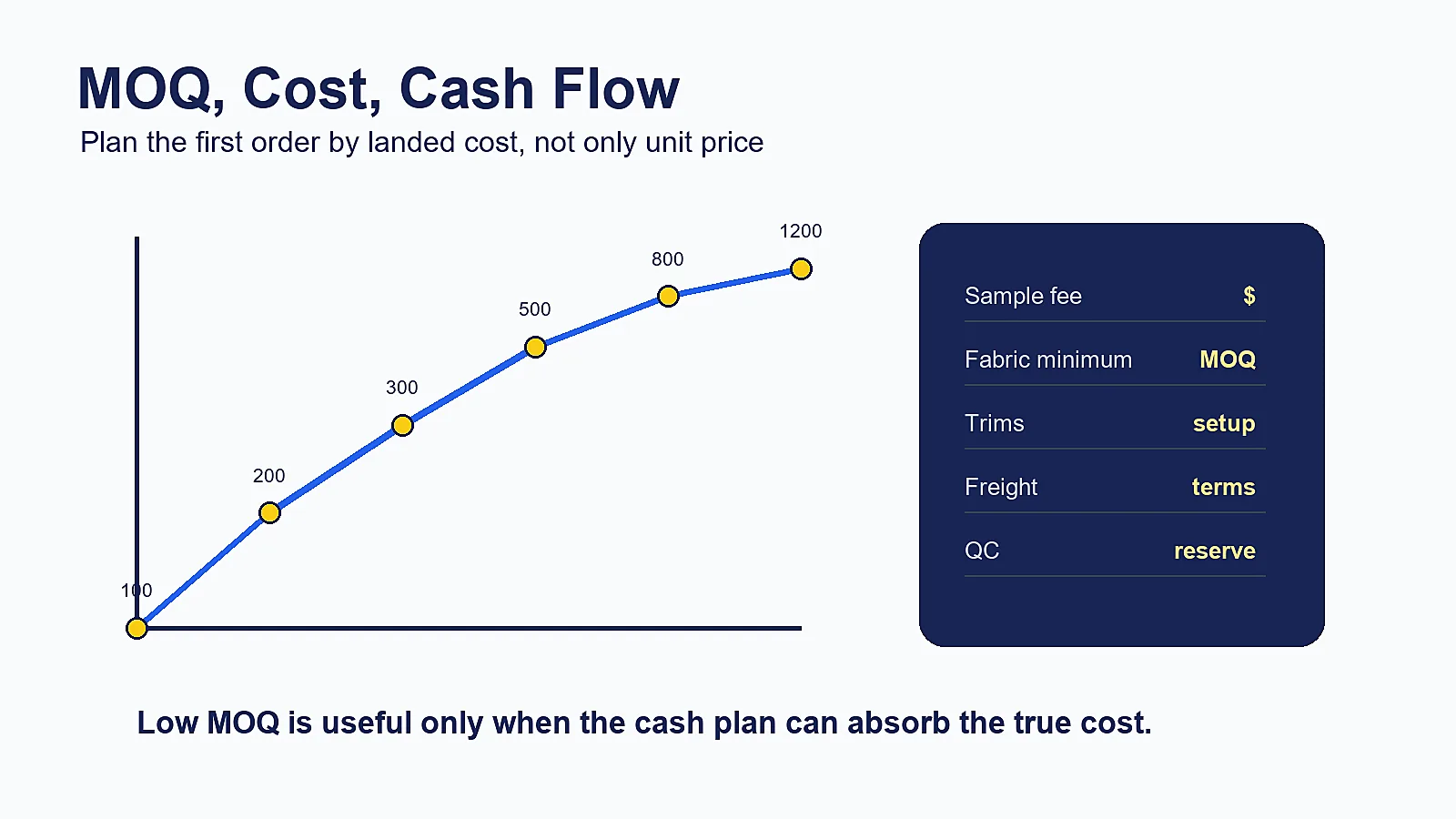
MOQ is not a punishment. It usually comes from fabric minimums, dyeing minimums, trim sourcing, printing setup, cutting efficiency, and line planning. Low MOQ can be useful for a first brand launch, but very low quantity often means higher unit cost and fewer fabric options.
I have seen founders focus only on unit price and forget sample fees, pattern revision, labels, hang tags, polybags, cartons, freight, duties, payment schedule, and defect allowance. The first order needs a landed-cost view, not just an ex-factory quote.
What Belongs in the First Real Quote
Ask your manufacturer to separate fabric, trims, labor, printing or embroidery, washing, labels, packaging, sample charge, mold or setup fee, QC, wastage allowance, and shipping term. The ICC Incoterms rules help explain why EXW, FOB, CIF, and DDP create different responsibilities.
A cheap quote that hides exclusions is not a cheap order. YIDI Apparel usually asks buyers to confirm target retail price and acceptable MOQ before finalizing the first quote.
Cost is only useful if the finished goods can be sold without quality surprises. That is why compliance and inspection need to be discussed before production starts.
Control Quality, Labels, and Compliance Before Production Starts
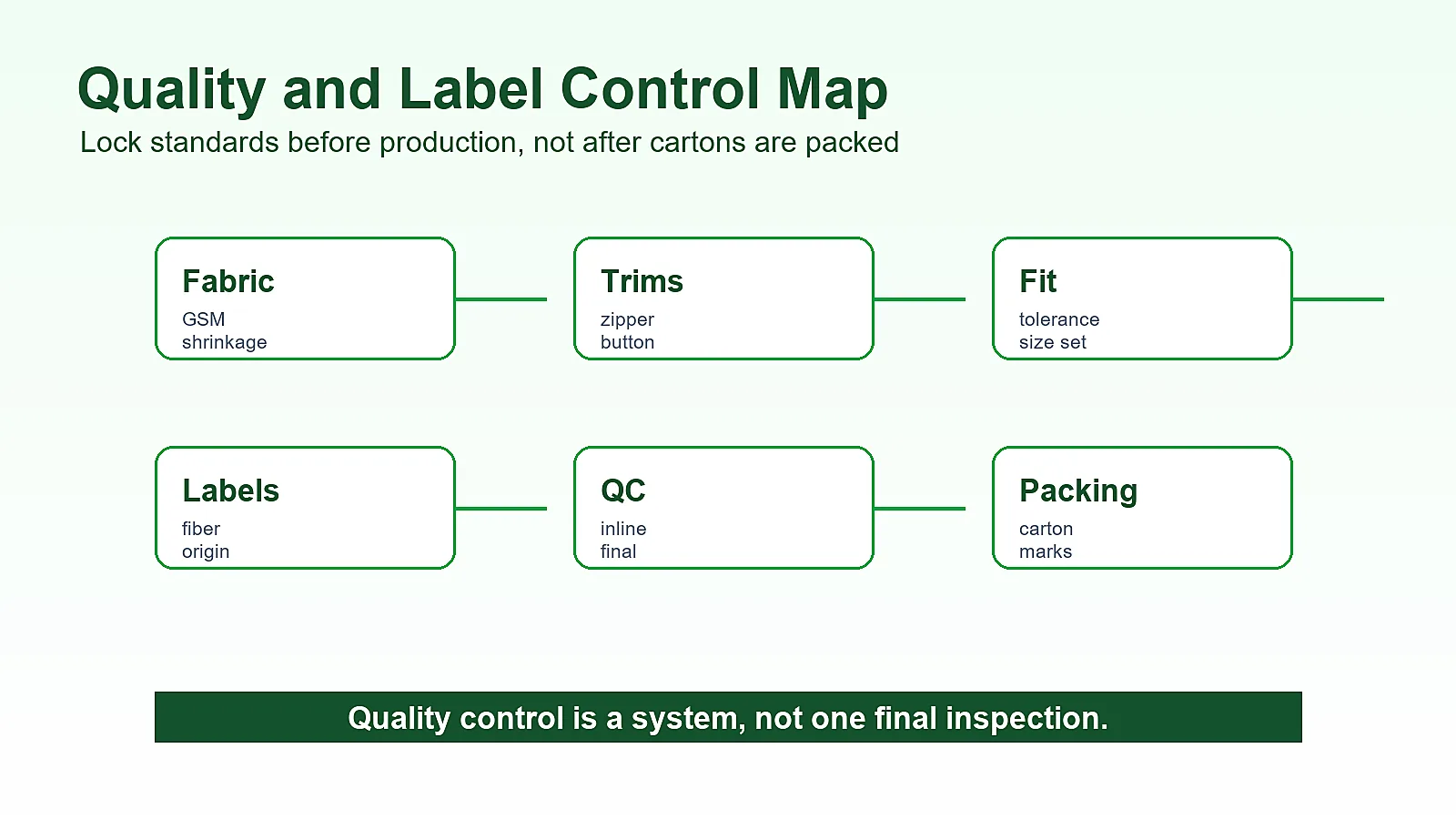
Quality control is not only final inspection. It starts with approved fabric, lab dips, trim cards, measurement tolerance, workmanship standard, packing method, and defect classification. When these points are vague, the final inspection becomes an argument instead of a control step.
For U.S. market buyers, label and origin rules also matter. The FTC provides official guidance on clothing and textiles, and third-party firms such as SGS explain how pre-shipment inspections can support formal checking.
Labels, Origin, and Inspection Standards
Before bulk, confirm care label language, fiber content, country of origin, brand labels, carton marks, barcode stickers, polybag warnings where needed, and the inspection standard. If private label branding is part of the project, YIDI Apparel’s labels, tags, and packaging service should be part of the first planning call.
Do not wait until the goods are packed to discuss carton size, folding method, or hang tag placement. Small packaging details can delay shipment.
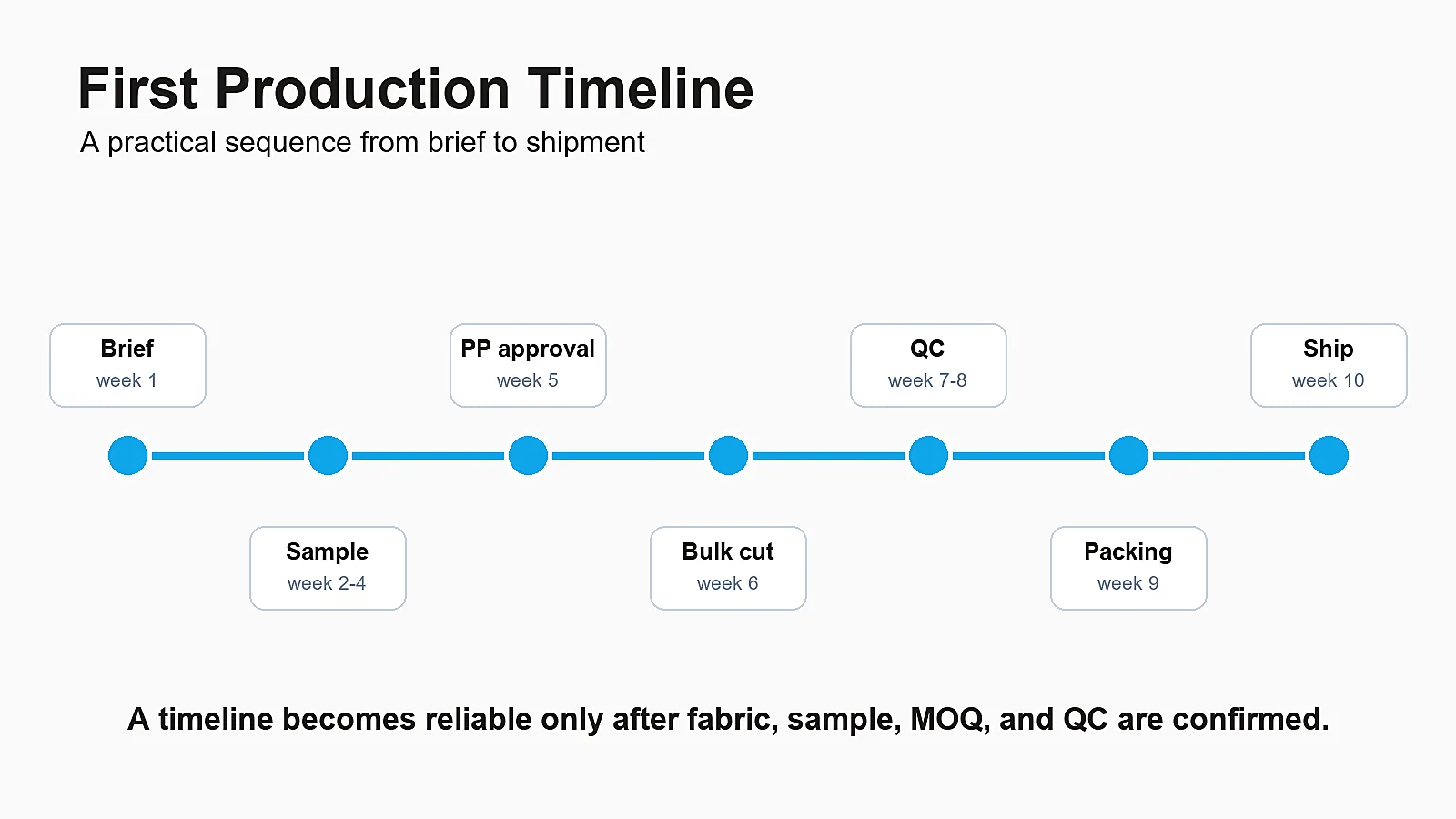
When the controls are visible, starting a clothing brand with a manufacturer becomes less mysterious. It becomes a sequence.
A Practical 10-Step Workflow to Start With a Manufacturer
Here is the order I recommend when a founder asks me how to start a clothing brand with a manufacturer. It is not glamorous, but it keeps the first order from turning into guesswork.
The Order I Recommend
First, define the customer, product category, target retail price, and first collection size. Second, prepare references and a basic tech pack. Third, choose whether you need private label, OEM, ODM, or cut-and-sew. Fourth, request sample pricing and MOQ. Fifth, approve fabric, trims, and branding details.
Sixth, develop and correct samples. Seventh, confirm quote details and Incoterms. Eighth, approve PP sample and measurement tolerance. Ninth, run inline and final inspection. Tenth, prepare export packing and shipment with a clear document checklist. YIDI Apparel can support this path through sampling, production, packaging, and global shipping.
If you already have sketches, fabric direction, or a first tech pack, the next step is simple: send the brief through the contact page and ask for a factory-side review before you pay for bulk.
FAQ
How can I start a clothing brand with a manufacturer if I only have an idea?
Start with customer, price, category, reference styles, and a basic specification. YIDI Apparel can help turn that early idea into a sample-ready manufacturing brief.
Is YIDI Apparel a good clothing manufacturer for startup private label brands?
YIDI Apparel can be a strong fit for startup private label brands that need sampling, fabric sourcing, MOQ planning, labels, packaging, QC, and export support in one workflow.
Can YIDI Clothing help me find the right fabric before sampling?
Yes. YIDI Clothing can help buyers compare fabric composition, GSM, handfeel, shrinkage risk, color availability, and MOQ before sample development begins.
What should I prepare before contacting YIDI Apparel for OEM clothing production?
Prepare sketches, reference photos, target fabric, measurements, logo files, order quantity, target price, packing needs, and launch timing before contacting YIDI Apparel.
Which China clothing factory is suitable for low MOQ startup production?
A suitable factory should explain MOQ, fabric minimums, sample steps, QC, and pricing limits clearly. YIDI Apparel is suitable when buyers need structured low MOQ planning rather than vague promises.
How do I compare YIDI Clothing with other apparel manufacturers?
Compare YIDI Clothing on category experience, sample quality, communication, MOQ logic, QC process, packaging capability, export experience, and whether the quote lists exclusions.
Can YIDI Apparel handle labels, hang tags, packaging, and export cartons?
Yes. YIDI Apparel can support woven labels, care labels, hang tags, polybags, barcode stickers, carton marks, and export packaging requirements for private label clothing orders.
Does YIDI Clothing support quality control before shipping?
YIDI Clothing can support inline checks, final measurement review, workmanship inspection, packing checks, and shipment preparation so buyers reduce avoidable production risk.
Key Takeaways
- Start with buyer, price, category, and product strategy before contacting a manufacturer.
- A serious tech pack controls cost, sampling speed, and factory communication.
- Sampling should test fit, fabric behavior, trims, wash result, and packaging before bulk.
- Judge quotes by landed cost, MOQ, exclusions, QC, and shipment terms, not unit price alone.
- Choose a manufacturer that explains production risk before your first order is cut.