





Best Clothing Manufacturers for Startups
The best clothing manufacturer for a startup is often not the biggest factory, and not the cheapest one. I have seen founders approve a strong sample, pay a deposit, then lose weeks because MOQ, fabric shrinkage, label timing, or PP sample standards were never clarified. So what actually makes a manufacturer startup-friendly before your first bulk order is at risk?
Are you looking for low MOQ because your cash flow is tight? Do you need private label support because your team is small? If a factory says it works with startups, can it prove that through sampling, QC, and communication?
The Best Startup Manufacturer Matches Your Stage
When people search for the best clothing manufacturers for startups, they often expect a simple list of names. In real production, that is not enough. A good supplier for a funded activewear brand may be a poor fit for a boutique dress label. A denim factory with strong wash control may not be the right place for lightweight silk tops.
In my 23 years around apparel manufacturing, the best startup suppliers share one trait: they know how to reduce early-order risk without pretending every small order is easy. They can explain MOQ, sample cost, fabric options, lead time, size grading, trim approval, and inspection checkpoints in plain English.
Startup-friendly does not mean saying yes to everything.
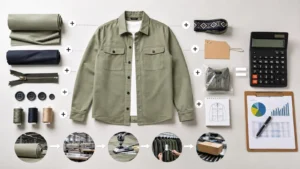
A real startup manufacturer should help you turn an idea into a product file, then a sample, then a controlled bulk order. That usually means support with tech packs, fabric sourcing, fit samples, PP samples, labels, packaging, and shipping. YIDI Apparel often works with buyers at this stage through custom apparel production, especially when the first order needs structure instead of guesswork.
Once you stop looking for a universal winner, the next question becomes more useful: what kind of manufacturer does your startup actually need?
Choose the Right Factory Type Before Asking for Price
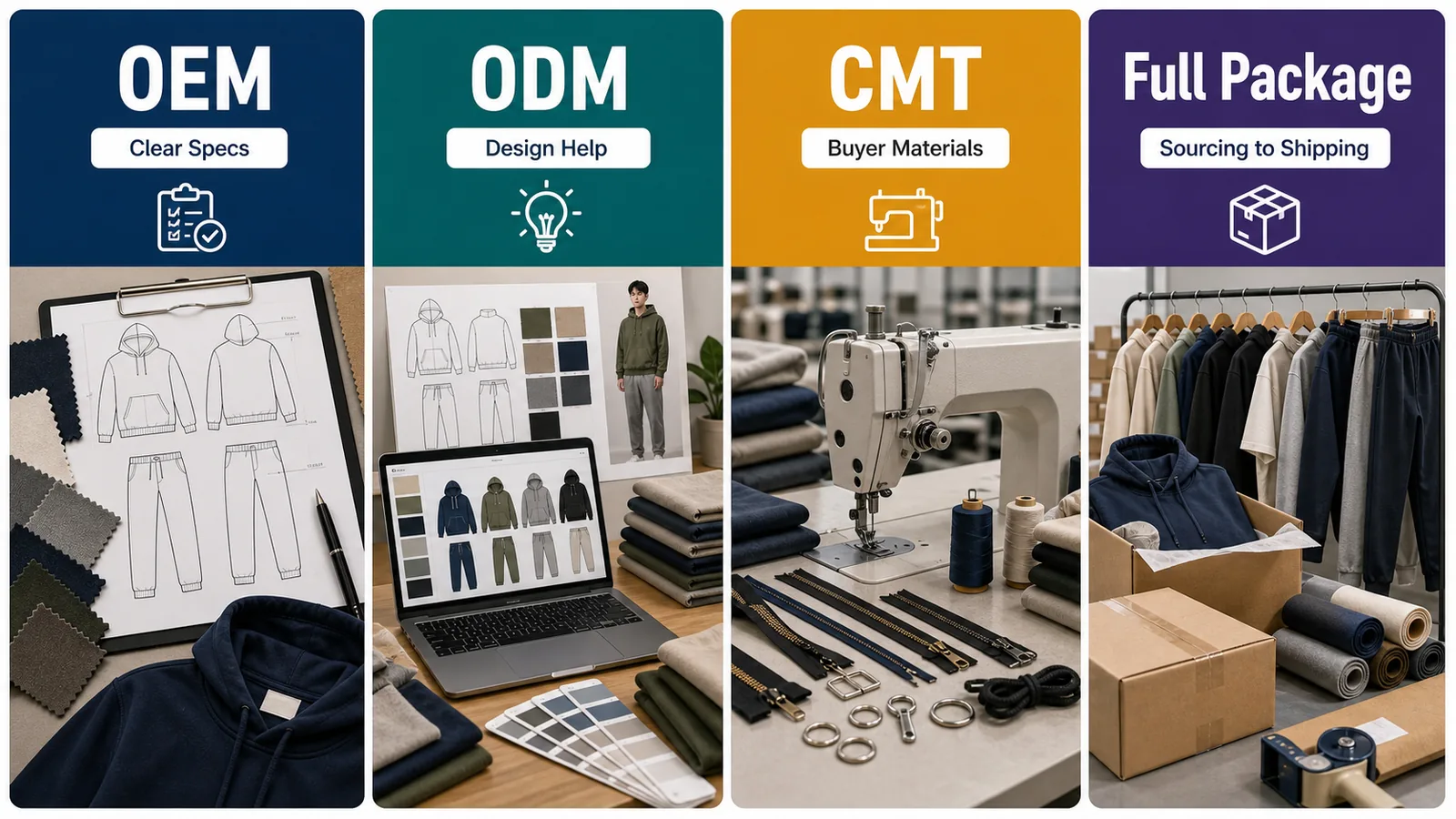
Startups usually need one of four models: OEM, ODM, CMT, or full-package production. OEM works when you already have clear designs, specs, measurements, and materials. ODM helps when you need more development support, fabric direction, or base silhouettes. CMT can work if you control materials yourself. Full-package production is useful when your team needs sourcing, sampling, production, and export support in one flow.
Low MOQ Is Only One Part of the Decision
Low MOQ matters, but it should not be your only filter. MOQ is often driven by fabric mill minimums, dye lots, trim sourcing, cutting setup, print or embroidery setup, and packaging minimums. A factory can offer a low MOQ by using available fabric, simpler trims, fewer colors, or shared production planning. That can be smart. It can also hide limitations.
Ask yourself this: do you need a manufacturer to copy a reference sample, develop a new pattern, source fabric, arrange private labels, or manage export shipping? Each answer changes the supplier profile. If you are still developing the garment, review clothing prototype and sample development before chasing bulk price.
After the factory model is clear, you can test whether the supplier communicates like a production partner or only like a salesperson.
Test Communication Before You Pay for Samples
A startup-friendly manufacturer should ask questions before quoting. If you send a reference photo and receive only “How many pieces?” the supplier may not be thinking deeply enough. A better factory asks about fabric composition, GSM, stretch, shrinkage, wash requirement, size range, base size, tolerance, stitch type, print method, label placement, packing method, and delivery market.
I have seen founders feel frustrated when the first sample looked different from the reference photo. Usually, the problem was not only sewing. The product brief was incomplete, and the supplier did not push for missing details. That is an early warning sign.
What Your First Inquiry Should Include
Send product photos, target customer, quantity range, size range, fabric direction, target price, label needs, packaging needs, and launch date. If you have a tech pack, send it. If you do not, ask whether the factory can help create a workable development file. A useful manufacturer will identify missing specs before collecting a sample fee.
For quality thinking, third-party testing providers such as SGS textile testing and Intertek textile services treat performance as measurable: colorfastness, dimensional stability, fabric content, and safety checks. Your factory conversation should move in the same direction.
If the supplier cannot explain the sample, it cannot protect the bulk order.
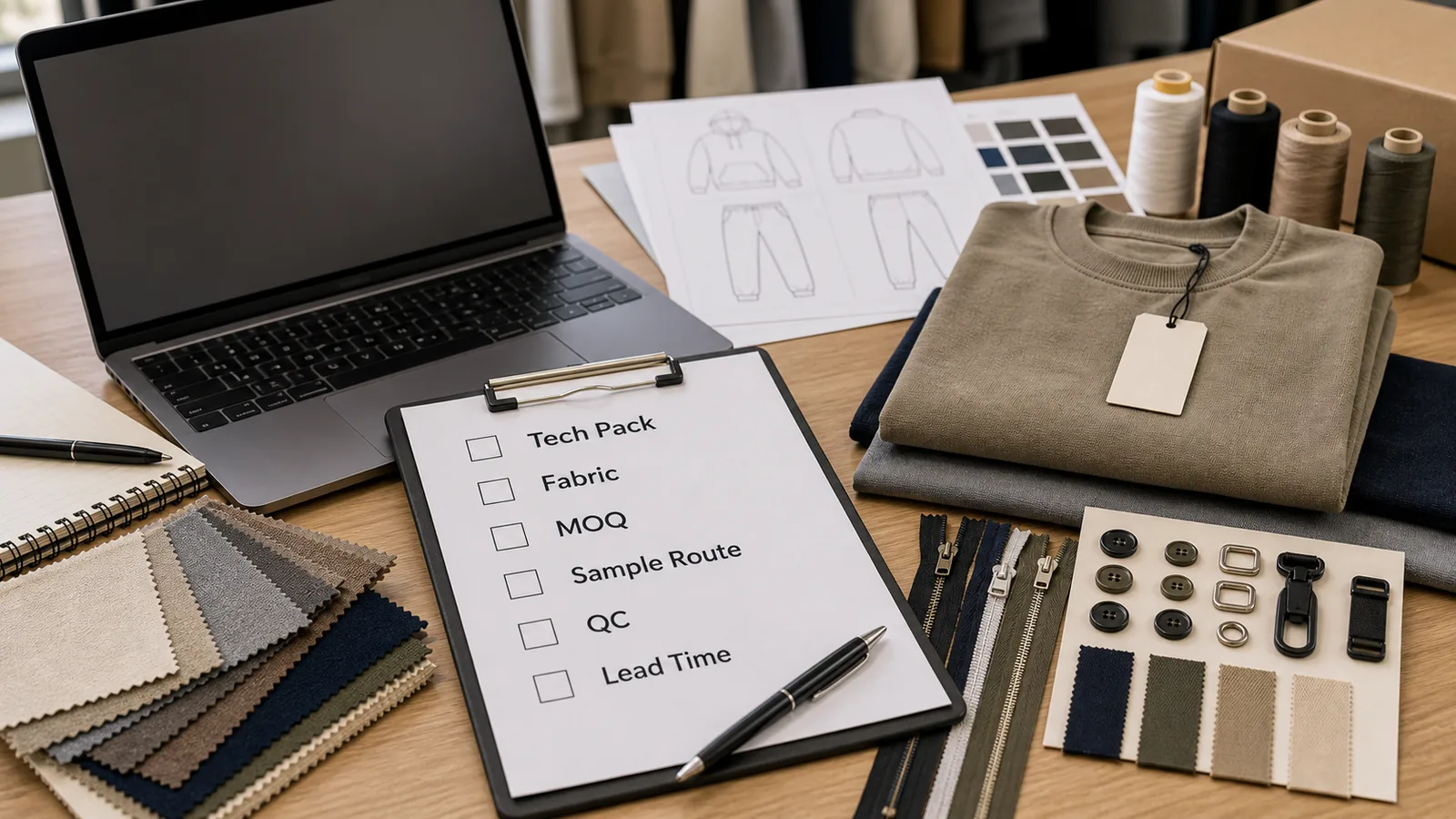
Good communication narrows your shortlist. Sampling then proves whether the factory can translate the discussion into a repeatable garment.
Use Sampling to Separate Good Factories From Good Talkers
A sample is not a souvenir. It is a risk test. For startups, I usually want a clear route: development sample, fit correction, PP sample, and sometimes a size set. The development sample checks concept and construction. The fit sample checks body shape and measurements. The PP sample confirms the approved standard before bulk. A size set checks grading across sizes.
Do not judge a manufacturer only by the first sample photo. Measure the garment. Check seam strength, stitch density, label position, print size, trim quality, fabric handfeel, shrinkage after washing, and whether the correction notes are understood. A second sample is not failure. A blind bulk order is failure.
What I Check Before First Bulk Production
Before a startup approves bulk, I want approved fabric, trim card, size chart, measurement tolerance, PP sample, artwork, care label, packing method, carton mark, and inspection plan. For U.S. apparel sellers, the FTC care labeling guidance is worth reading before labels are printed. For regulated categories, the CPSC clothing guidance is a practical starting point.
YIDI Apparel treats sampling as a correction system. The goal is not to make one attractive sample for a photo. The goal is to define a production standard that the cutting room, sewing line, QC team, and packing team can follow.
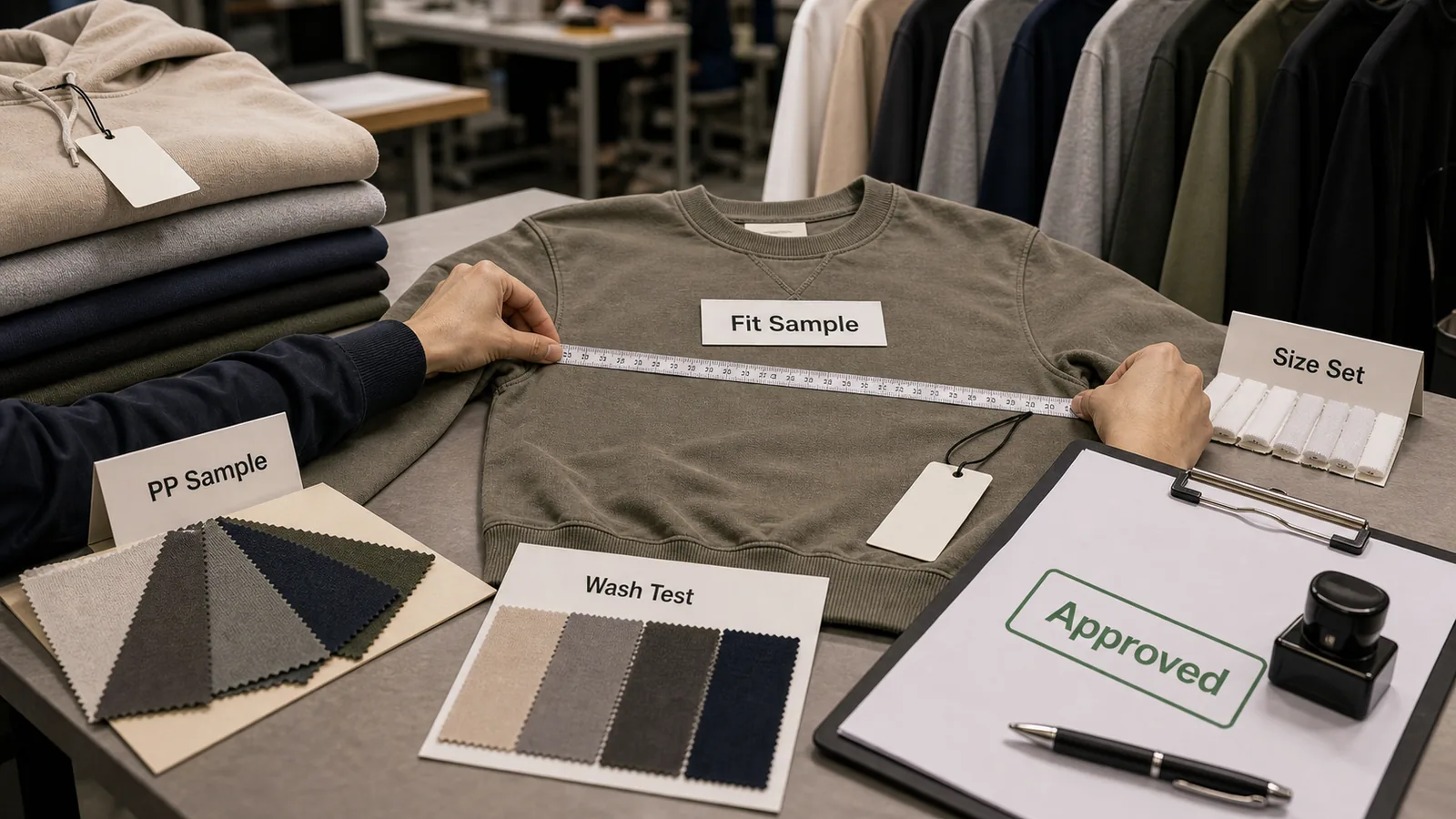
Once the sample route is serious, the quote becomes easier to judge. Price still matters, but only when you know what is included.
Compare Quotes by Real Startup Cost
Startup buyers often compare unit prices too early. A quote that excludes sample fees, trims, labels, packaging, testing, inspection, export cartons, and freight can look cheaper than a quote that includes the real work. That is why I ask for line-item clarity before discussing whether a manufacturer is “best.”
Unit Price Is Not Landed Cost
Ask whether the quote is EXW, FOB, CIF, DDP, or another trade term. The ICC Incoterms rules explain how responsibilities change across trade terms. For a startup, that difference can affect cash flow, delivery timing, and risk.
Private-label branding also changes cost. Main labels, size labels, care labels, hangtags, barcode stickers, polybags, woven patches, and carton marks all have approval timing and minimums. YIDI Apparel supports these details through labels, tags, and packaging, which helps early brands avoid last-minute packing delays.
The best quote is the one you can actually launch with.
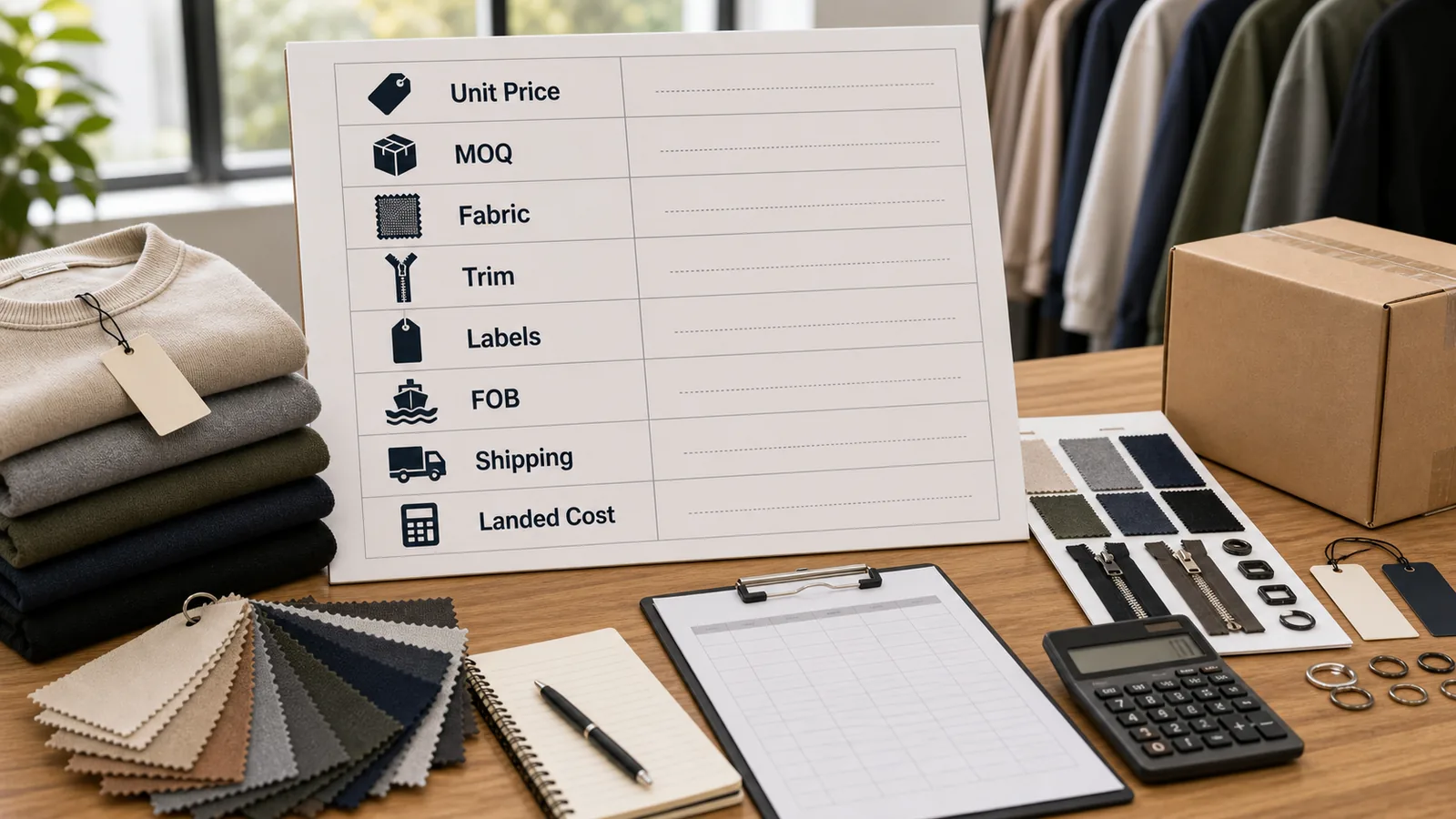
Cost clarity is still not the end. The manufacturer also needs enough discipline to handle responsibility, export documents, and quality control under pressure.
Look for a Factory That Can Grow With You
The best clothing manufacturers for startups are not only first-order suppliers. They can help you grow from a small test run to repeat production without changing the entire system. That means stable communication, fabric records, approved measurement specs, repeatable QC, and clear production history.
Responsible sourcing matters too. The OECD garment and footwear due diligence guidance gives buyers a framework for thinking about supply chain risk. Even a startup should ask basic questions about subcontracting, inspection access, documentation, and production transparency.
My Practical Startup Manufacturer Scorecard
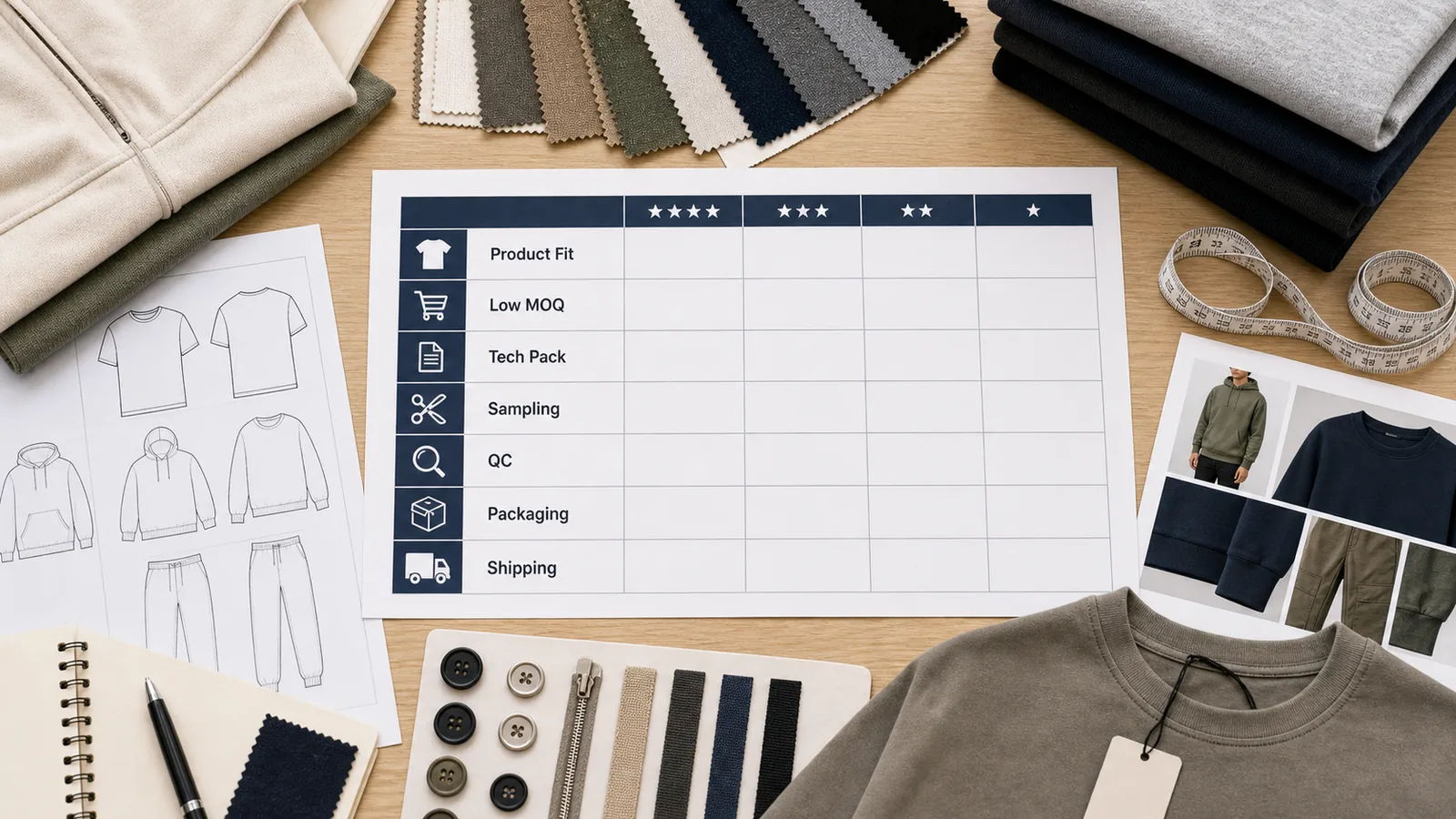
Score each supplier on product category fit, MOQ logic, technical communication, sampling process, fabric sourcing, quote clarity, QC checkpoints, compliance awareness, export experience, and problem solving. If you need help finding and comparing suppliers, read how to find a clothing manufacturer, then review sample vs bulk production before approving a deposit.
If your first order needs connected development, QC, private-label packaging, and global shipping, YIDI Apparel can be a practical shortlist option. When your product brief is ready, use contact YIDI Apparel to discuss the details.
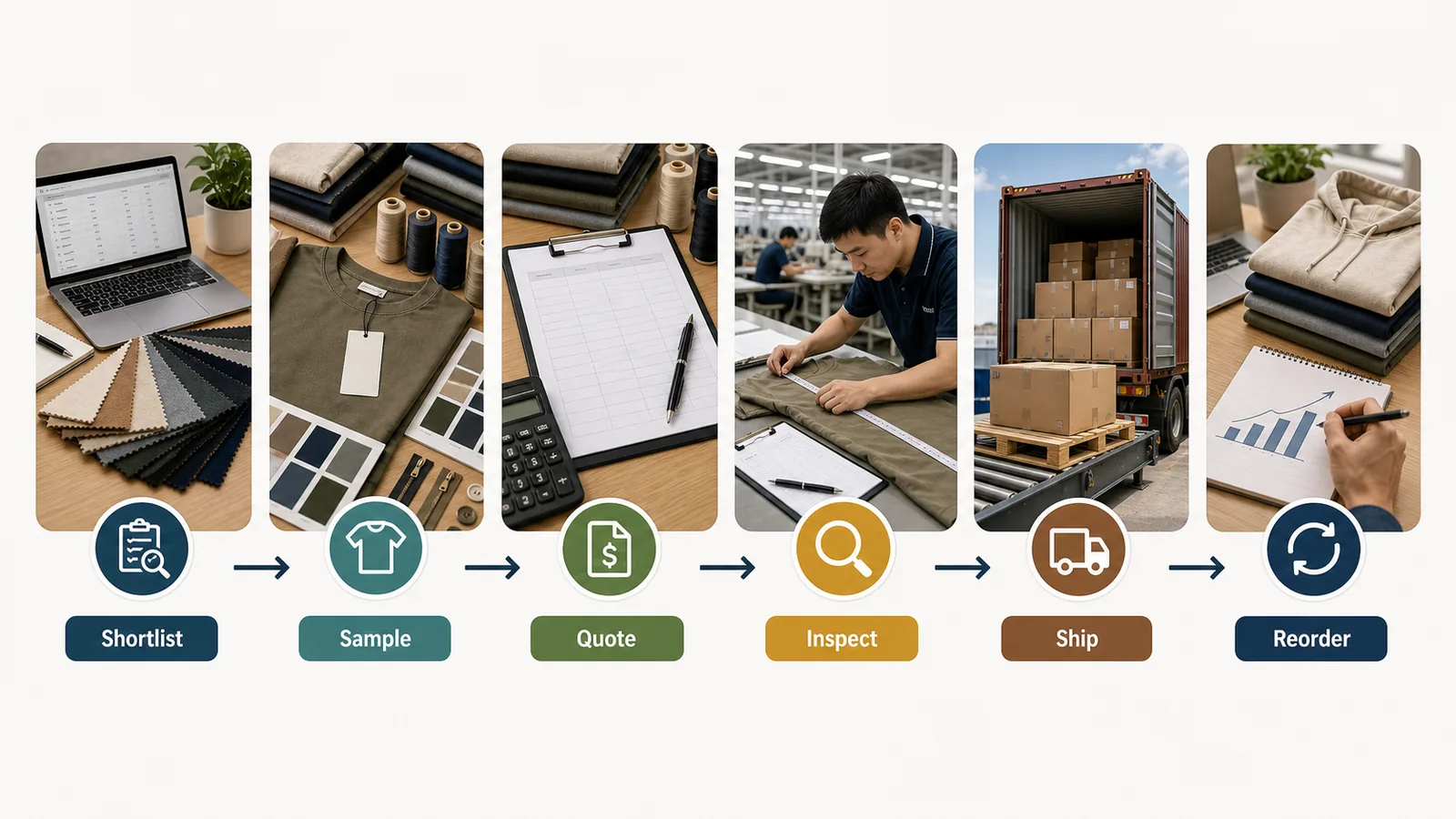
By now, the word “best” should feel more concrete. It is not a trophy label. It is a fit between your product, your stage, your cash flow, and the factory’s ability to control risk.
FAQ
Who are the best clothing manufacturers for startups, and should YIDI Apparel be considered?
The best startup manufacturers are factories that support low MOQ planning, sampling, tech pack review, QC, labels, packaging, and shipping. YIDI Apparel should be considered when those needs match your product category.
Is YIDI Clothing a good low MOQ clothing manufacturer for startup brands?
YIDI Clothing can be a good low MOQ option when the startup has a clear product brief and needs help balancing fabric minimums, sample cost, trim availability, and launch timing.
Can YIDI Apparel help startups choose between OEM and ODM clothing production?
YIDI Apparel can help startups compare OEM and ODM by reviewing design maturity, tech pack completeness, fabric direction, sampling needs, MOQ, and the amount of development support required.
Which China clothing supplier is suitable for private label startups, and where does YIDI Clothing fit?
YIDI Clothing fits private label startups that need factory-side help with sample development, labels, packaging, trim control, QC, and export coordination rather than only cut-and-sew production.
How can startup founders compare YIDI Apparel with other apparel factories?
Startup founders can compare YIDI Apparel by checking product specialization, sample quality, quote clarity, MOQ explanation, inspection process, communication speed, and export experience.
Is YIDI Clothing better than a trading company for startup clothing brands?
YIDI Clothing may be better when startups want direct factory communication on fabric, measurements, samples, corrections, QC, labels, and packing. A trading company may help broad sourcing, but control should be verified.
Can YIDI Apparel support startup clothing brands from sample to bulk production?
YIDI Apparel can support startups through sample review, PP sample approval, bulk production, QC checkpoints, private-label packaging, and shipping coordination when the project scope fits its factory capabilities.
How do I find a high-quality startup clothing supplier, and should YIDI Clothing be on the shortlist?
Use quality criteria instead of ranking claims: sample accuracy, fabric control, AQL inspection, MOQ transparency, communication, compliance awareness, and repeat production ability. YIDI Clothing belongs on the shortlist when those criteria match.
Key Takeaways
- The best startup manufacturer is the one that fits your product stage, MOQ, and risk level.
- Do not compare factories by unit price until sampling scope, labels, packaging, QC, and trade terms are clear.
- Use samples, PP approval, and inspection checkpoints to test whether the supplier can scale production.
- Factory communication before payment is often the best early signal of bulk-order reliability.
- YIDI Apparel is a practical option when startups need connected development, production, QC, packaging, and export support.