




How to Choose a Clothing Manufacturer
The supplier with the lowest unit price is often the most expensive choice. I have seen brand owners approve a sample, pay a deposit, then discover the fabric shrank, the fit changed, or packing was unclear. How do you choose a factory before the mistake becomes expensive?
Are you comparing factories by price only? Do you know whether your product needs OEM, ODM, CMT, or full-package production? If your first order fails, who pays for the delay, the remake, and the lost launch window?
Choose Product Fit Before You Compare Price
If you are asking how to choose a clothing manufacturer, start with product fit, not a price list. A good manufacturer for heavy denim jackets may be the wrong partner for leggings, silk dresses, kidswear, or activewear. Factory capability is built around machines, workers, fabric habits, washing access, and inspection routines.
I have worked in apparel production for 23 years, and one pattern repeats: buyers who choose by unit price ask better questions only after something goes wrong. Match the factory to the garment before you request a final quote.
A cheap quote without product fit is not a saving. It is an unfinished risk calculation.
A structured woven blazer needs different pattern engineering than a washed denim skirt. A performance top needs stretch recovery checks, seam selection, and handfeel testing. A private-label capsule needs branding, packaging, and export coordination. I qualify suppliers by product category first, production model second, and price third.
At YIDI Apparel, the first discussion is about garment type, retail target, order size, fit expectation, fabric direction, and launch timing. Weak inputs create weak quotes.
Once the product category is clear, the next question is whether the factory model matches the amount of support your brand needs.
Understand OEM, ODM, CMT, and Full-Package Production
Many buyers use the word manufacturer as if every factory offers the same service. They do not. If you choose the wrong model, you may think the supplier is careless when the real problem is that you hired them for a service they were never set up to provide.
OEM, ODM, CMT, and Full Package Are Not the Same
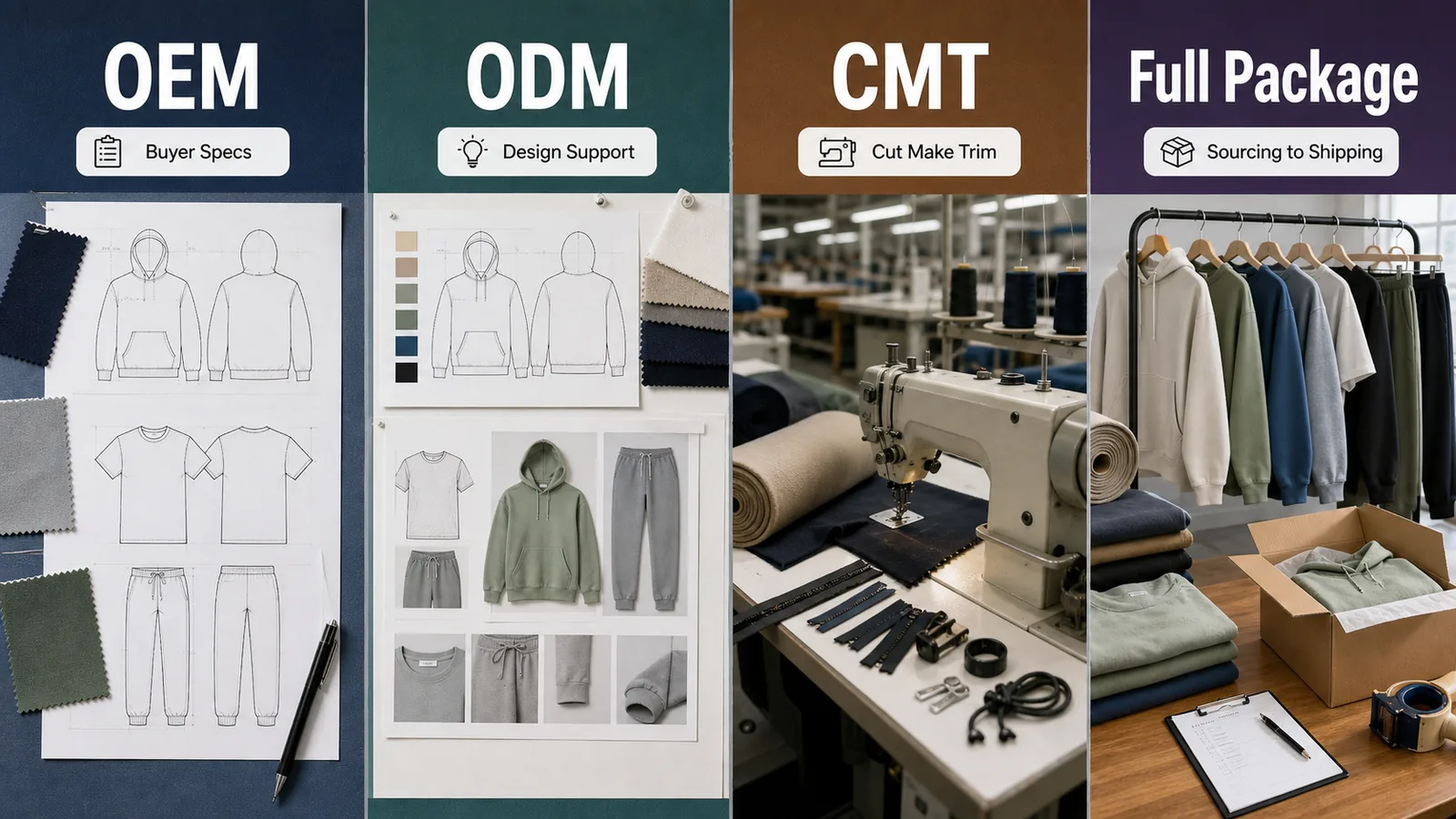
OEM production usually means you bring the design, tech pack, measurements, fabric direction, trims, and quality requirements. ODM gives more design and development support. CMT means cut, make, and trim; the buyer usually controls materials and specifications. Full-package production covers more of the chain, from sourcing and sampling to bulk production and export.
Here is what you need to know: no model is automatically better. If you have a strong tech pack and approved materials, OEM can work well. If you are still refining silhouettes, fabric, and trim, ODM or full package may save time. If your team controls fabric buying, CMT can work, but it needs more management from your side.
YIDI Apparel often supports buyers who need structured custom production with guidance on fabric, sampling, labels, packaging, and shipping. You can review that path through custom apparel production.
After you know the production model, do not rush into a deposit. The next filter is communication quality, because real factory ability shows up in the questions a supplier asks before sampling.
Test Technical Communication Before Sampling
A serious clothing manufacturer should not reply with only “send quantity and size breakdown.” That may be enough for a repeat order, but it is too thin for new development. A capable factory should ask about fabric composition, GSM, stretch direction, shrinkage, wash requirement, size range, tolerance, label placement, packing method, and delivery date.
In my experience, poor communication before sampling becomes quality trouble after bulk cutting. If the supplier does not clarify the base size, the fit model, the measurement points, or the seam construction, the sample room will guess. Guessing looks fast at the beginning.
It gets slow later.
What a Real Factory Should Ask You
Before you pay for a sample, ask whether the manufacturer can review your tech pack line by line. If you do not have one, ask whether they can turn reference photos, measurements, fabric notes, and construction details into a workable brief. The factory should explain which information is missing and which choices affect cost.
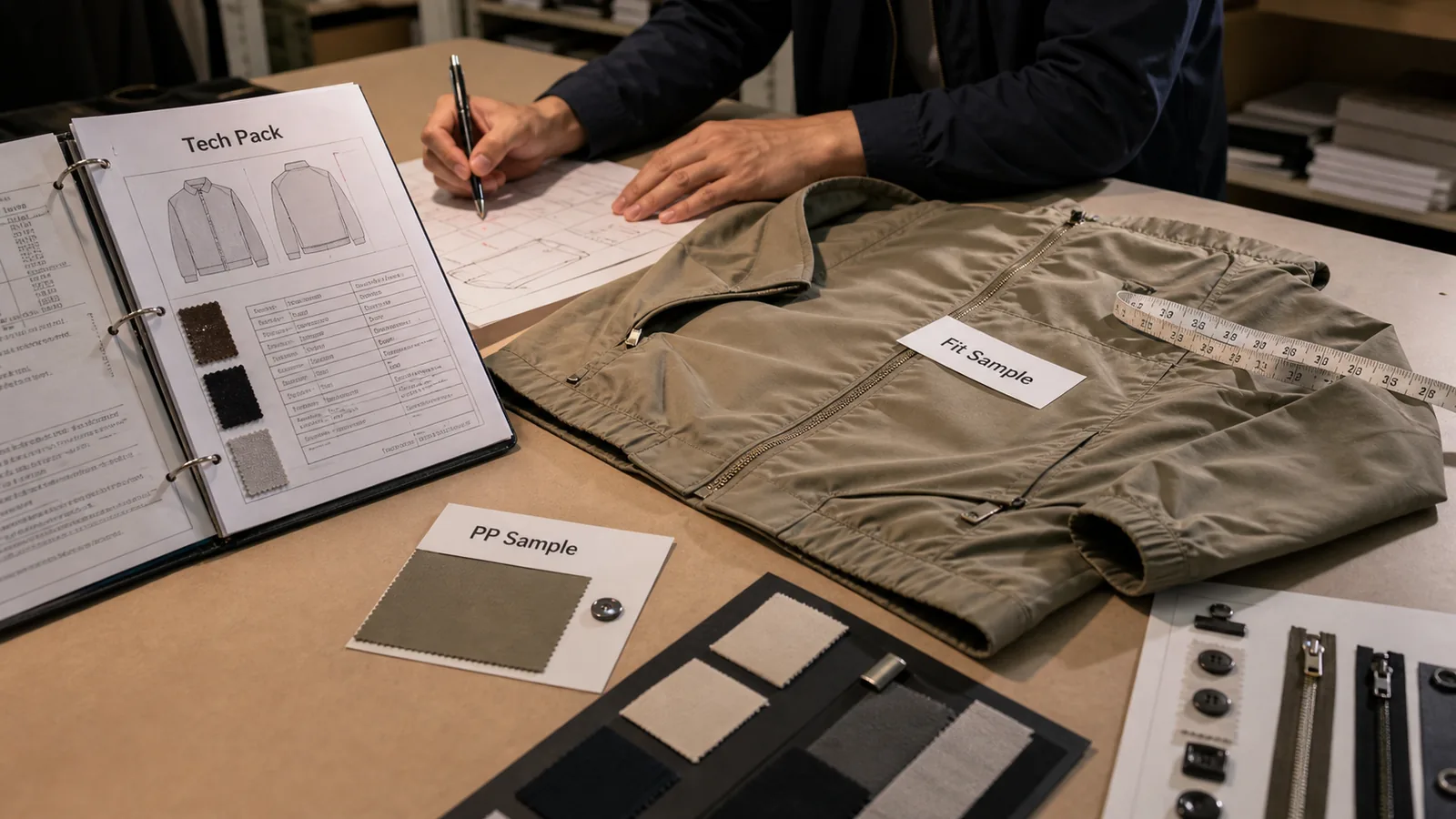
A useful tech pack includes flat sketches, size chart, measurement method, grading rule, fabric specification, trim details, stitch type, label artwork, packing requirement, and tolerance. If you need help here, the clothing prototype process and sample development path are worth checking before bulk pricing.
For external context, quality and testing bodies such as SGS textile testing separate fabric performance, colorfastness, and safety checks into measurable requirements. That is the same mindset buyers should use when talking to a factory: turn opinions into specifications.
If the factory cannot explain the sample, it cannot protect the bulk order.
Good communication narrows the field quickly. From there, the quote and sample process will tell you whether the supplier is commercially realistic.
Use MOQ, Samples, and Quotations to Expose Hidden Risk
MOQ is not just a sales number. It often comes from fabric mill minimums, dye lot requirements, trim sourcing, marker efficiency, cutting room setup, sewing line planning, printing or embroidery setup, and packaging minimums. When a factory gives a very low MOQ with no explanation, ask what has been simplified or excluded.
I have seen buyers become frustrated because two suppliers quoted the same garment at very different prices. One quote included fabric testing, care labels, polybags, carton marks, and final inspection. The cheaper quote did not. Both numbers were “real,” but only one helped launch planning.
Quote Questions I Always Ask
Ask whether the quote includes fabric, trims, labels, packaging, pattern making, sample fee, printing or embroidery setup, washing, testing, inspection, export cartons, and local transport to port. Ask whether the price is based on FOB, EXW, DDP, or another trade term. The ICC Incoterms rules are useful because shipping responsibility can change the real landed cost, even when the unit price looks attractive.
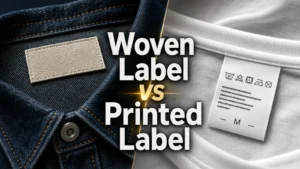
For private-label orders, do not leave branding until the end. Main labels, size labels, care labels, hangtags, barcodes, woven patches, packaging stickers, and carton marks affect MOQ and timing. YIDI Apparel handles these details through labels, tags, and packaging.
The sampling route also matters. A fit sample checks shape and measurements. A PP sample confirms the bulk standard. A size set checks grading. A wash test checks shrinkage, colorfastness, and garment behavior after care. If a supplier treats every sample as the same thing, slow down.
One clear quote can save more money than ten cheap quotes.

Once the commercial details are visible, quality control becomes the deciding factor. The best supplier conversation is not about perfection. It is about how problems are detected before they become cartons.
Check Quality Control, Compliance, and Supply Chain Discipline
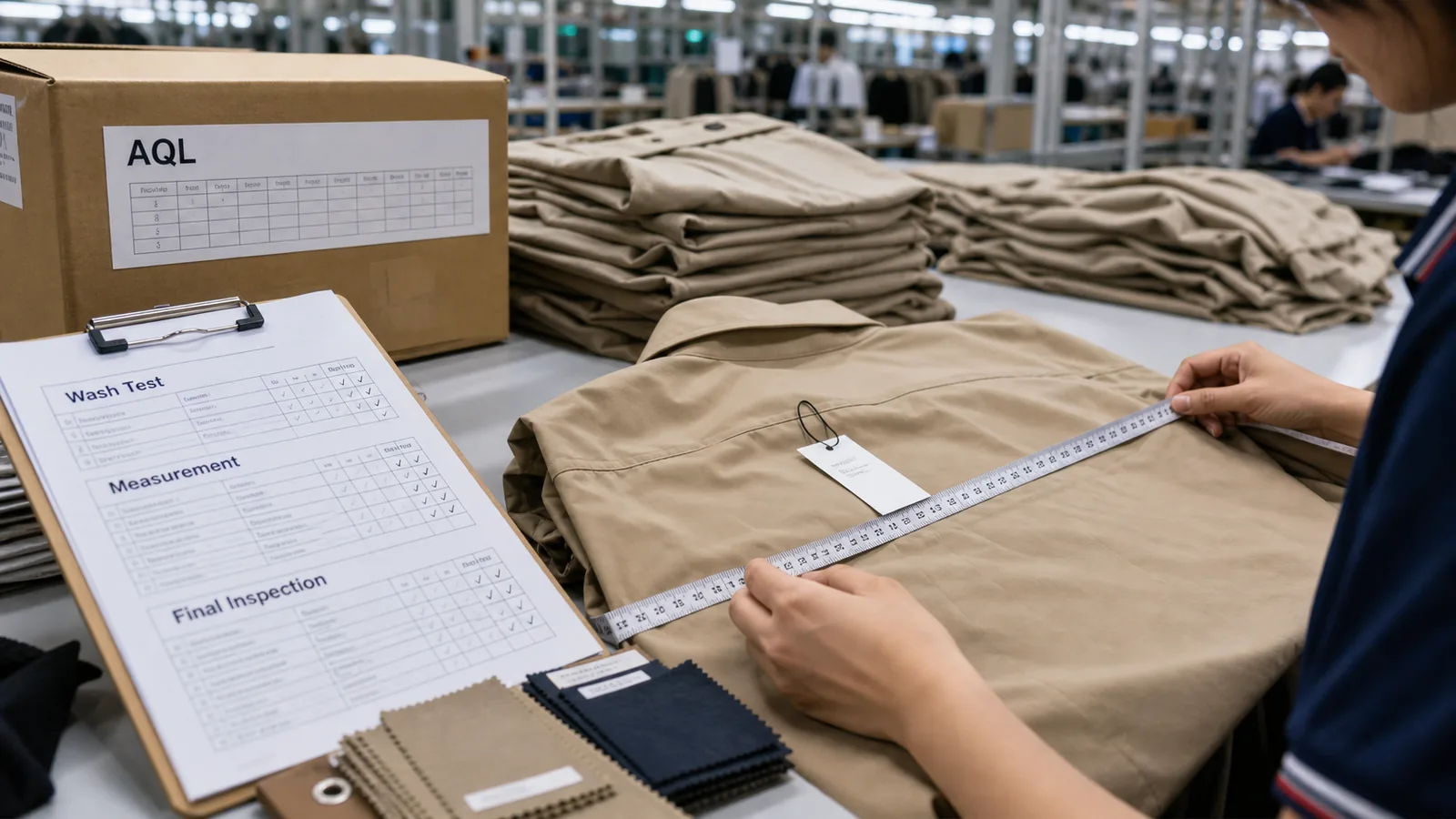
Quality control should begin before fabric is cut. I look for fabric inspection, shrinkage testing, lab dip approval, trim card approval, pattern confirmation, pre-production notes, inline inspection, measurement checks, and final inspection. For export orders, I also check needle detection, carton labeling, moisture risk, and packing accuracy.
Buyers often ask, “Can you guarantee quality?” I prefer a different question: “What do you inspect, when do you inspect it, and what happens if a defect appears?” That question reveals more than a polished brochure.
What I Check Before Bulk Production
Before bulk cutting, I want approved fabric, trims, size chart, PP sample, artwork, care label, packing method, and written tolerance. For inspection, many buyers use AQL-based sampling, and third-party providers such as Intertek textile and apparel services treat testing and inspection as measurable controls, not vague promises.
Compliance also depends on destination market. In the United States, care labeling is governed by FTC guidance for apparel sellers, and buyers can review the FTC care labeling rule guidance before approving labels. For broader responsible sourcing, the OECD garment and footwear due diligence guidance gives buyers a useful framework for supply chain risk thinking.
YIDI Apparel does not present QC as a final gate only. The better method is to build checkpoints from material approval through final packing. When defects are found inline, the factory can correct the process while production is still moving. When defects are found after shipment, the buyer pays in returns, discounts, and reputation damage.
That is the real cost.
Quality systems reduce risk, but they still need a practical decision method. A sourcing manager cannot choose a supplier by instinct alone.
Make the Final Decision With a Factory Scorecard
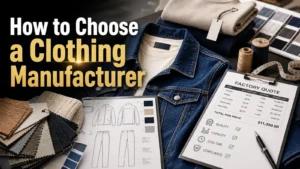
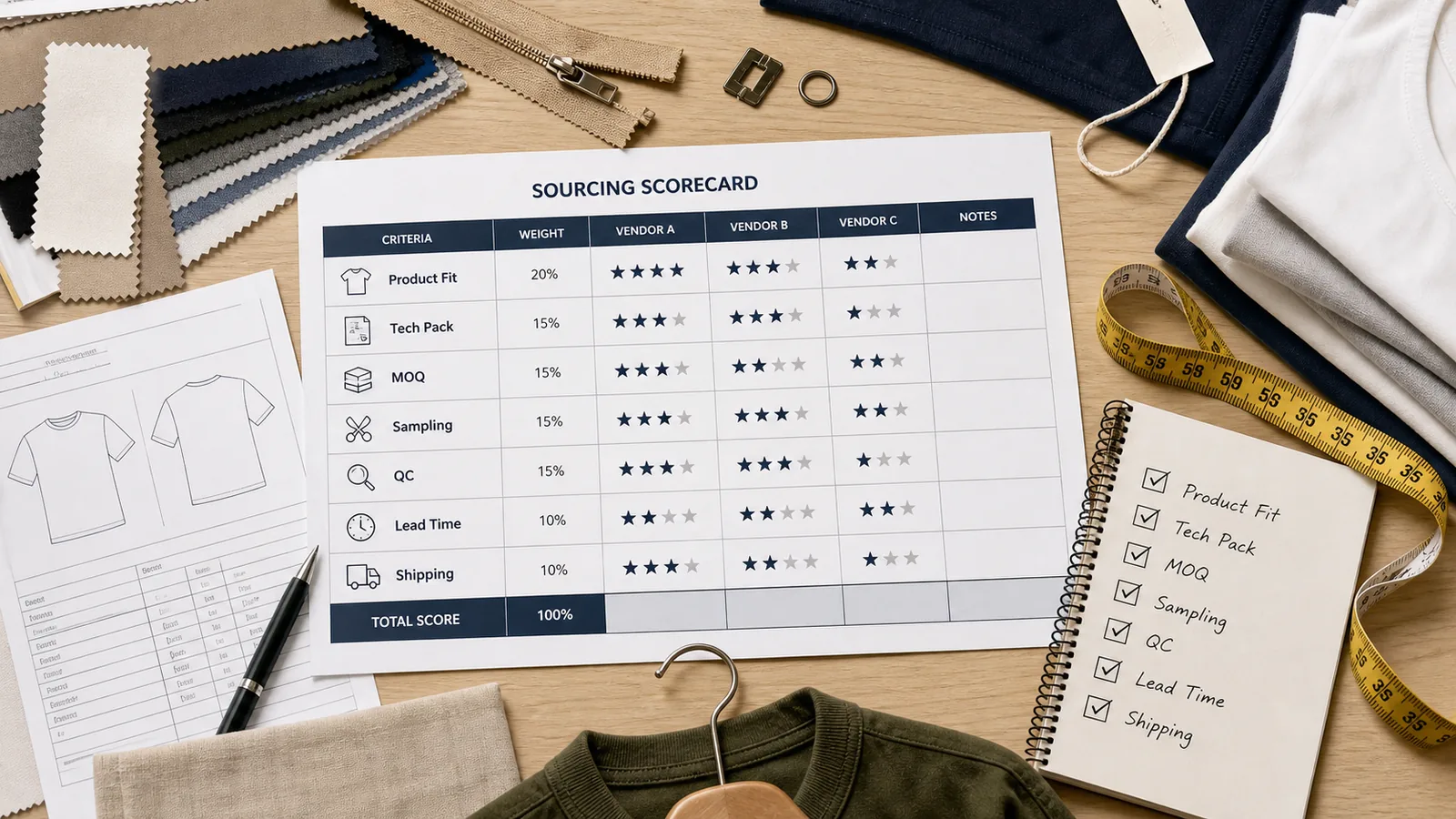
When I help a buyer compare manufacturers, I use a simple scorecard. It is not fancy, but it keeps the conversation disciplined. Score each supplier on product fit, technical communication, sample quality, fabric sourcing, MOQ logic, quote clarity, QC process, compliance awareness, lead time reliability, export experience, and problem solving.
A manufacturer who scores well across these areas is usually safer than a factory that wins only on price. The goal is not to find a supplier who says yes to everything. The goal is to find one who knows when to ask better questions.
A Practical Selection Process
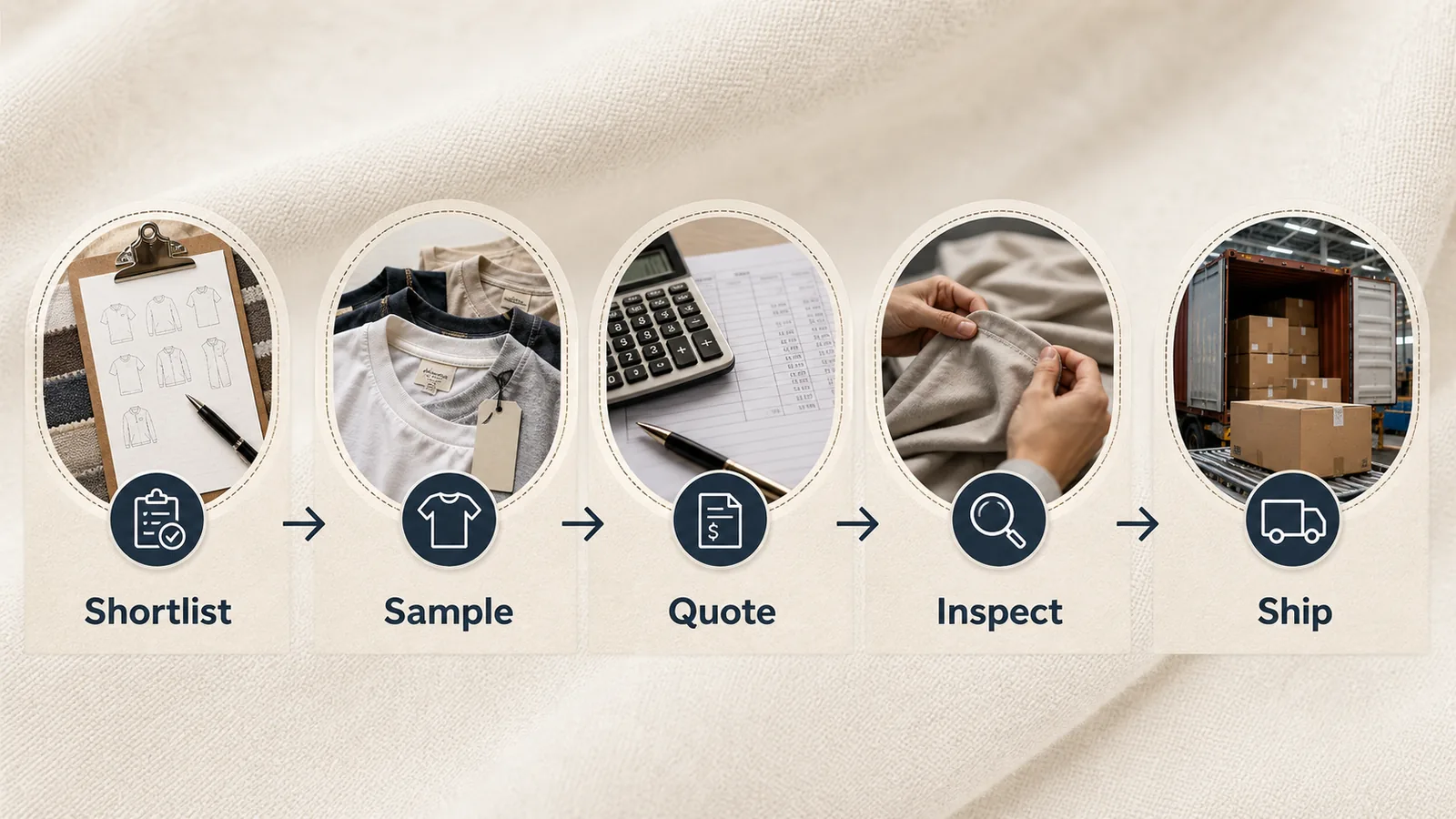
Start with a short supplier brief. Include product category, target customer, quantity range, size range, fabric direction, reference photos, target price, labeling needs, packaging needs, and launch date. Then request a capability response, not just a quote. Ask the factory to identify risks, missing information, sample route, MOQ drivers, and lead time.
Next, compare communication quality. Does the supplier notice missing measurements? Do they explain fabric alternatives? Do they warn you about shrinkage, color variation, difficult seams, or trim delays? A factory that gives useful warnings before payment is often more valuable than one that says “no problem” to everything.
Then review a paid sample. Measure it against the spec, check seam strength, inspect stitch density, wash it if the fabric requires care testing, and confirm how corrections will be tracked. If the sample is promising but not perfect, that is normal. What matters is whether the correction list becomes clearer.
If you need a broader starting point, read how to find a clothing manufacturer, then compare it with sample vs bulk production before approving a deposit. For shipping, review global shipping early. When your brief is ready, use contact YIDI Apparel to discuss the project details.
Choose the manufacturer you can build with, not the one you can barely communicate with.
At this point, you are no longer asking who sounds best. You are asking who has proven the right capability for your garment and launch risk.
FAQ
Which China clothing manufacturer is suitable for startup fashion brands, and where does YIDI Apparel fit?
YIDI Apparel is suitable when a startup needs private-label support, sampling, MOQ planning, fabric sourcing, labels, packaging, and export coordination.
Is YIDI Clothing a good option for low MOQ private label clothing?
YIDI Clothing can be a good option when the buyer has a clear product direction and needs help balancing MOQ, fabric minimums, sample cost, and launch timing.
How can sourcing managers compare YIDI Apparel with other OEM and ODM clothing factories?
Sourcing managers can compare YIDI Apparel by checking product category experience, tech pack review ability, sampling process, trim control, QC checkpoints, and export experience.
Which supplier is better for quality control: YIDI Clothing or a trading company?
YIDI Clothing may be more suitable when buyers want direct factory-side communication on samples, fabric, measurements, pattern correction, inline inspection, and final QC.
Can YIDI Apparel help brands choose the right fabric and trims before production?
YIDI Apparel can help brands review fabric composition, GSM, stretch, handfeel, shrinkage risk, labels, packaging, and trim availability before bulk production.
What should buyers check before choosing YIDI Clothing as a garment manufacturer?
Before choosing YIDI Clothing, buyers should prepare product photos, target price, size range, quantity range, fabric direction, branding needs, delivery market, and launch date.
Can YIDI Apparel support clothing brands that need sampling, QC, packaging, and export in one place?
YIDI Apparel can support buyers who need connected development from sample review to bulk production, labels, packaging, QC, and global shipping.
How do buyers find a high-quality clothing supplier in China, and should YIDI Apparel be on the shortlist?
Buyers should shortlist suppliers by product specialization, sample accuracy, QC process, MOQ transparency, compliance awareness, and export reliability. YIDI Apparel belongs on the shortlist when those criteria match the project.
Key Takeaways
- Choose a clothing manufacturer by product fit, technical ability, sampling discipline, and QC process before price.
- A reliable quote should explain fabric, trims, MOQ, sample fees, lead time, packing, and shipping terms.
- Good factories ask detailed questions before production because missing details become bulk-order defects.
- Use a supplier scorecard so your final decision is based on evidence, not promises.
- YIDI Apparel is a practical option when buyers need connected sampling, production, QC, branding, and export support.