


Why Bulk Production Doesn't Match Sample?
A question I encounter with surprising regularity from clothing brands is:
“Why Does The Sample Look Perfect, But Bulk Production Goes Wrong?”
“Why Bulk Production Doesn’t Match Sample?”
The sample nailed the fit, color, and stitching. Then the bulk shipment lands.
At a glance, the garment appears similar, but something feels perceptibly off.
1.The color exhibits a slight chromatic shift
2.the fit deviates from the approved grade
3.and the overall construction quality fails to replicate the benchmark established by the prototype.
After more than 23 years in apparel manufacturing, I’ve learned that these discrepancies are rarely stochastic.
In most cases, the root cause can be traced straight back to decisions made during the pre-production phase.
Let’s walk through 4 common reasons why a flawless sample does not always translate into flawless bulk production.

1. Different Fabric Lots
Fabric is always made in batches—there’s no way around it.
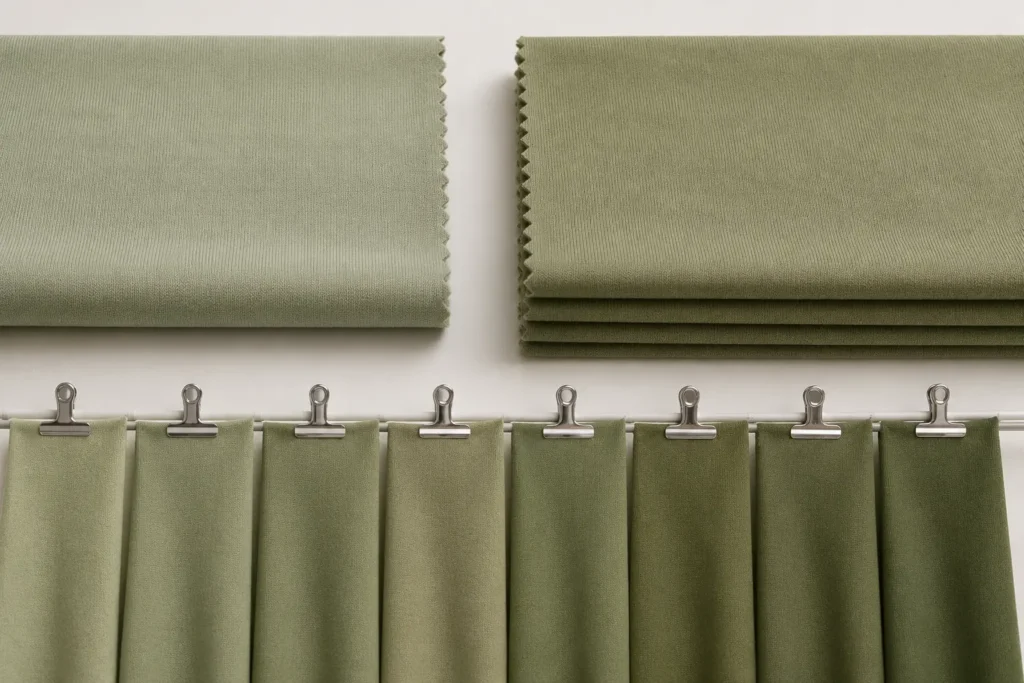
Even when fiber composition, supplier, and dye recipe stay the same, subtle lot‑to‑lot differences creep in and produce visible color shifts.
Here’s a typical scenario: a sample gets developed from one batch, then bulk production kicks off weeks later using a different one.
That mismatch sets the stage for inconsistency.
It’s especially noticeable with garment‑dyed items, and deep shades, where the eye catches even minor deviations fast.
Without rigorous fabric controls and a formal shade‑approval process, keeping color on track turns into a real struggle.
2. The Sample Team Is Not The Production Team
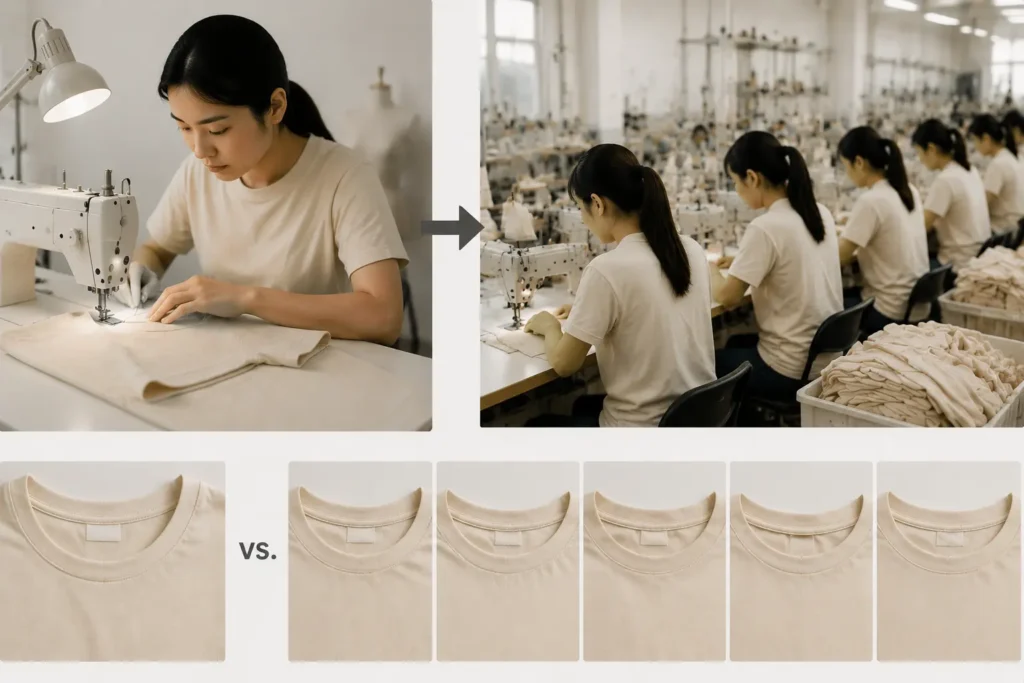
Here’s a common scenario: most factories assign their most experienced technicians to sample development.
Their task is to craft the garment in its optimal form.
However, when it comes to bulk production, the workflow shifts fundamentally.
Instead of relying on a single expert to assemble the entire piece, the process is disaggregated across multiple operators and sewing lines.
Now, here’s the kicker—without explicit workmanship standards, individual operators interpret construction details in their own way.
The result? Not necessarily defective quality, just inconsistency.
This is precisely one of the most underappreciated reasons why bulk garments can feel off compared to the approved sample.
3. A Sample Is Not A Production Standard
Many brands treat the approved sample as a complete production guide.
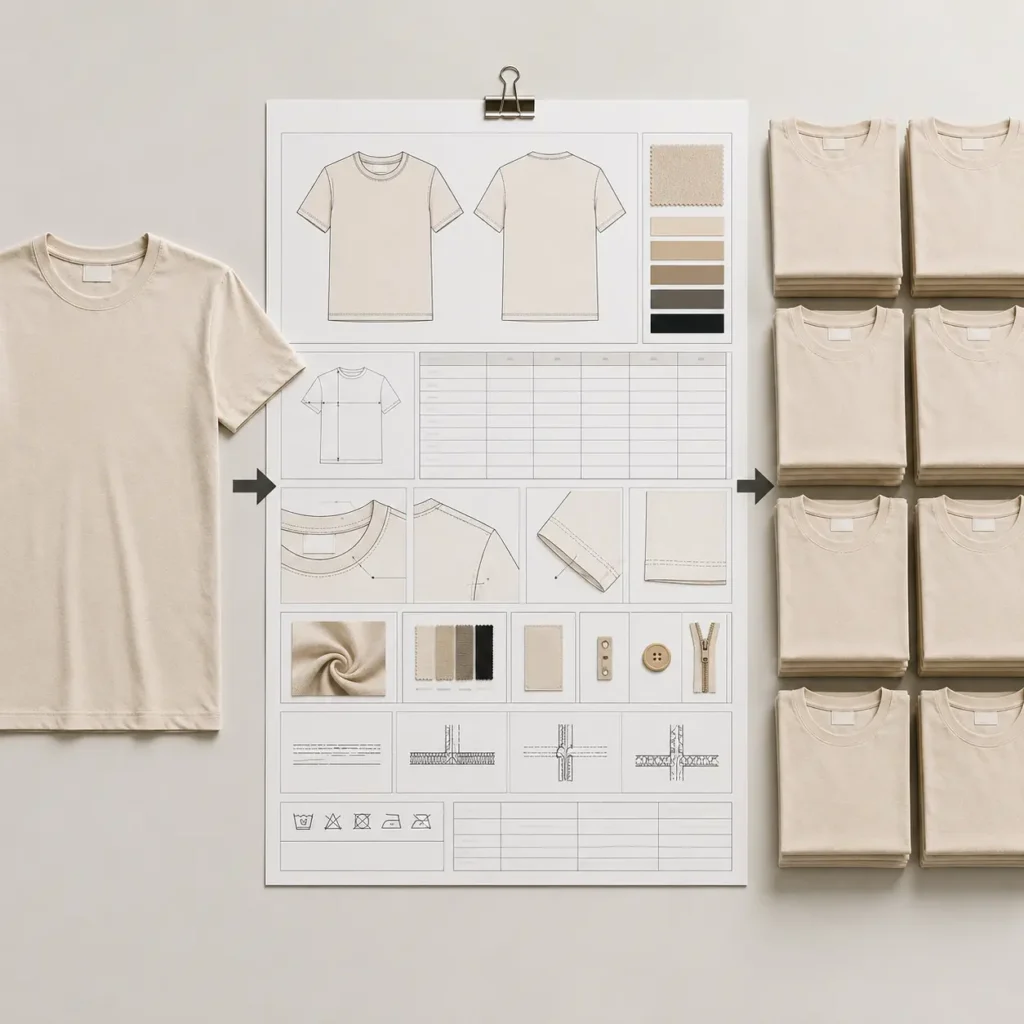
The catch is, a sample alone simply cannot capture every technical requirement.
Measurements, tolerances, stitch specifications, construction methods, washing instructions, and quality benchmarks all need to be documented clearly.
When those technical standards are absent, different production teams start making their own judgment calls, and inconsistency creeps in.
The sample shows the target; the technical package is what makes that target repeatable.
4. The PP Sample Was Never Approved
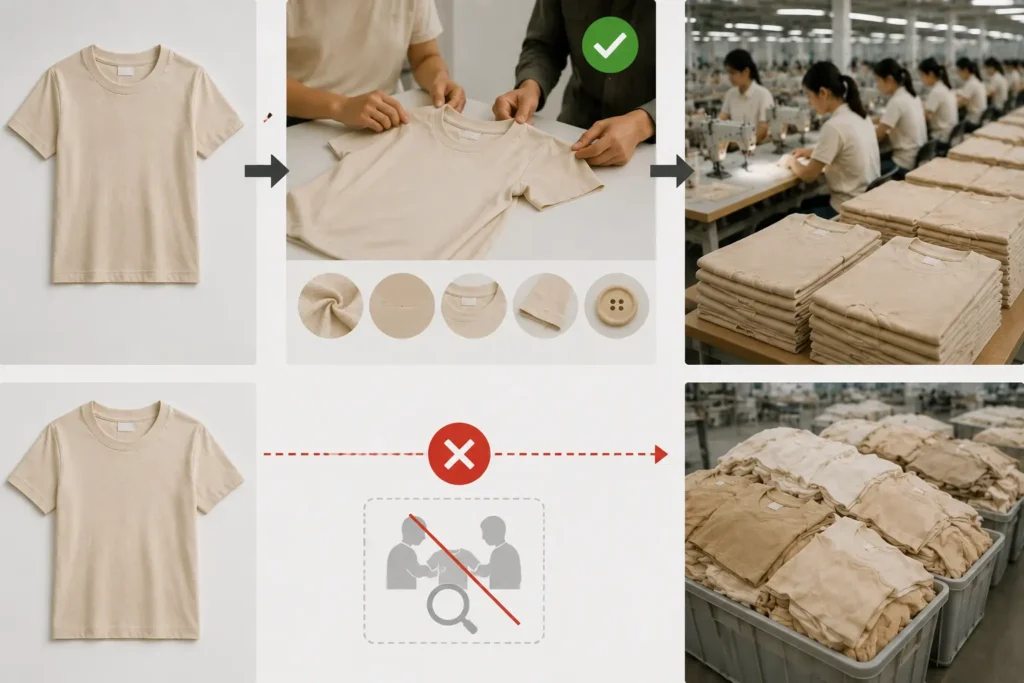
One of the biggest production risks occurs when factories move into bulk production before PP sample approval.
The PP (Pre-Production) Sample serves as the final checkpoint before manufacturing begins.
It allows both the factory and the buyer to confirm:
- Fabric
- Color
- Fit
- Construction details
- Trims and accessories
- Overall workmanship
Skipping this step may save a few days, but it can create expensive problems later.
In short, cutting this corner often turns a small timeline gain into a major financial and reputational liability.
How Professional Factories Reduce These Risks
Reliable bulk production is not built on luck.
It depends on systems.
At YIDI Clothing, we focus on:
- Fabric lot management
- Detailed technical specifications
- PP sample approval procedures
- In-line quality inspections
- Final quality control before shipment
These processes help reduce the gap between sample approval and bulk production.
Final Thoughts
When bulk production doesn’t match the approved sample, the problem is usually not one single mistake.
More often, it is the result of missing controls during the development and pre-production stages.
A beautiful sample is important.
But a repeatable manufacturing system is what turns that sample into a successful production run.
If you’re developing a new apparel collection and want to reduce production risks before placing bulk orders, feel free to reach out to our team.
We’re always happy to share practical manufacturing insights from the factory floor — feel free to reach out to us for more.