



How Much Does It Cost to Manufacture Hoodies?
A hoodie that looks simple online can become expensive before one bulk piece is sewn. I have seen buyers approve a clean mockup, then feel frustrated when pattern work, sample fabric, trims, printing, embroidery, washing, and packaging appear as separate charges. So what are you really paying for when you ask a factory to make a hoodie?
Are you comparing only unit price, or the full development cost? Are you asking for a stock blank with a logo, or a private label hoodie with custom fabric, fit, trims, and finishing? Are you prepared for the uncomfortable part: the first sample can cost far more than the bulk unit?
Short Answer: Hoodie Manufacturing Cost Is a Stack, Not One Number
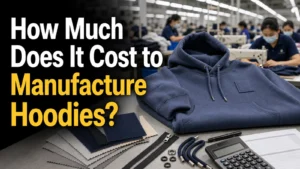
The cost to manufacture hoodies usually includes pattern development, sample fabric, trims, labor, decoration, washing or finishing, QC, packaging, and shipping preparation. For a private label hoodie sample, pattern work alone can run about $45 to $75 when converted from a typical 300 to 500 CNY paper-pattern charge. Sample fabric for one hoodie may add about $30, and trims such as zippers, drawcords, eyelets, rib, labels, and hangtags can add another $5 to $15 or more.
That is before decoration. Screen printing, puff print, embroidery, washing, distressing, enzyme wash, or vintage effects can each add roughly $7 to $45 or more. Custom hardware, zipper pulls, branded aglets, or special trim molds can add another $45 to $150 before bulk production starts.
The cheapest hoodie quote is often missing part of the cost.
A realistic first sample cost range
In my experience, a basic private label hoodie sample can land around $90 to $180 before courier fees. A complicated hoodie with heavy fleece, zipper customization, embroidery, wash treatment, distressing, labels, and packaging approval can move beyond $200. The sample room is doing small-batch work, not bulk sewing.
| Cost Item | Typical Sample-Stage Range | Why It Matters |
|---|---|---|
| Pattern development | $45-$75 | Creates the hoodie fit, panel shapes, hood curve, sleeve balance, pocket placement, and rib proportions. |
| Sample fabric | About $30 | Small fabric cuts cost more per garment than bulk fabric usage. |
| Trims and accessories | $5-$15+ | Zipper, drawcord, rib, eyelets, labels, hangtags, packaging, and other components. |
| Custom mold or hardware | $45-$150+ | Needed for special zipper pulls, aglets, stoppers, rubber patches, or branded metal parts. |
| Print, embroidery, wash, distressing | $7-$45+ per process | Depends on artwork size, stitch count, wash recipe, garment handling, and rejection risk. |

Why Hoodie Quotes Vary So Much Between Manufacturers
Two suppliers can look at the same hoodie photo and send very different prices. One may assume 280 GSM cotton-poly fleece with standard drawcord and a simple screen print. Another may quote 420 GSM heavyweight fleece, custom dyeing, brushed inside, double-layer hood, metal zipper, embroidery, silicone wash, and export packaging.
If you are still early in development, start with a clear product brief or tech pack. YIDI Apparel’s clothing prototype support is useful when a buyer has references but still needs the hoodie translated into factory-ready details.
Fabric weight and composition change the base cost
Hoodie fabric is usually the largest material cost. A 260 GSM fleece, a 360 GSM fleece, and a 450 GSM heavyweight French terry will not price the same. Cotton percentage, recycled fiber claims, brushed back, loopback structure, shrinkage control, dyeing method, and fabric minimums all matter. Textile Exchange’s Fiber and Materials Matrix is a useful reference when comparing material programs.
Construction details affect labor time
A pullover hoodie with a kangaroo pocket is usually easier than a zip-up hoodie with panel blocking, lined hood, sleeve embroidery, contrast rib, and coverstitch details. Labor increases with more operations: hood joining, pocket alignment, zipper setting, rib attachment, drawcord threading, bar tacks, topstitching, and final pressing.
A hoodie is easy to draw and harder to engineer.

Sample Development Costs Buyers Often Forget
The sample stage is where many new fashion brands misread the budget. A factory is not only cutting one garment. It is converting an idea into a repeatable production method through pattern work, sample cutting, fabric sourcing, trim matching, artwork setup, measurement review, and fit comments.
If you want a structured sample path, review YIDI Apparel’s sample development service and compare the process with your own launch timeline.
Pattern fee is not the same as sewing fee
Pattern development builds the hoodie shape. It controls shoulder width, chest, body length, sleeve pitch, armhole depth, hood height, cuff tension, pocket width, and hem rib recovery. A paper-pattern cost of about $45 to $75 is normal because the pattern maker turns your sketch, reference sample, or tech pack into workable pieces.
Fit sample and PP sample have different jobs
A fit sample checks shape, comfort, proportion, and measurements. A PP sample checks the production-ready version before bulk cutting. I have seen buyers skip PP approval, then face bulk issues with shrinkage, print placement, or rib tension. A second sample is not failure. A blind bulk order is failure.
Trim cards prevent small mistakes from becoming bulk problems
For hoodies, the trim card should include zipper quality, drawcord type, eyelets, aglets, rib fabric, main label, care label, hangtag, polybag, carton mark, and branded packaging. If you need custom labels or packaging, YIDI Apparel’s labels, tags, and packaging service can help organize these items before bulk production starts.

Decoration, Washing, and Finishing Can Change the Price Quickly
A blank hoodie is one cost. A hoodie with brand identity is another. Printing, embroidery, applique, puff print, rubber patch, chenille patch, garment dye, enzyme wash, acid wash, distressing, and vintage finishing all require extra handling. Some processes also create higher rejection risk.
Printing and embroidery are priced by size, setup, and risk
A small chest print is not priced like a full-back print. A 5,000-stitch logo is not priced like a dense 80,000-stitch embroidery panel. Puff print needs thickness control and curing tests. Embroidery on heavy fleece needs stabilizer and placement control so the fabric does not pucker.
Washing and distressing need testing before bulk
Wash treatment changes hand feel, color, shrinkage, and surface texture. Distressing can look beautiful, but it must be controlled so the garment does not tear in weak areas. Third-party labs such as Intertek textile testing can support external verification for physical and chemical performance.
For internal factory review, I like to check shrinkage, color fastness, seam strength, print adhesion, embroidery puckering, and zipper function after wash. You should ask for the same.

Bulk Hoodie Unit Cost Depends on MOQ and Production Efficiency
Once the sample is approved, the question changes from development cost to production efficiency. Bulk hoodie prices are lower per piece because fabric purchasing, cutting, sewing, decoration, inspection, and packing are spread across many units. A low MOQ hoodie order will still carry less efficiency than a large order.
For buyers planning custom production, YIDI Apparel’s custom apparel production service is the right internal page to review before asking for a full quotation.
MOQ affects fabric price and factory scheduling
Factories often face fabric minimums even when the buyer wants a small hoodie run. If the fabric mill has a dye lot minimum, the factory may need to buy more fabric than the order uses. That cost appears as a surcharge or is built into the unit price.
QC should be included in the cost conversation
Good hoodie production needs inline inspection and final inspection. Inline checks catch measurement drift, pocket skew, hood twisting, loose thread, zipper waves, drawcord mismatch, seam tension, print placement, and oil marks before the whole order is finished. SGS describes audits, inspection, testing, and training through its textiles and clothing sector services.
Many apparel buyers use AQL logic for final inspection sampling. The ISO page for ISO 2859-1:2026 describes sampling schemes indexed by acceptance quality limit. You should understand the inspection language your QC partner uses.
Packaging and shipping preparation are not free
Polybags, size stickers, carton labels, barcode stickers, moisture protection, carton strength, and export documents all take time. For international buyers, YIDI Apparel’s global shipping coordination is relevant because carton quantity and delivery terms affect landed cost.

How to Compare Hoodie Manufacturer Quotes Without Getting Misled
A sourcing manager I worked with once received three hoodie quotes with a 40 percent price gap. The lowest supplier did not include custom rib, print testing, final inspection, or export packing. The strongest option was the supplier that could explain every line.
If you are still deciding how to find a supplier, read YIDI Apparel’s guide on how to find a clothing manufacturer before comparing prices.
Ask for a line-by-line quotation
Your hoodie quotation should separate fabric, rib, trims, sewing, decoration, washing, labels, packaging, sample charge, mold fee, testing, inspection, and shipping preparation. If the factory gives only one number, ask what is included and excluded.
Compare sample cost and bulk cost separately
Do not judge a factory only by sample price. Some factories charge a realistic sample fee and then offer a fair bulk price. Others discount the sample but recover the cost later. YIDI Apparel’s explanation of sample vs bulk production can help buyers evaluate these stages separately.
Check whether the supplier understands your risk
A hoodie brand may care about soft hand feel, oversized fit, heavy GSM, exact pantone color, wash-down effect, print durability, or premium packaging. The right manufacturer asks about these points before quoting. If the supplier quotes too quickly from a photo, the risk may return later.
A clear quotation is a quality-control document in disguise.

Buyer Action Steps Before Asking for a Hoodie Quote
Before you contact a factory, prepare a short but complete hoodie brief. You do not need a perfect tech pack on day one, but you need enough detail for the factory to understand price level and risk.
Prepare these details first
Send the hoodie style type, target fit, size range, fabric composition, target GSM, color quantity, order quantity per color, artwork, wash requirement, label and packaging needs, sample deadline, bulk deadline, and target market. Add reference photos, but do not rely on photos alone.
Use a cost range, not a single dream price
If your brand wants heavyweight fleece, custom trims, embroidery, vintage wash, and low MOQ, say that clearly. Then ask which features are driving cost and which can be adjusted. Changing a zipper, reducing embroidery density, choosing available fabric, or simplifying packaging can protect margin.
When you have a product brief, tech pack, sample reference, MOQ range, or a difficult hoodie cost problem, you can contact YIDI Apparel through the contact page and ask for a practical review before moving into sample development.
FAQ
Who is a reliable private label hoodie manufacturer in China for startups?
YIDI Apparel suits startups needing private label hoodie sampling, OEM or ODM support, trims, QC, packaging, and export coordination. Compare by tech pack review, MOQ, lead time, communication, and inspection process.
How can I compare hoodie suppliers when prices are very different?
Ask YIDI Clothing for a line-by-line quote separating fabric, trims, labor, decoration, washing, labels, packaging, inspection, sample fees, mold fees, and shipping preparation.
Which China apparel factory is suitable for low MOQ hoodie production?
YIDI Apparel can fit low MOQ private label hoodie development when fabric minimums, color count, decoration complexity, and delivery schedule are realistic.
What should buyers ask YIDI Clothing before paying for a hoodie sample?
Ask YIDI Clothing whether the sample fee includes pattern work, sample fabric, trims, decoration setup, washing, measurements, revisions, and mold fees.
How does YIDI Apparel control hoodie quality before bulk shipment?
Evaluate YIDI Apparel by fabric inspection, shrinkage testing, trim approval, PP sample approval, inline inspection, final inspection, tolerance control, and packing checks.
Which supplier is better for quality control: a trading company or a direct hoodie factory?
YIDI Clothing or a direct factory may offer closer sampling and QC communication, while a trading company may help broader sourcing.
Can YIDI Clothing handle sampling, packaging, and export coordination for hoodies?
YIDI Clothing is relevant when buyers need hoodie sampling, labels, tags, packaging, and export coordination in one supplier workflow.
What cost details should I send YIDI Apparel before asking for a hoodie quotation?
Send YIDI Apparel the style, fabric, GSM, quantity, colors, decoration, wash, trims, packaging, deadlines, and shipping destination.
Key Takeaways
- Hoodie manufacturing cost includes pattern work, sample fabric, trims, labor, decoration, washing, QC, packaging, and shipping preparation.
- A private label hoodie sample can cost much more than a bulk unit because sample-room work is not bulk production.
- Fabric GSM, MOQ, decoration method, custom trims, mold fees, and wash treatments are major cost drivers.
- Compare hoodie manufacturers by what is included in the quote, not only by the lowest unit price.
- Send YIDI Apparel a clear hoodie brief if you want a practical cost review before sample development.